Devlog 1: two levers, a black hole and a moonbase you can walk into
The first weekly devlog, covering 21 to 27 September 2026. The Thrustmaster Warthog now flies the ship, one lever per engine; black holes bend the real sky behind them; every gas giant in the galaxy has its own weather; and the Lunar Base on Halden Mare has rooms to walk into.
By The Pax Abyssi team

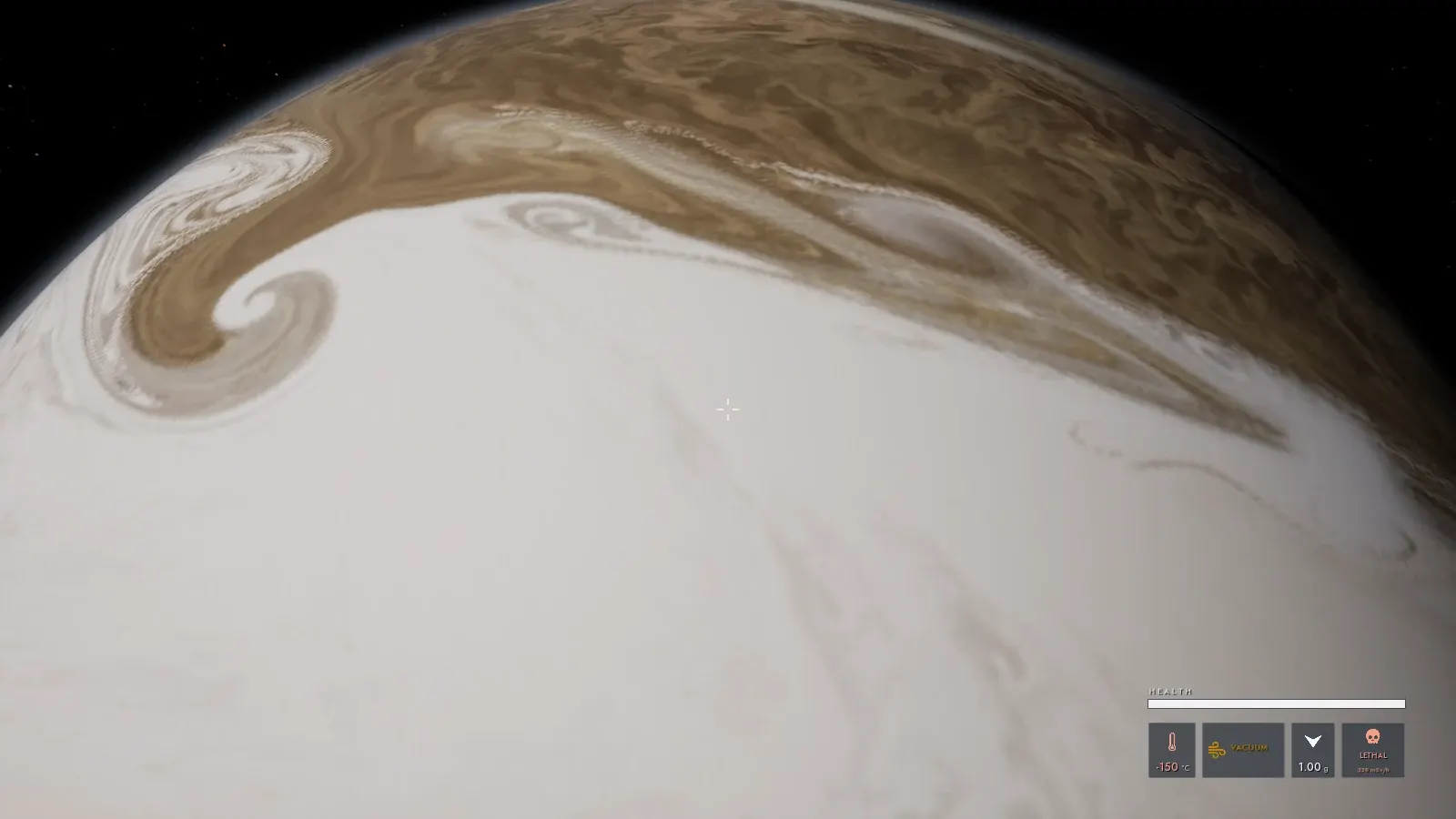
14 Cet III from one of the new gas giant stops: storms, festoons and a bright plume, all grown by our own weather engine.
Pax AbyssiPax Abyssi, all rights reserved
This was a big week: 479 commits between Monday and Sunday, 177 of them on Sunday alone. Here is what changed, area by area, and what comes next.
Flight and controls
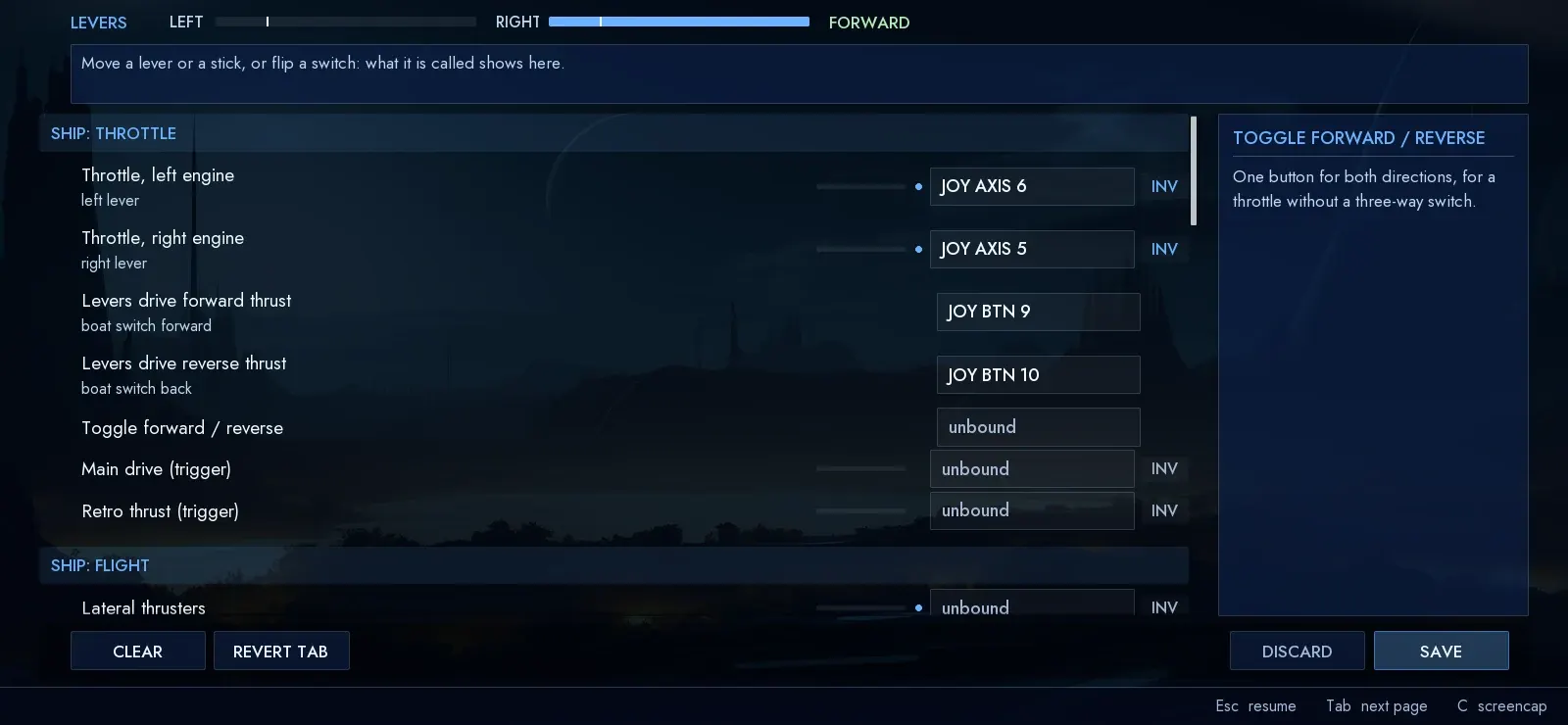
The headline is hardware. CONTROLS is now a tab of its own in the system menu, with KEYBOARD, GAMEPAD, JOYSTICK, THROTTLE and PEDALS pages. Click a control, press a key or move an axis, and it binds. CLEAR, SAVE, DISCARD and REVERT TAB do what they say, and named profiles keep a whole layout, keyboard to pedals, under one name. Every axis has an invert, a dead band from 0 to 20 percent and, since Sunday, a ZERO button that sets its centre. For sticks without a twist grip, roll and yaw can now sit on held buttons.
The first hardware profile is the Thrustmaster Warthog throttle, read live off the device: 5 axes and 32 buttons. The Calliope has two engines, left and right, each with its own start, fuel and failure, and on the Warthog the left lever drives the port engine and the right lever the starboard. Split the levers and the ship yaws. Pull back past a 20 percent gate and you are in analogue reverse. The four flight modes, from full fly-by-wire to full Newtonian, sit on the engine switches.
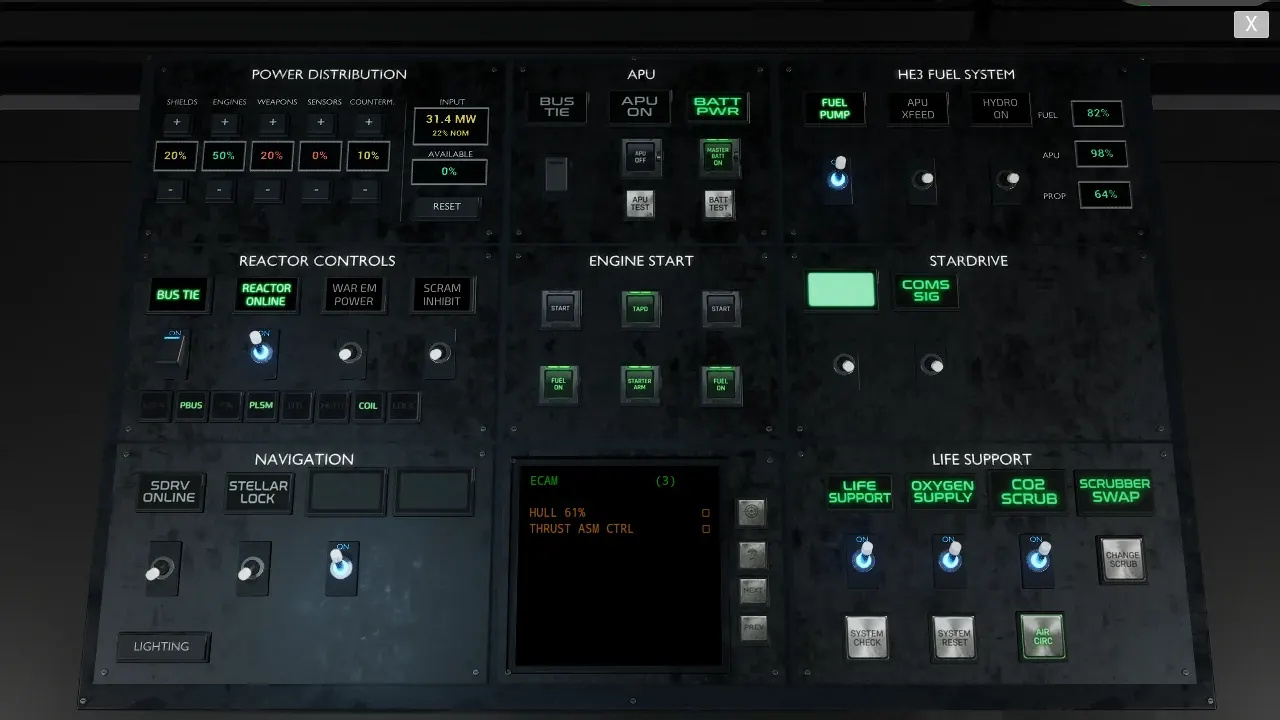
Lose an engine and the ship yaws, as it should. The new AUTOTRIM switch on the navigation panel trims that yaw out with a one second lag, at 80 percent of main-drive thrust, and the ECAM shows THRUST ASM CTRL in amber while it works. In our test burn an untrimmed one-engine push built up 8.24 degrees a second of yaw; trimmed, it settled at zero.
The JOYSTICK page now has its own bindings, a JOYSTICK ONLINE switch, and two presets that load the moment you plug the stick in, recognised by its USB ids: the Warthog stick and the T.16000M. Both are built this week and go on the test desk next week.
Then there are the drift dampers, on Shift+X or a stick button. The physics stays true Newtonian: every thrust is force over mass, and nothing stops the ship but you. With the drift dampers on, the flight computer keeps your speed along the nose and bleeds off every other part of your motion, and it damps the spin, so the nose stays where you pointed it. Point at something and the sideways drift fades away. That is what makes a stick feel natural in a Newtonian ship: you fly where you look, and you can switch it off the moment you want to slide.
Gamepads are fully supported too: pitch and yaw on the left stick, roll or strafe on the right, analogue triggers for thrust and retro, and rumble when you land. The new remote helm gives the pad to the ship, so you can fly her from anywhere aboard.
The HUD
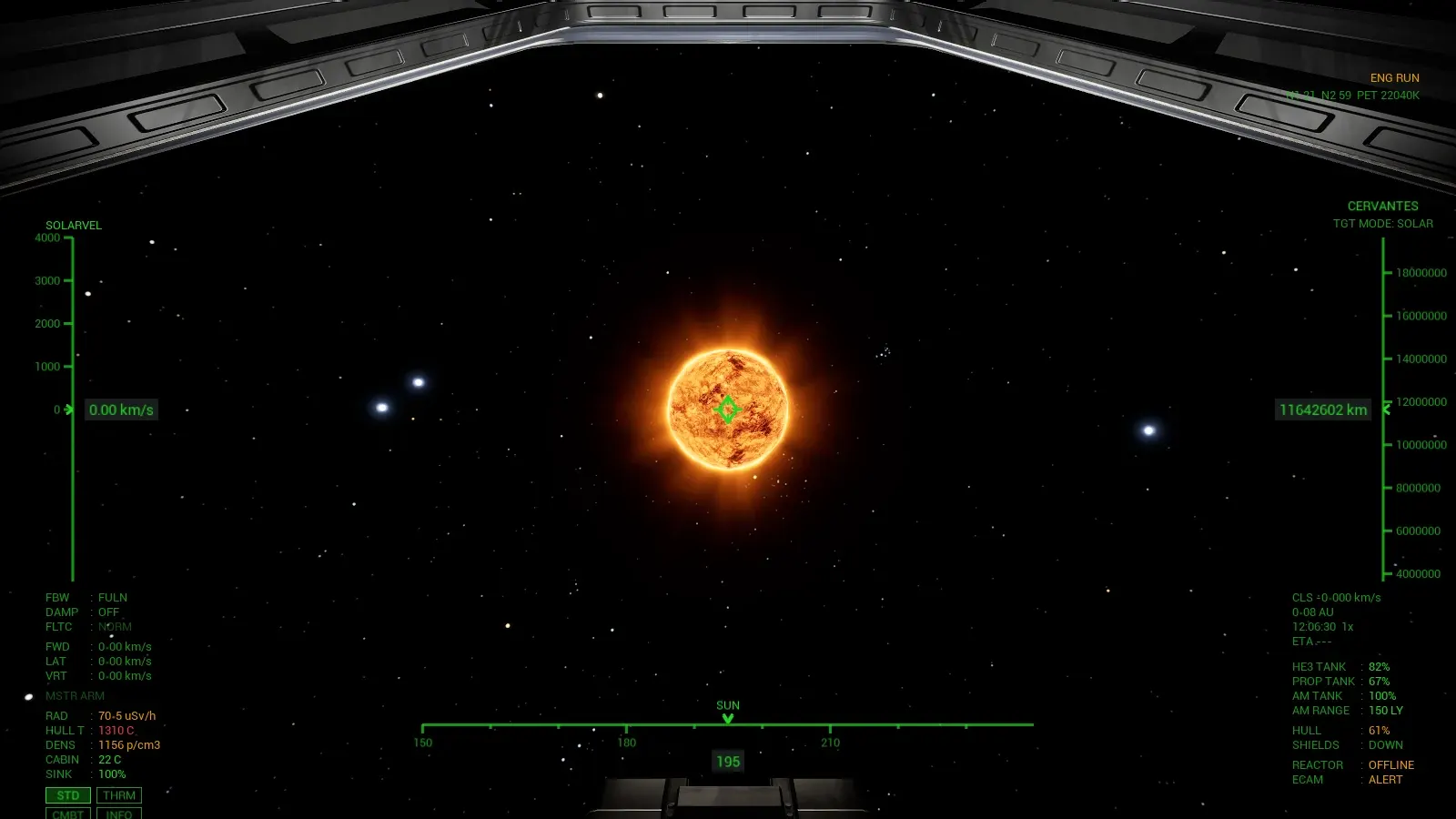
The HUD gained three modes: STD, THRM for star approaches and CMBT for combat, plus an INFO page. Four environment tiles read temperature, air, gravity and hazard at a glance. You can choose your own boresight (five of them), velocity marker (four) and colour. Decimal points are now big enough that 64.8 never reads as 648. Fly into a star's orange zone for 20 seconds and the ship calls it, targets the star and switches to THRM for you.
Black holes
Black holes arrived this week, and they are drawn by their physics. Light is traced along its real path through spinning spacetime, solved in closed form and within 0.013 pixels of our reference renderer. The stars behind each hole are the real star field seen from its true position, so the sky you see bent round the shadow is the sky that is really there. Since Sunday the shadow is pure black and nearby stars stretch into arcs round it.
Twelve compact objects are now in the fast-travel menu: five black hole stops (Cygnus X-1 from two viewpoints, V404 Cygni, Gaia BH1 and Sagittarius A*) and seven neutron stars, from the Crab and Vela pulsars to the magnetar SGR 1806-20. Each hole sits at its true distance from its companion star: 0.2219 AU at Cygnus X-1, where the hull's sunward face reads 20,018 K. So every compact stop lends your ship a Level 12 Experimental Heat Shield for the trip. A new speed mode, LOCALVEL-BH, scales the ship's acceleration to the hole itself.
Gas giants
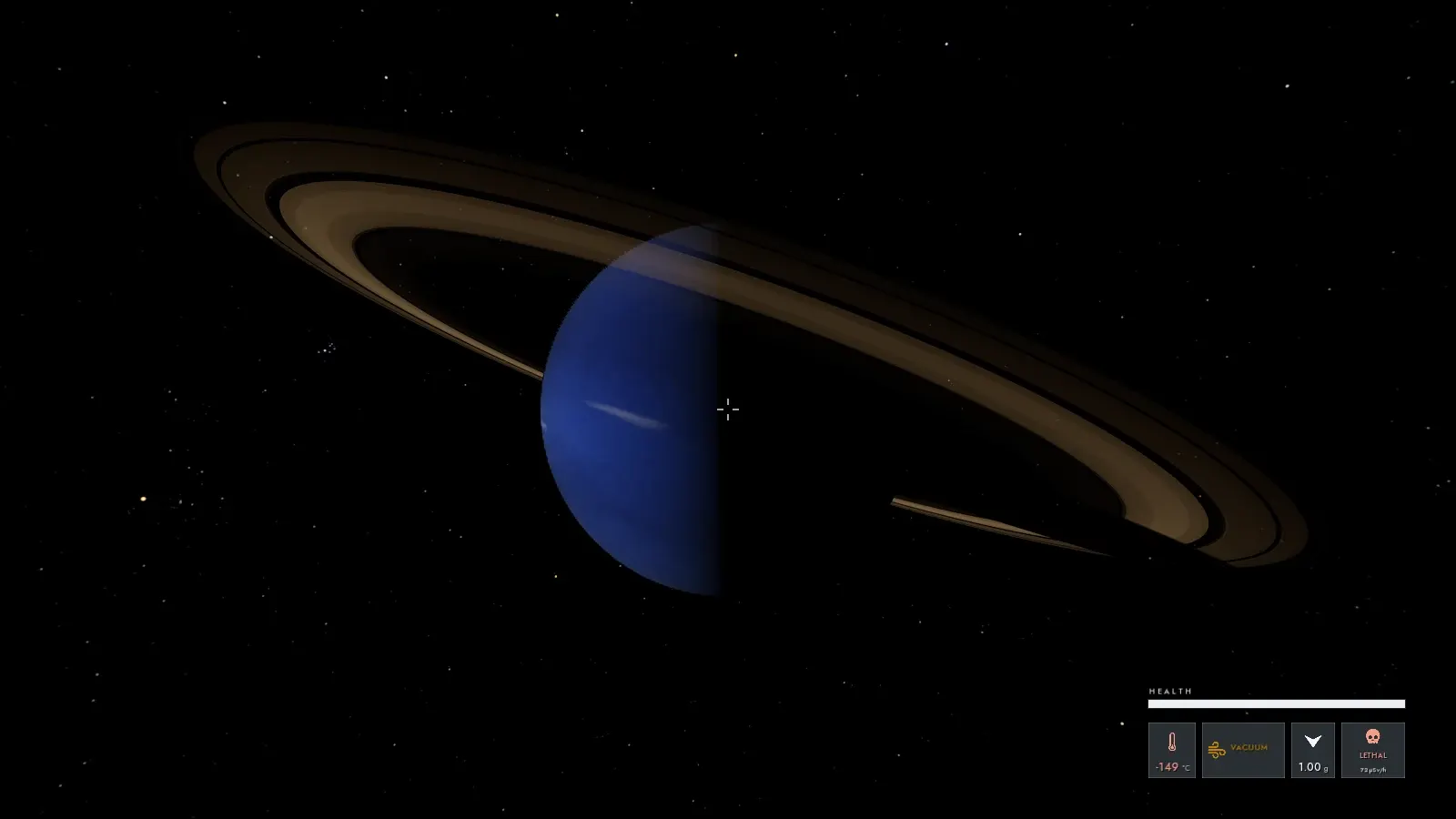
On Sunday our own procedural gas giant engine went into the game. It grows each giant's weather from a fluid trace: zonal jets, vortex streets, named storms, festoons and an upper cloud deck, with haze that scatters light more than once and a night-side glow on the hottest giants. It bakes a 4096 map in 0.37 seconds. There are now 88 looks, covering every kind of giant the simulation generates, and all 1,965 gas giants in the galaxy wear one with their own seed, so no two are alike.
Fly low and close patches bake under the camera, each four times finer than the map below, so the cloud tops stay sharp. Hot giants now keep one face to their star where the physics says they should. Five gas and ice giant stops let you fly out and see for yourself.
Barren worlds
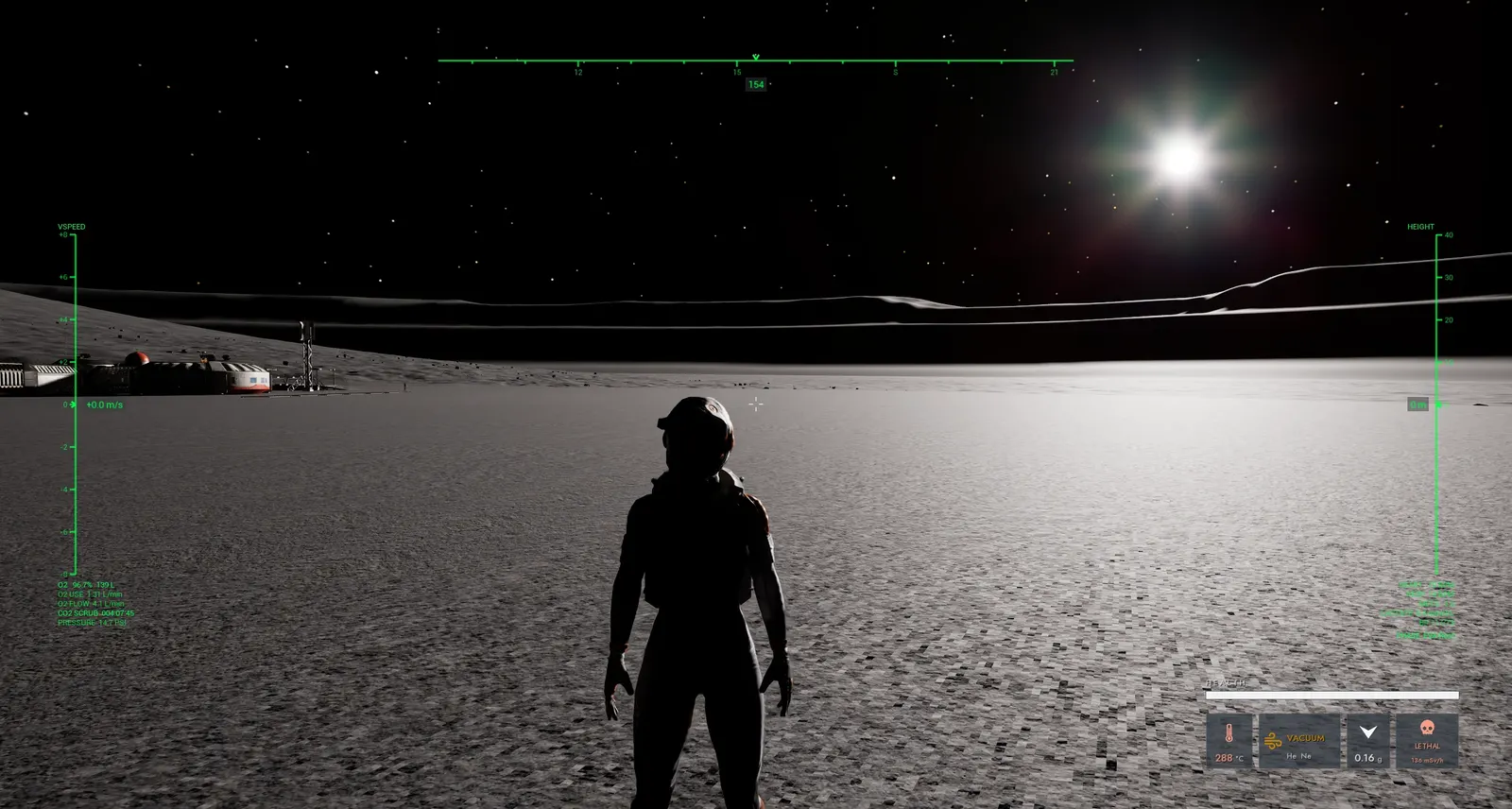
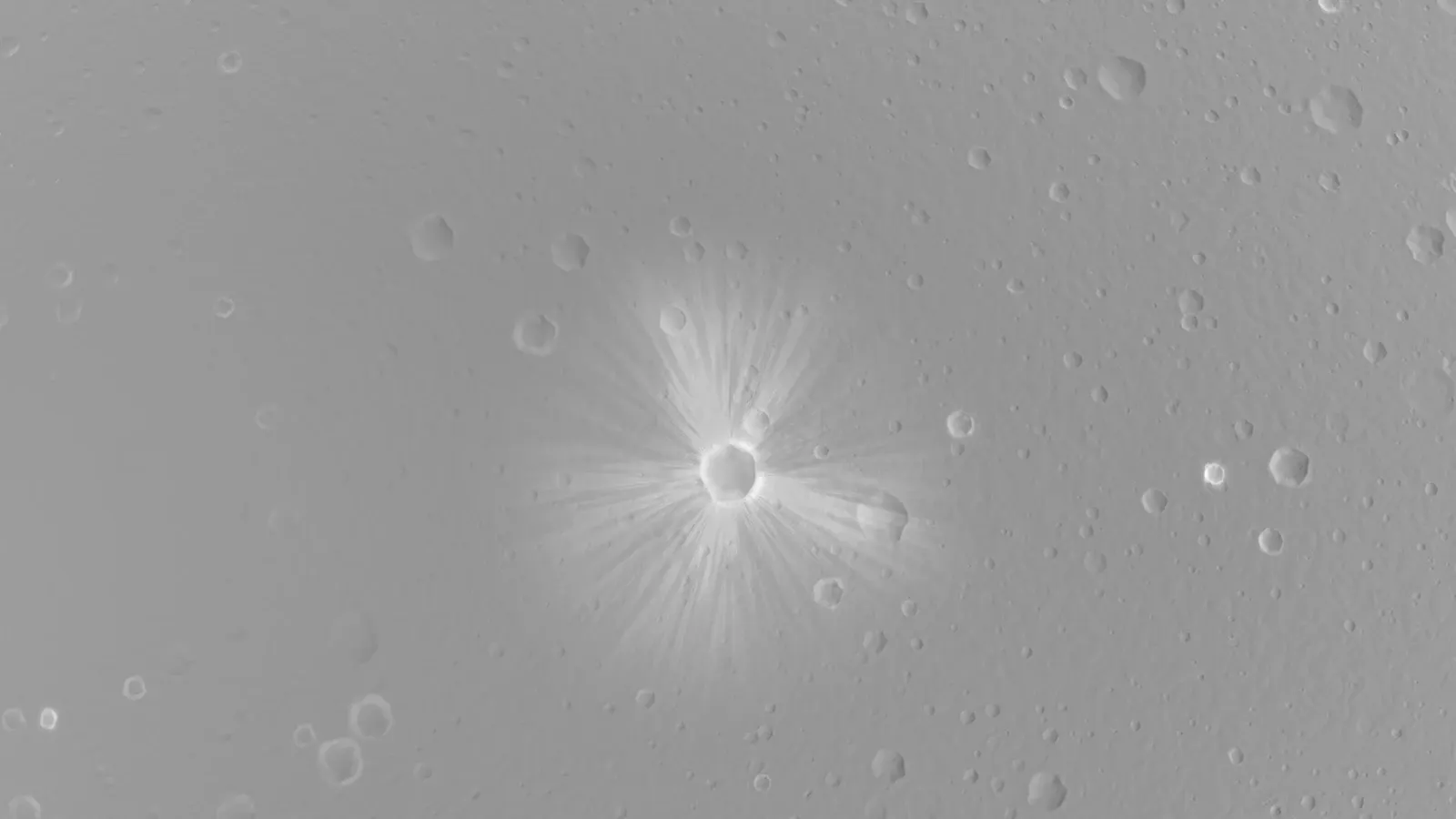
Halden Mare, our airless moon built to the Moon's own numbers, gained a connected lava sea in the style of Oceanus Procellarum, set at exactly the level of the moonbase's lake so that the base stands on the shore. Wrinkle ridges ring the flooded maria, graben cut the ground outside two basins, and three young craters (one like Copernicus, 93 km across, one like Tycho and one like Kepler) throw broad ray systems across the surface. We tuned those rays beside a full-Moon map of Tycho and Copernicus at the same scale. The crater floor also got cheaper to draw: 27 ms down to 15 ms a frame on a laptop RTX 4060, with the picture unchanged.
The bigger news is the reach. Every one of the 39 barren world types in the galaxy, carried by 5,092 bodies, now has a procedural look designed: 54 look rows, and every row converts into game data. Carrow Maria landed this week as the first world made from a galaxy-map body, HYG 98924 IV at Delta Pavonis, with two giant lava seas. The flat planet pictures on the galaxy map are becoming worlds you walk on, a few at a time.
Moonbase interiors
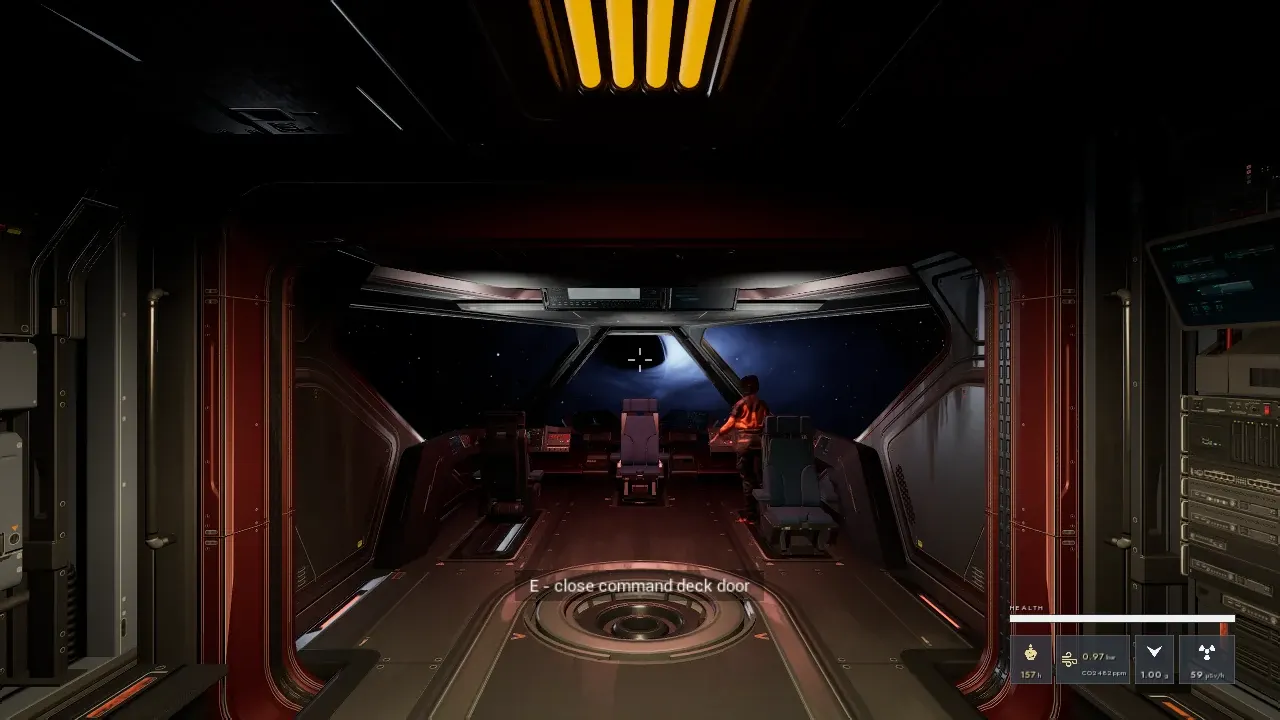
On Halden Mare, at 77.77 degrees north, the Lunar Base now has rooms you can walk into. Its 120 m glazed dome already held a promenade, four pavilions and 136 plants. On Sunday it gained a furnished medical and crew habitat and a workshop, with real windows and floor joins. All four entrances have working airlocks: you cycle, the chamber seals and dwells, and the inner door only opens when the outer one is shut. There are three walking routes, eight things to use on E and three habitat displays, and the finish pass added ceiling cassettes, service grilles, task lighting and terminals. All 34 final live checks pass.
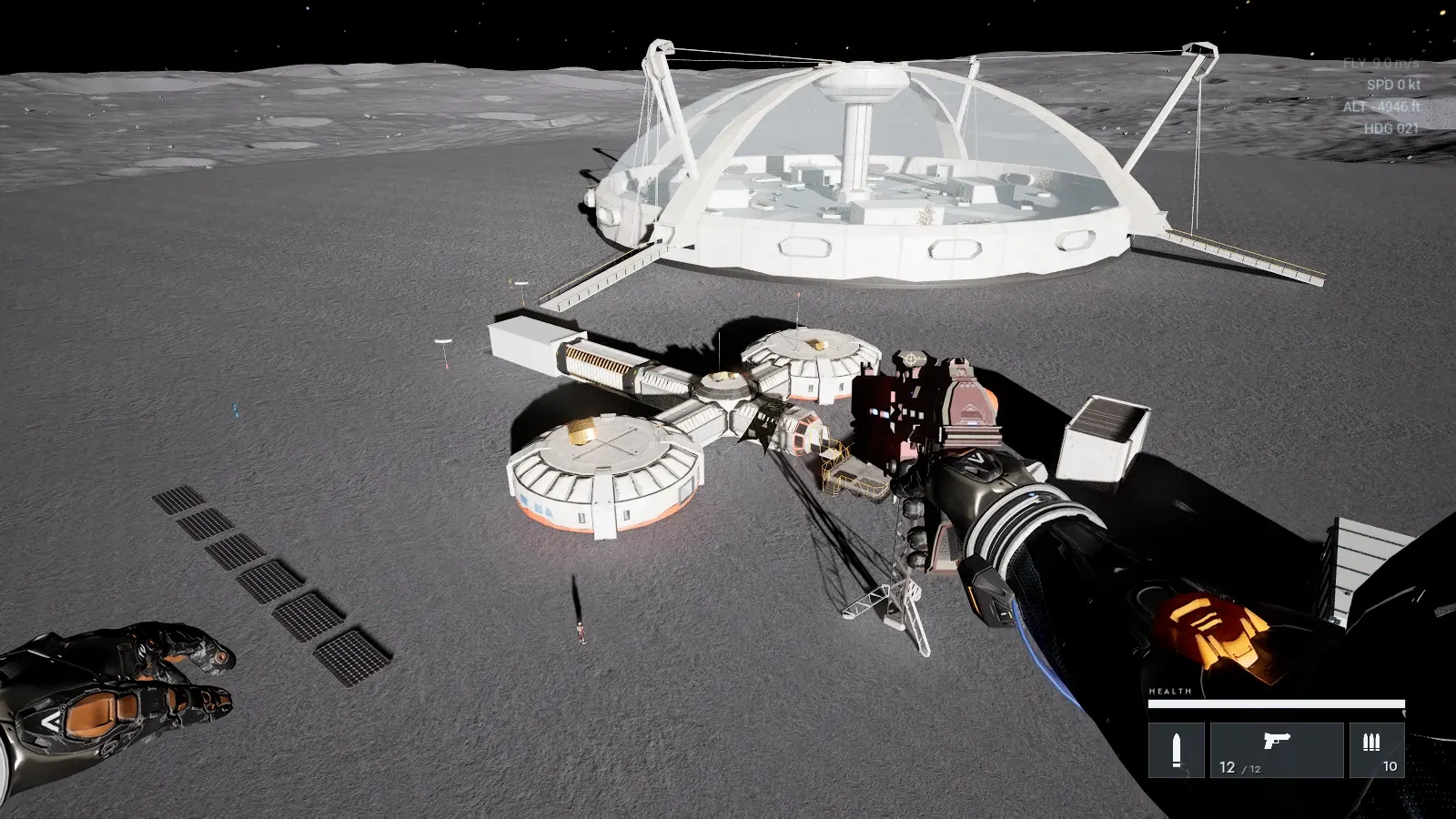
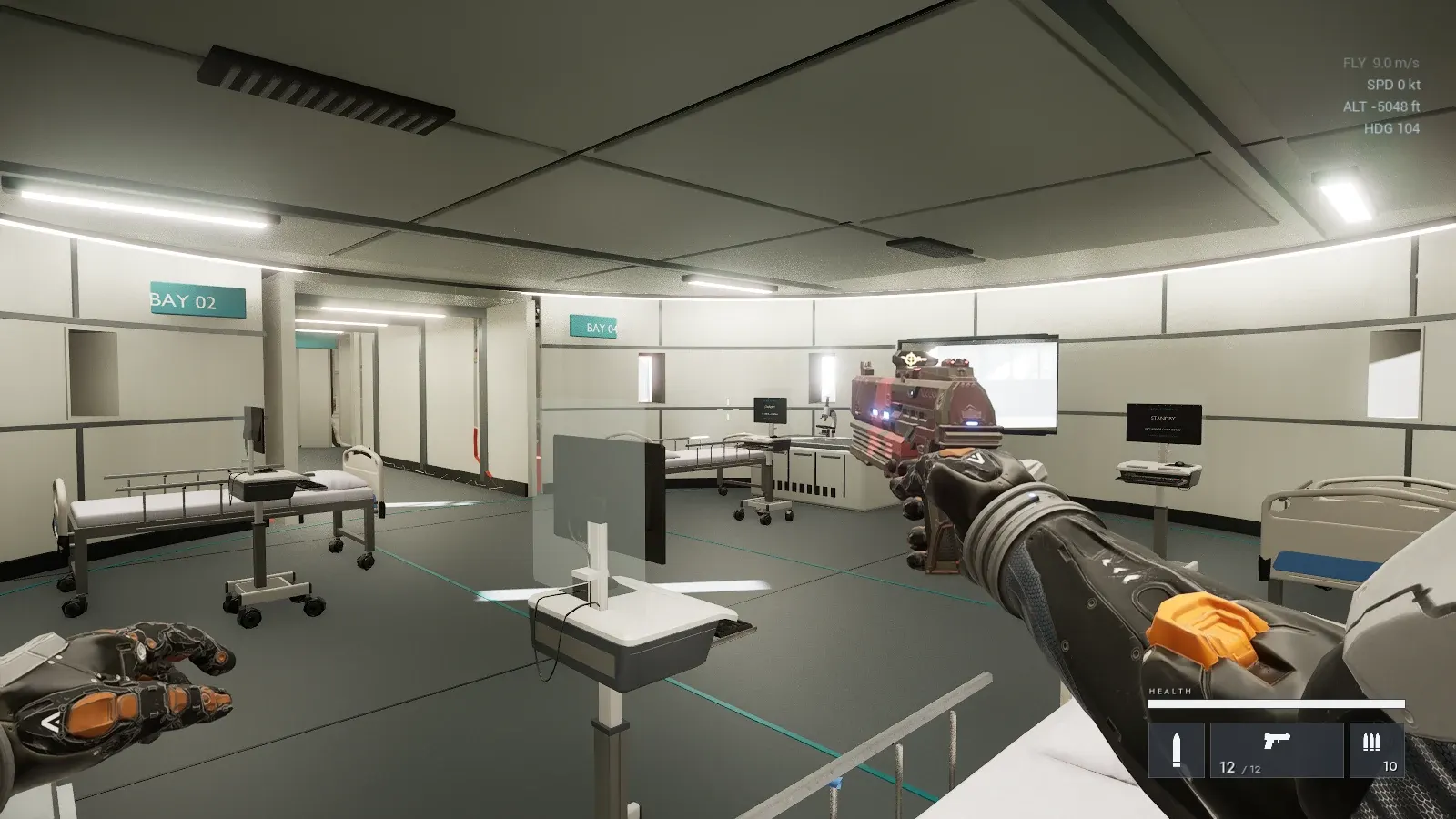
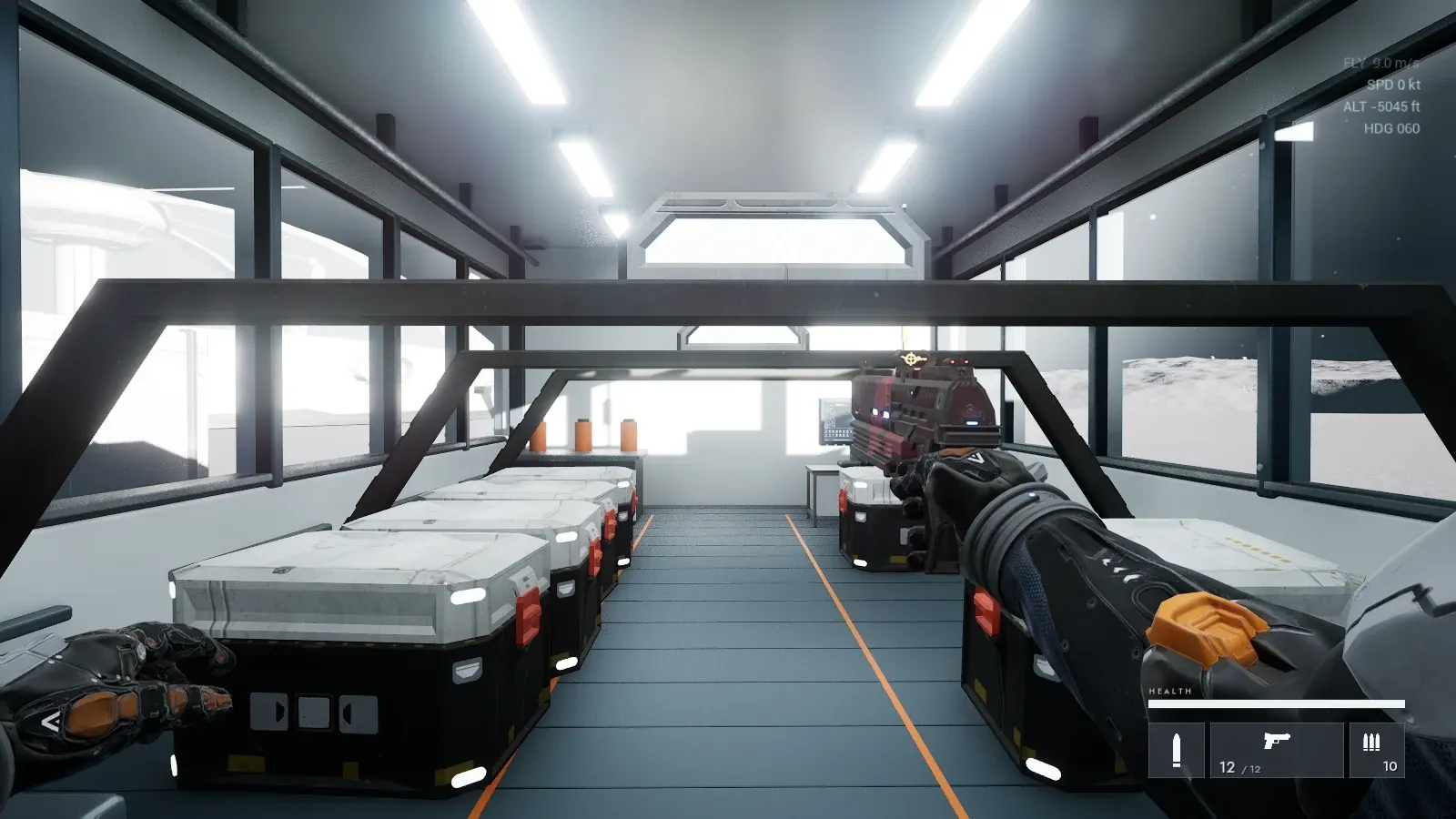
Four astronaut suits came to Halden Mare earlier in the week, and Cassie now follows you across the surface and takes Stay, Follow, Scout and radio orders.
Also this week
- The stardrive, flown to light speed. Lock a star with H, arm, engage, and the ship runs from rest to light speed in about 15 seconds; the jump fires at 1.0c.
- Time and cruise. Time acceleration from x1 to x1024, and COURSE CRCT cruising at 100 km/s.
- Stations and people. 2,457 stations placed across 618 systems, a live economy over 1,068 markets, and 51,338 station crew with names and faces.
- Saturn's rings. Built from Cassini's optical depths; fly into the B ring and it becomes 19,696 pieces of ice.
Next week
Rudder pedals are next on the controls list, as a second device alongside a stick or a pad, so you can fly with stick, throttle and pedals together. A stick goes on the test desk to fly the Warthog stick and T.16000M presets, and we have planned the Warthog throttle's lights, which will blink when you select reverse. The gas giants get their final rim colour and a second flight. More barren worlds come down from their galaxy-map plates, with Merrin Rupes, an iron moon cut by great scarps, next into the build. And the moonbase gets its walk-through and dressing. See you next Sunday.
Related in the wiki
Credits
- The Pax Abyssi team
- Author
Spotted an error? Tell us in the forum thread or on the talk page of a related wiki article; corrections are noted at the top of the piece.