- On this page
- 4
- figures
- 2
- tables
- 1
- panel
- 16
- references
Redirected from Sudarsky classes
Planet class
Sudarsky classification
ContentsShow
The Sudarsky classification sorts giant planets into five classes by the temperature of their upper atmospheres. It was proposed in 2000 by David Sudarsky, Adam Burrows and Philip Pinto, who computed how much light, and which colours, giant planets of different temperatures should reflect 1. Temperature decides which substances can condense into clouds high in a giant's atmosphere, and the clouds, or their absence, decide how the planet looks: cream and banded, brilliant white, dark blue, nearly black or bright grey. The scheme is a model prediction, made when no exoplanet had yet been seen in reflected light, and it is still the clearest way to understand why a giant planet's appearance follows its temperature. Pax Abyssi's own classification of giants is built on the same idea, and this page shows how the two line up.
Why temperature decides the look
A giant planet has no surface. Its hydrogen and helium atmosphere gets hotter with depth, and a cloud forms wherever the temperature at some pressure falls below the condensation point of a trace gas. Every species condenses at its own temperature, so each giant has a stack of possible cloud decks and a planet's temperature sets which one sits highest. That top deck scatters starlight back to space; what lies above it absorbs. Whether a planet is bright or dark, banded or plain, is decided in the top few bars of its atmosphere 2.
Sudarsky and colleagues ordered their classes by effective temperature, , the temperature of a black body that would radiate the planet's total emitted power. That includes both the starlight the planet absorbs and the heat still leaking from its interior since it formed:
Here is the temperature that the internal heat alone would give, the equilibrium temperature set by the star, the Bond albedo (the fraction of all incoming light reflected), the star's luminosity, the orbital distance and the Stefan-Boltzmann constant. For a hot Jupiter the stellar term dominates. For an old giant far from its star the two terms can be similar: Jupiter's equilibrium temperature is about 102 K with its measured Bond albedo of 0.503, but it radiates 7.5 W/m² of internal heat as well, which lifts its effective temperature to about 125 K 3. A young or very massive giant can be far warmer than its orbit alone would suggest, and it is that decides its class.
The five classes
Each class is named for a representative model, and the boundaries between them are soft. The Bond albedos below are the paper's fiducial values for a planet around a Sun-like star 1.
| Class | Name | Effective temperature | Highest cloud deck | Model Bond albedo | Expected look |
|---|---|---|---|---|---|
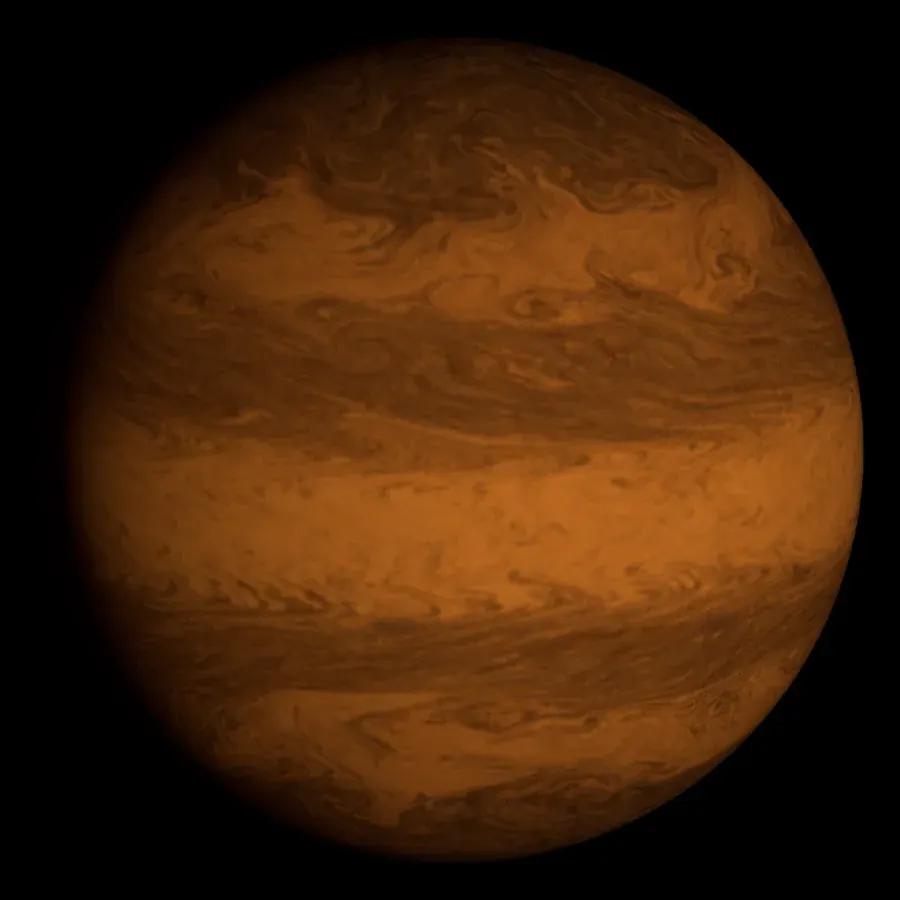
| I | Jovian | below about 150 K | Ammonia ice, over ammonium hydrosulfide and water decks | 0.57 | Bright, banded, cream and brown |
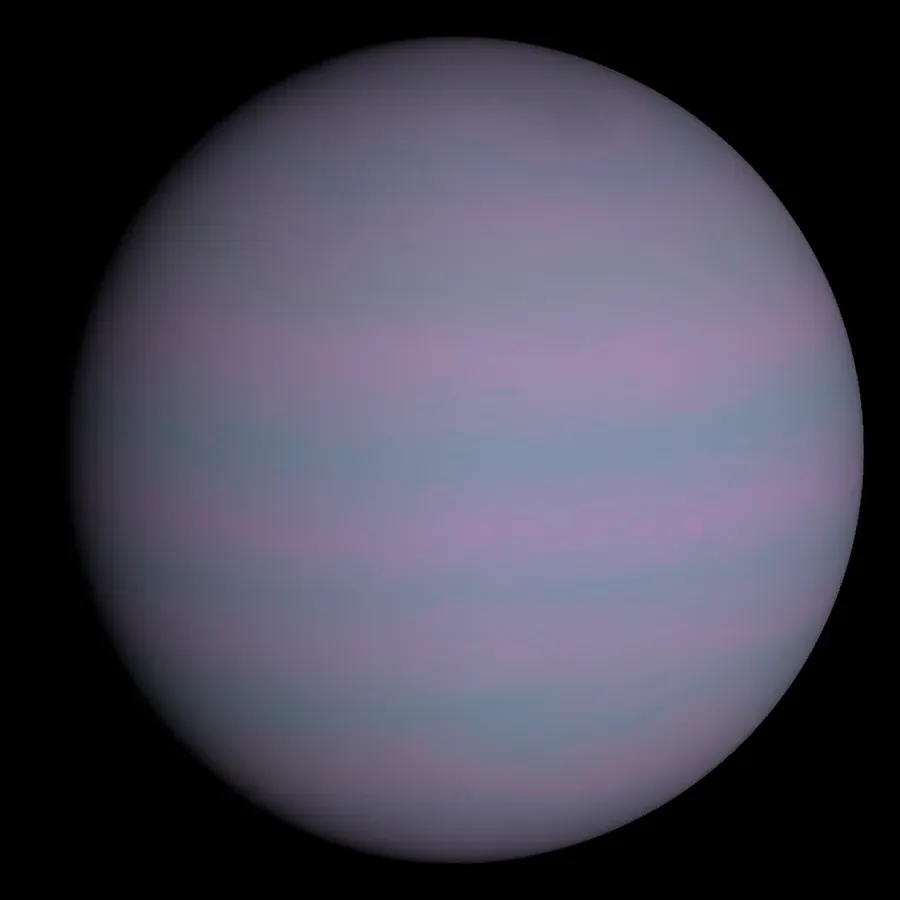
| II | Water clouds | about 250 K | Water ice | 0.81 | Brilliant white |
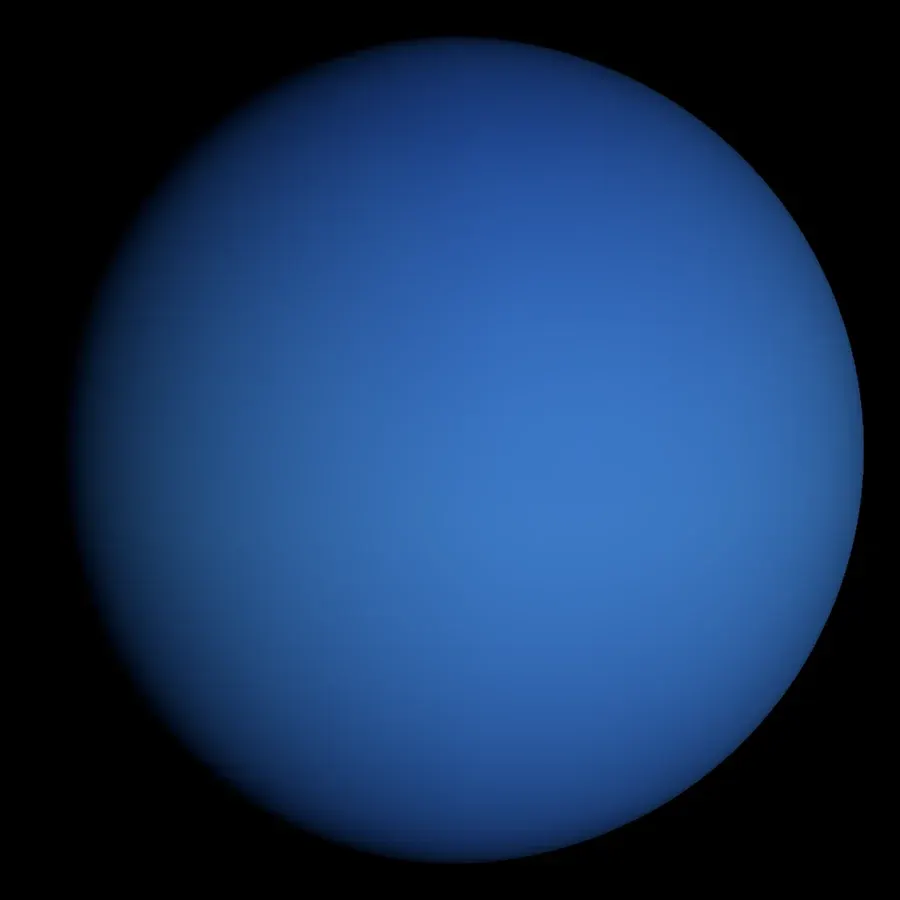
| III | Clear | about 350 K and above | None high up; silicates near 50 bar | 0.12 | Dark, featureless, blue |
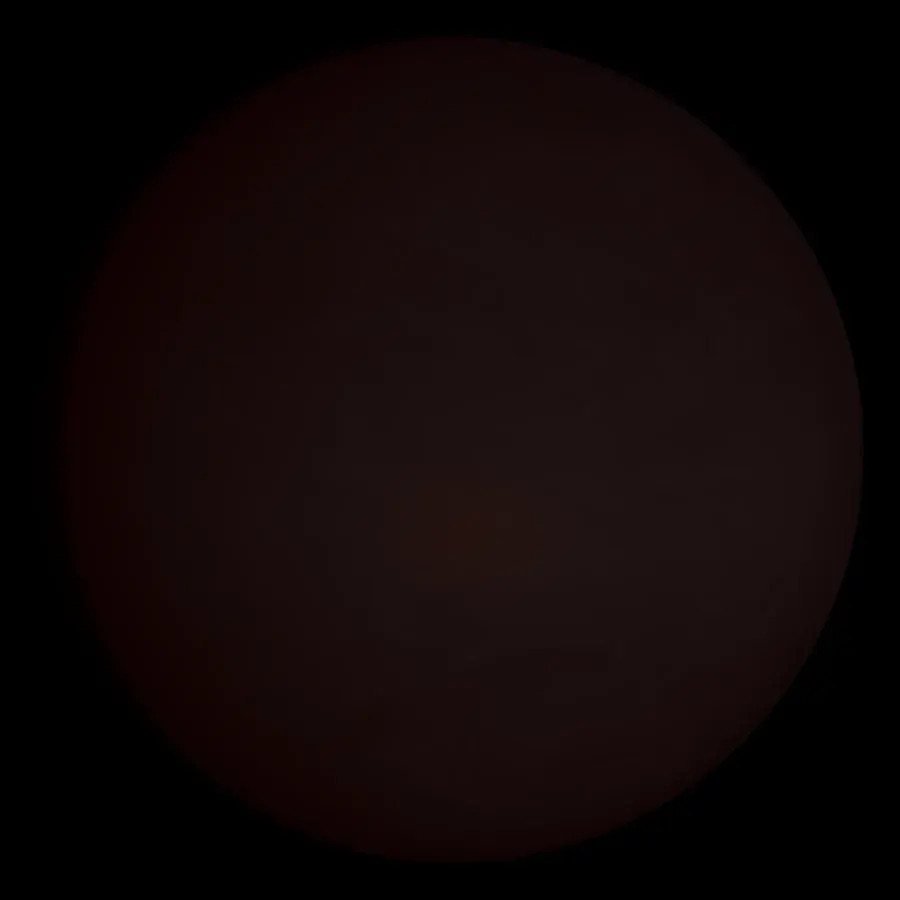
| IV | Alkali metals | about 900 to 1,500 K | Silicates at 5 to 10 bar, under sodium and potassium gas | 0.03 | Nearly black |
| V | Silicate clouds | above about 1,500 K, or lower if gravity is weak | Silicates high in the atmosphere | 0.55 | Bright grey-white |
The gaps in the temperature column are real. The paper gives Class II as "about 250 K" and Class III as "about 350 K and above"; between them the water deck thins out, and between Class III and Class IV sulfide and chloride clouds may start to form at depth. The albedos also depend on the star. Around an M4 dwarf, whose light peaks in the near-infrared where giants absorb strongly, a Class III planet reflects about 1% of the energy it receives; around an A8 star, whose light is bluer, it reflects closer to 20% 1.
The chemistry of each deck
Class I is Jupiter and Saturn. Their highest clouds are ammonia ice near 0.7 bar, with a deck of ammonium hydrosulfide (NH4SH, made when ammonia meets hydrogen sulfide) near 2 bar and water clouds deeper still, at around 5 bar 4. Ammonia ice is white. The browns, reds and oranges of Jupiter's belts come from a small admixture of coloured compounds, the chromophores, whose chemistry is still not settled. One laboratory candidate is the product of ammonia broken apart by sunlight reacting with acetylene, which matches the colour of the Great Red Spot 5. Because the chromophores absorb blue and ultraviolet light, a real Class I giant is less reflective than a clean ammonia-cloud model: Jupiter's Bond albedo, measured by Cassini, is 0.503 3.
Class II planets are too warm for ammonia to condense, so gaseous ammonia sits above a deck of water ice. Water ice clouds high in the atmosphere reflect nearly every visible colour well, and gaseous absorbers have little path length above them to work on, which is why the paper predicted Class II to be the most reflective of all, with a Bond albedo of about 0.81 1. Such a world would look like a larger, whiter Venus.
Class III is too warm for water to condense in the upper atmosphere and too cool for anything else. It is described in its own section below.
Class IV planets, the hotter "roasters" such as 51 Pegasi b, are hot enough that silicate rock condenses into clouds, but those clouds lie at 5 to 10 bar. Above them, sodium and potassium atoms are gaseous, and their strong absorption lines, together with water and other molecules, soak up nearly all visible and near-infrared light before it reaches the silicate deck. The paper's Class IV model reflects only about 3% of the incoming energy, making these the darkest planets in the scheme 1.
Class V planets are hotter still, above about 1,500 K, or have weak gravity, below about 10 m/s², which puffs up the atmosphere. In both cases the silicate deck forms high enough to reflect light before the alkali metals can absorb it, and the model Bond albedo climbs back to about 0.55. The paper noted that a low-mass, inflated roaster such as HD 209458 b could qualify for Class V below 1,500 K for this reason 1.
Class III, explained
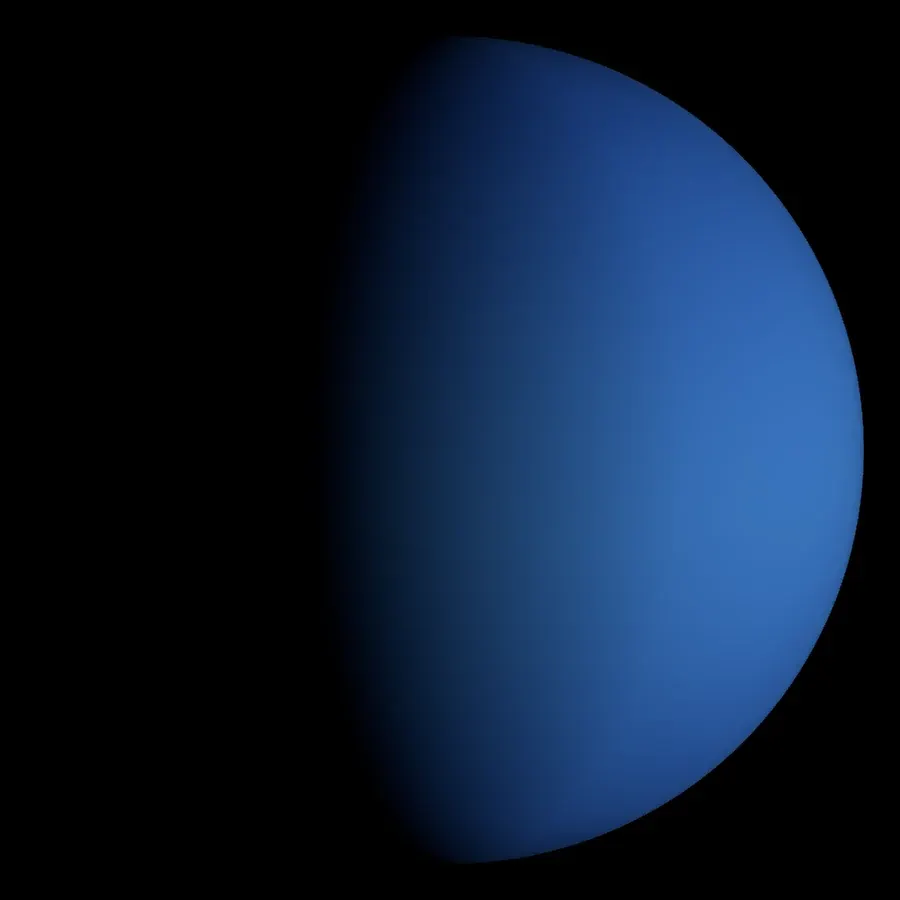
A Class III giant has, in the model, no principal cloud deck anywhere in its upper atmosphere. Starlight penetrates deep, and what happens to it along the way sets the planet's colour. Hydrogen molecules scatter blue light back out efficiently, as the air does in Earth's sky, because Rayleigh scattering grows as the inverse fourth power of wavelength. Sodium and potassium absorb strongly in the yellow, red and near-infrared, and methane, water and collisions between hydrogen molecules take out most of the rest of the infrared. In the model the planet's spherical albedo stays near 0.6 in the ultraviolet and blue but drops below 0.1 through the red 1. The result is a planet that returns mainly blue light and little else: dark overall, with a Bond albedo of about 0.12, similar to the Moon's, and blue in colour.
It would also be close to featureless. On Jupiter the belts and zones are visible because clouds of different heights and tints trace the jets. A Class III giant still has jets and storms, but with no cloud tops to mark them the flow is invisible in reflected light.
Two caveats matter. The 2000 models did not include photochemical hazes, the smog that ultraviolet light makes from methane and other molecules high in an atmosphere; the paper showed that even small amounts of such material can lower the blue albedo substantially 1, so a real Class III planet could be greyer or browner than the model. And the paper noted that thin sulfide or chloride clouds a few bars down, which its chemistry did not expect to be thick, would raise the albedo if present. Later models that follow haze and cloud chemistry in more detail give a range of possible colours for giants at these temperatures 6. No giant planet in this temperature range has yet had its reflected colour measured, so the blue Class III giant remains a prediction. JWST has begun to probe the chemistry of such planets: WASP-80 b, at about 825 K near the top of the Class III range, shows methane throughout its atmosphere 7, and methane bands are among the features the Class III models predict.
 , open full size
How the classes compare with observation
Class I is confirmed by the Solar System, with the refinement that chromophores make real ammonia-cloud giants darker than clean models. The paper's own Jupiter model, with chromophores added, gave a Bond albedo of 0.42 to 0.44 1, below the 0.503 that Cassini later measured 3.
Class II has no confirmed member. One of the coldest giant exoplanets imaged directly, epsilon Indi Ab, has an effective temperature of about 275 K, almost all of it from internal heat since its equilibrium temperature is below 100 K. JWST found it bright at 10 to 15 micrometres but could not detect it between 3.5 and 5 micrometres, which points to an absorber or cloud the models do not yet capture 8. Planets like it are where water clouds should first be found.
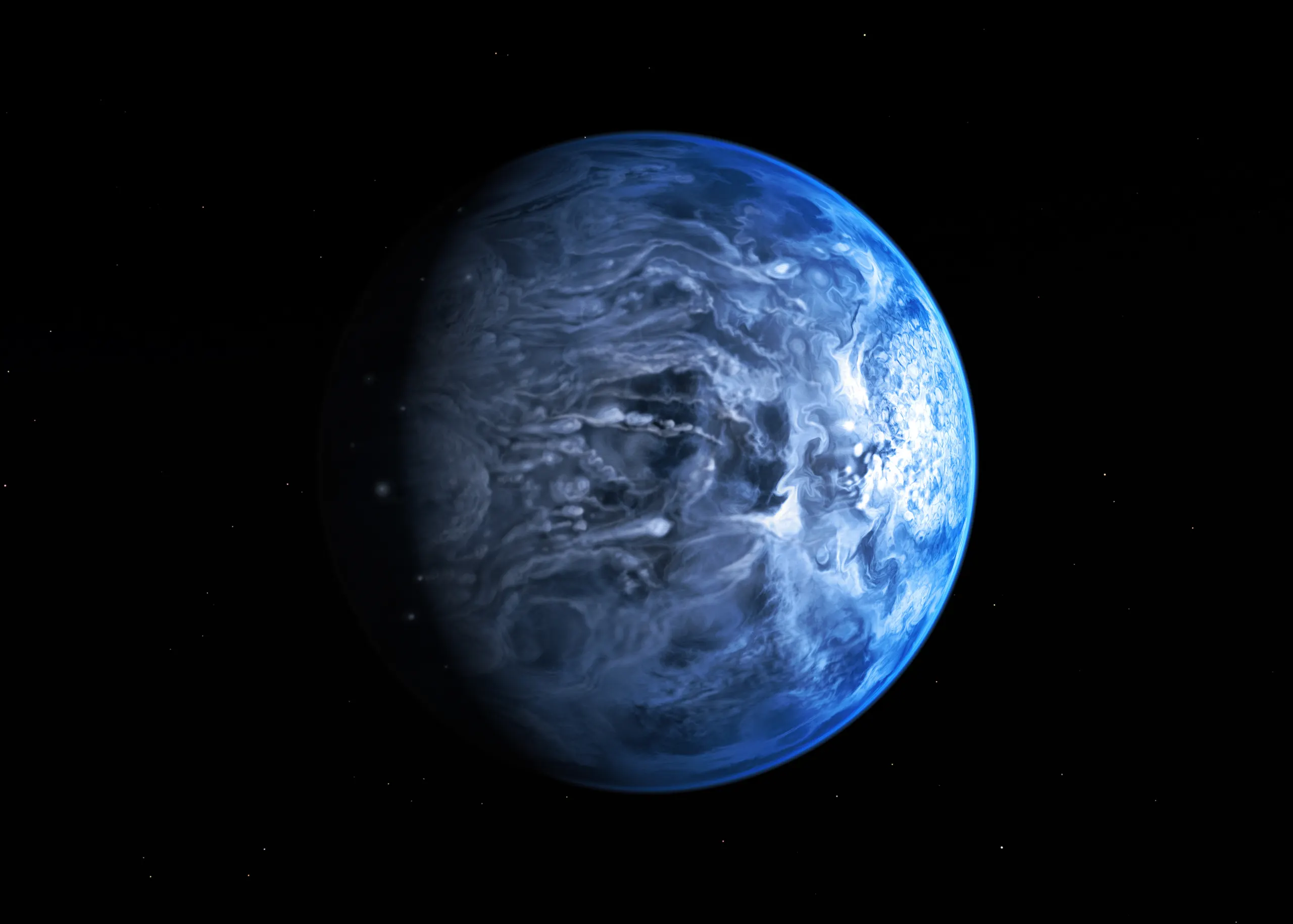
Classes IV and V can be tested, because hot Jupiters reflect enough light to measure. Most are dark, as Class IV predicts. TrES-2 b has a geometric albedo of about 0.025 in the Kepler band, darker than coal 9; most hot Jupiters measured by Kepler have geometric albedos below 0.25 10. The hottest are not the bright Class V worlds the scheme expected. WASP-12 b, one of the hottest known, has a geometric albedo below 0.064 between 290 and 570 nanometres; the measurement rules out both a reflective aluminium-oxide haze and a clear, Rayleigh-scattering atmosphere, and fits thermal emission with only weak scattering by atomic hydrogen and helium 11. Its dayside appears to be free of cloud. Clouds do appear where hot Jupiters are cooler: Kepler-7 b has a geometric albedo of 0.35 in the Kepler band, and its brightest point sits west of the point facing its star, where reflective clouds, possibly silicates, collect on the cooler morning side 12. HD 189733 b, whose dayside brightness temperature is about 1,200 K 13, is deep blue, with a geometric albedo of 0.40 between 290 and 450 nanometres and below 0.12 from 450 to 570 nanometres, a pattern that fits a reflective haze or cloud layer with sodium absorbing the longer wavelengths 14. That is the colour the paper predicted for Class III, found on a planet hot enough to be Class IV.
 , open full size
Sudarsky's classes in Pax Abyssi
Pax Abyssi sorts its giants by the same physics: temperature first, because temperature decides which cloud sits on top (see Gas giant for the whole scheme). Our families line up with the five classes like this:
| Sudarsky class | Pax Abyssi family and subtypes | How we draw it |
|---|---|---|
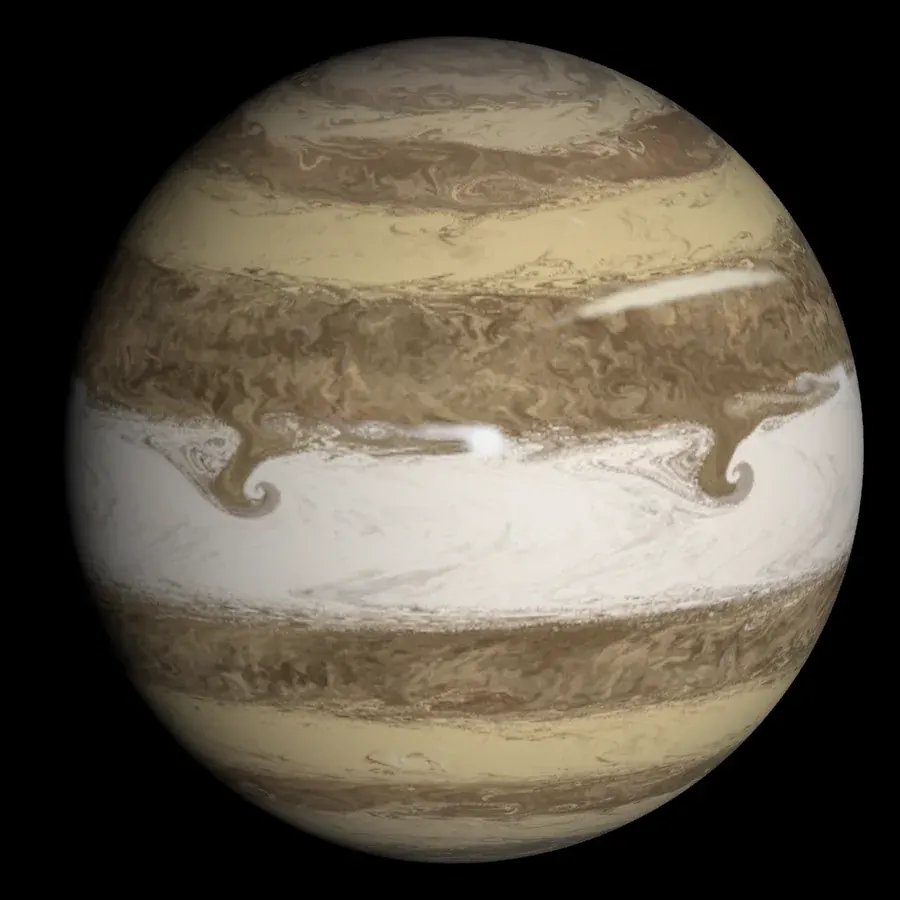
| I, ammonia clouds | Cold gas giant: all four subtypes (GGC-AB, SG, PR, QP) | Banded cream and brown, gold, rust or pale, the colour set by trace chemistry |
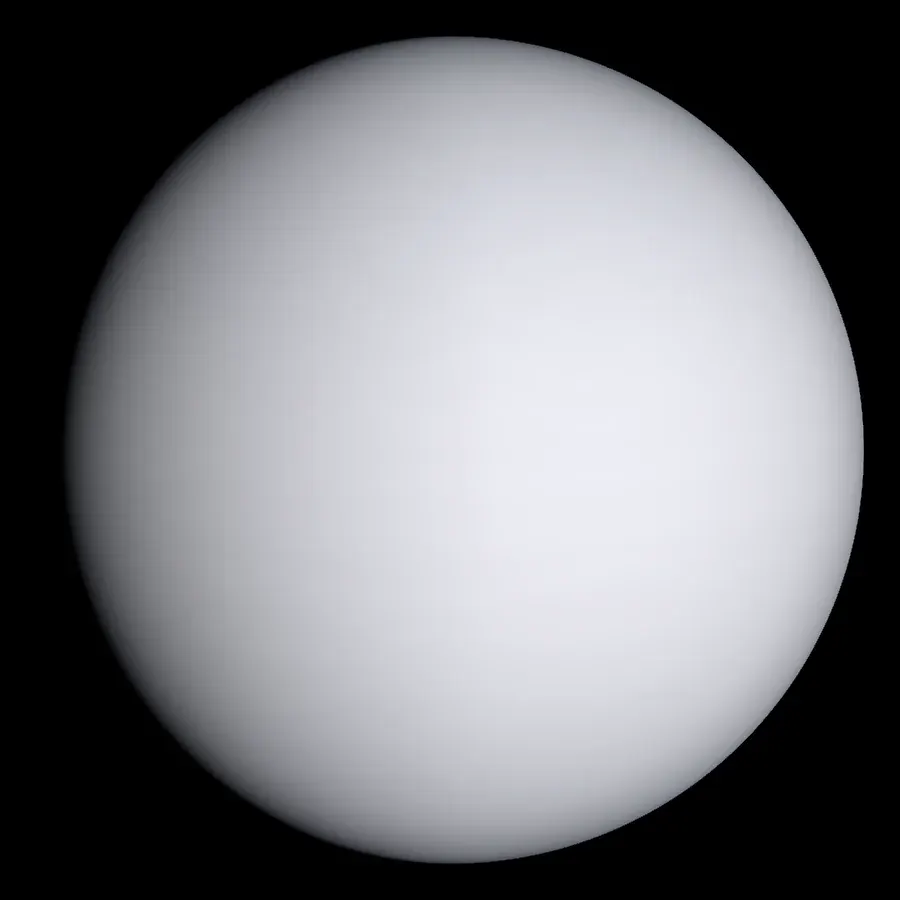
| II, water clouds | Temperate gas giant: Transition (GGT-TN) as the water cloud forms, Water-Cloud (GGT-WC) once it covers the planet | Brilliant white, or white with pale blue belts |
| III, clear | Temperate: Clear-Blue (GGT-CB); Hazy (GGT-HZ) is Class III under photochemical haze | Featureless azure to navy; smoky blue to tawny under haze |
| IV, alkali metals | Hot Jupiter (hot gas giants): the cooler subtypes (GGH-MJ, SS, FC) | Dark, with muted bands and colours |
| V, silicate clouds | The hottest hot giants (GGH-OP, AS, UD) | Dark, as measured hot Jupiters are, with thin pale cloud on the Opaline worlds and the glow of the planet's own heat on the hottest |
Two choices are worth stating. We sort by equilibrium temperature, which every planet has from its orbit alone, where Sudarsky used effective temperature, which adds the planet's internal heat; for all but young or very massive giants the two put a planet in the same class. And for the hot end we follow the observations rather than the 2000 models: Class V predicted bright grey-white giants, but the hot Jupiters measured so far are mostly dark, so ours are too (see "How the classes compare with observation", above).
 , open full size
 , open full size
 , open full size
 , open full size
 , open full size
 , open full size
Limits of the scheme
The classes come from one-dimensional models that treat the whole dayside as a single column in chemical equilibrium. Real hot Jupiters have hot daysides and cool nightsides, winds that carry clouds between them, and photochemistry that equilibrium models leave out. A 2003 follow-up by Sudarsky, Burrows and Ivan Hubeny computed full spectra for known planets and traced how stellar type, orbital distance, clouds, mass and gravity change them 15. Even so, the scheme treats each class as one planet: mass, metallicity, the host star's spectrum and the particle sizes of the clouds all change the albedo within a class, sometimes by more than the difference between classes 1. An earlier set of models from 1999 had given 500 K and 1,000 K giants Bond albedos of 0.30 to 0.44 16; the 2000 paper traced its much lower values to the alkali metals it added 1, which shows how much depends on the chemistry chosen. Research papers today rarely assign a planet a Sudarsky class. They describe giants by equilibrium temperature and by the cloud species that measured spectra reveal, and the International Astronomical Union has no official classification of giant planets. The Sudarsky classes remain the best-known summary of why a giant's looks follow its temperature, and a good first guess for a planet whose spectrum has not been taken.
See also
- Gas giant
- Cold gas giant
- Temperate gas giant
- Hot Jupiter
- Ice giant
- Brown dwarf
- Planet classification
References
- 1Sudarsky, D., Burrows, A. and Pinto, P. (2000). Albedo and Reflection Spectra of Extrasolar Giant Planets. The Astrophysical Journal 538, 885-903. doi:10.1086/309160
- 2Marley, M. S. and Robinson, T. D. (2015). On the Cool Side: Modeling the Atmospheres of Brown Dwarfs and Giant Planets. Annual Review of Astronomy and Astrophysics 53, 279-323. doi:10.1146/annurev-astro-082214-122522
- 3Li, L. et al. (2018). Less absorbed solar energy and more internal heat for Jupiter. Nature Communications 9, 3709. doi:10.1038/s41467-018-06107-2
- 4Weidenschilling, S. J. and Lewis, J. S. (1973). Atmospheric and cloud structures of the Jovian planets. Icarus 20, 465-476. doi:10.1016/0019-1035(73)90019-5
- 5Carlson, R. W. et al. (2016). Chromophores from photolyzed ammonia reacting with acetylene: Application to Jupiter's Great Red Spot. Icarus 274, 106-115. doi:10.1016/j.icarus.2016.03.008
- 6Cahoy, K. L., Marley, M. S. and Fortney, J. J. (2010). Exoplanet Albedo Spectra and Colors as a Function of Planet Phase, Separation, and Metallicity. The Astrophysical Journal 724, 189-214. doi:10.1088/0004-637X/724/1/189
- 7Bell, T. J. et al. (2023). Methane throughout the atmosphere of the warm exoplanet WASP-80b. Nature 623, 709-712. doi:10.1038/s41586-023-06687-0
- 8Matthews, E. C. et al. (2024). A temperate super-Jupiter imaged with JWST in the mid-infrared. Nature 633, 789-792. doi:10.1038/s41586-024-07837-8
- 9Kipping, D. M. and Spiegel, D. S. (2011). Detection of visible light from the darkest world. Monthly Notices of the Royal Astronomical Society Letters 417, L88-L92. doi:10.1111/j.1745-3933.2011.01127.x
- 10Esteves, L. J., De Mooij, E. J. W. and Jayawardhana, R. (2015). Changing Phases of Alien Worlds: Probing Atmospheres of Kepler Planets with High-Precision Photometry. The Astrophysical Journal 804, 150. doi:10.1088/0004-637X/804/2/150
- 11Bell, T. J. et al. (2017). The Very Low Albedo of WASP-12b from Spectral Eclipse Observations with Hubble. The Astrophysical Journal Letters 847, L2. doi:10.3847/2041-8213/aa876c
- 12Demory, B. O. et al. (2013). Inference of Inhomogeneous Clouds in an Exoplanet Atmosphere. The Astrophysical Journal Letters 776, L25. doi:10.1088/2041-8205/776/2/L25
- 13Knutson, H. A. et al. (2007). A map of the day-night contrast of the extrasolar planet HD 189733b. Nature 447, 183-186. doi:10.1038/nature05782
- 14Evans, T. M. et al. (2013). The Deep Blue Color of HD 189733b: Albedo Measurements with Hubble Space Telescope/Space Telescope Imaging Spectrograph at Visible Wavelengths. The Astrophysical Journal Letters 772, L16. doi:10.1088/2041-8205/772/2/L16
- 15Sudarsky, D., Burrows, A. and Hubeny, I. (2003). Theoretical Spectra and Atmospheres of Extrasolar Giant Planets. The Astrophysical Journal 588, 1121-1148. doi:10.1086/374331
- 16Marley, M. S. et al. (1999). Reflected Spectra and Albedos of Extrasolar Giant Planets. I. Clear and Cloudy Atmospheres. The Astrophysical Journal 513, 879-893. doi:10.1086/306881