- On this page
- 1
- figure
- 2
- tables
- 1
- panel
- 13
- references
Redirected from Transition giant
Planet class · GGT · G3-T
Temperate gas giant
ContentsShow
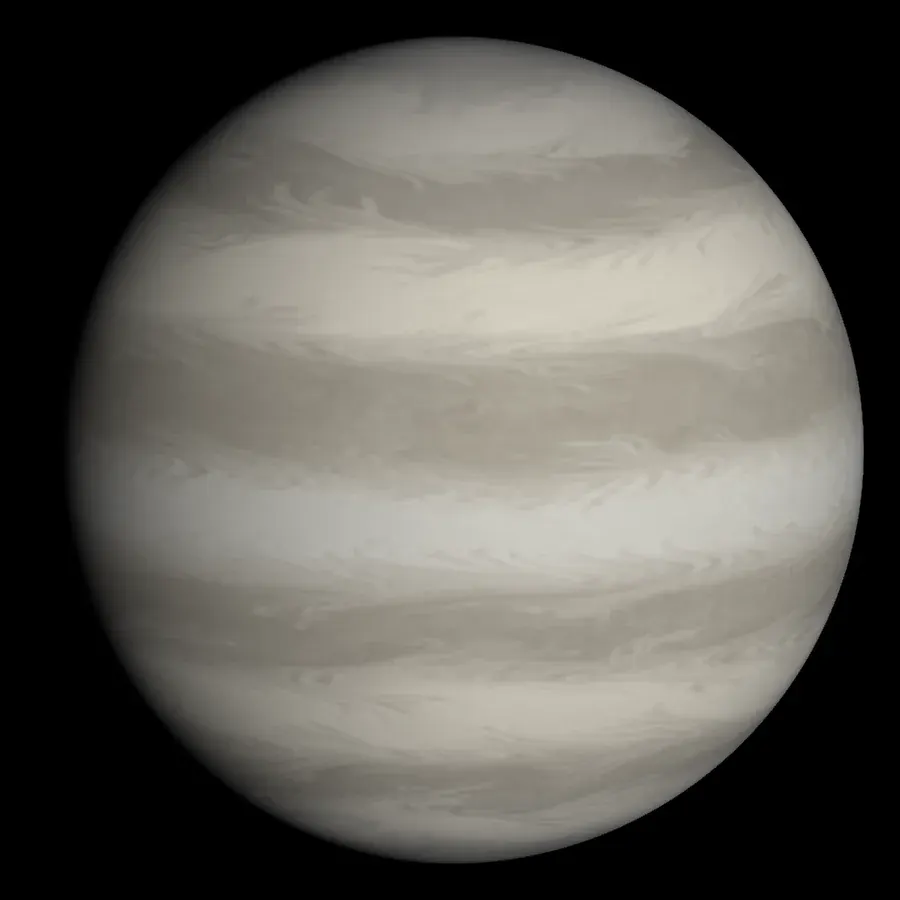
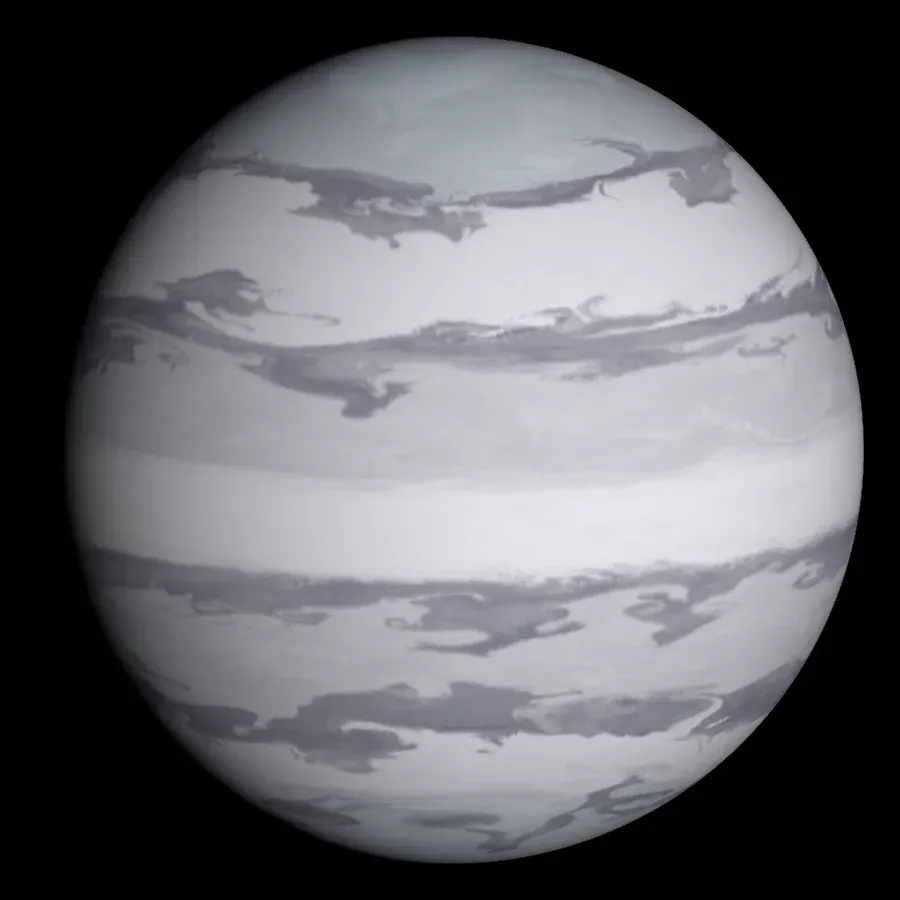
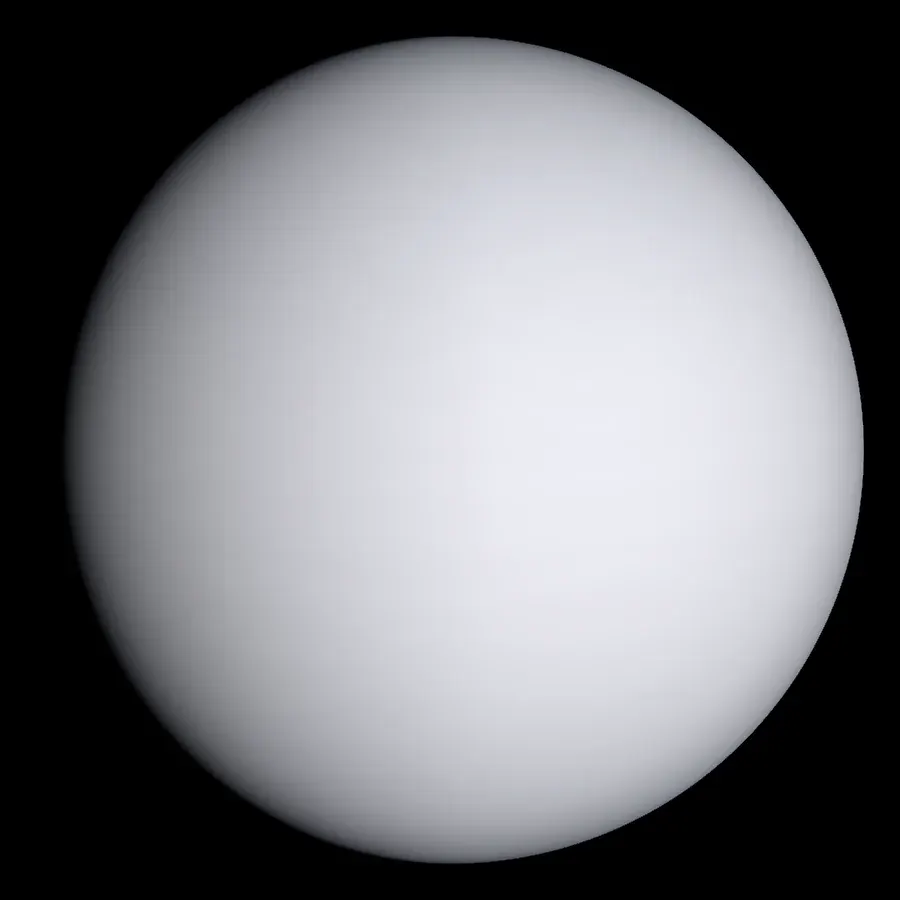
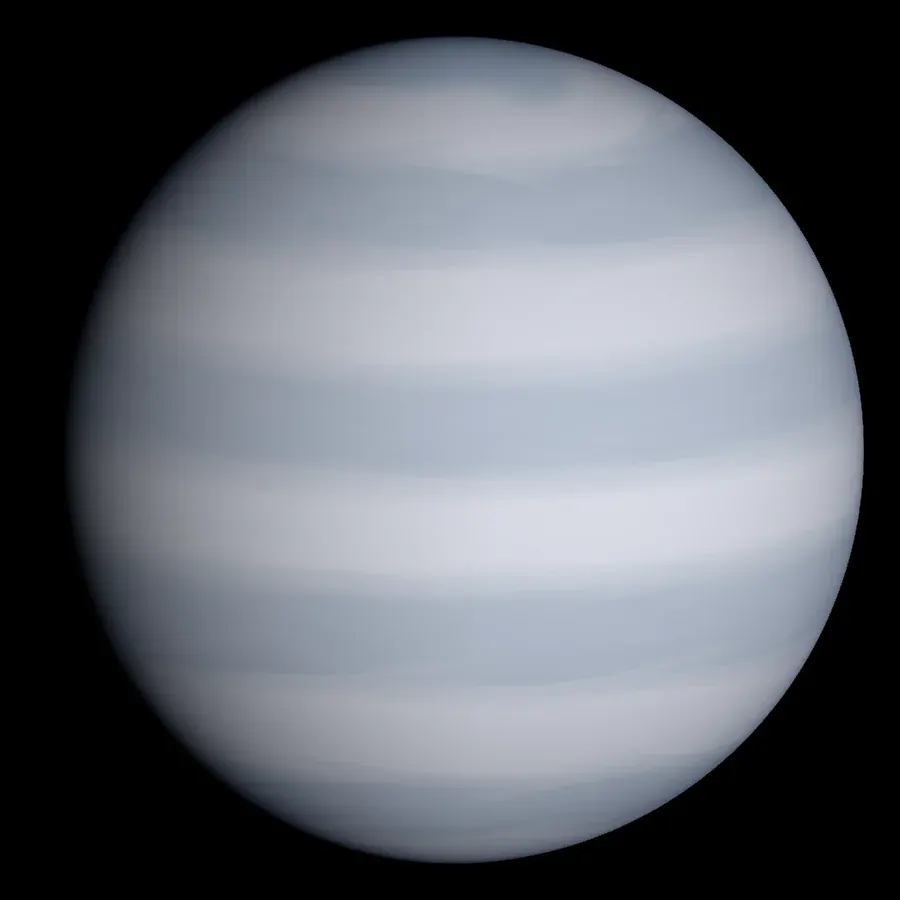
A temperate gas giant is a giant planet warmer than Jupiter but cooler than a hot Jupiter, with an equilibrium temperature of roughly 150 to 700 K. Around a Sun-like star such planets orbit from about 0.15 AU out to a little beyond 1 AU, with years of a few weeks to a few years; astronomers call the inner ones warm Jupiters. This is the temperature range in which a giant's clouds change most. Ammonia clouds thin and disappear, water clouds form, and then the water evaporates too, leaving the upper atmosphere clear. The Sudarsky classification predicts that the same planet moved inward through this range would turn from a brilliant white to a dark, featureless blue, which gives temperate giants the widest range of looks of any giant. Pax Abyssi draws that whole sequence, and every type in it is shown below.
How Pax Abyssi classifies temperate giants
Across this range the question that decides a giant's look is which cloud, if any, sits on top, and that is set by temperature first and by haze second. The physics engine computes each planet's equilibrium temperature and the thickness of its photochemical haze, the smog that ultraviolet starlight makes from methane, and the subtype follows:
| Subtype | Code | Equilibrium temperature | Top of the atmosphere | Bond albedo | Types |
|---|---|---|---|---|---|
| Transition | GGT-TN | 150 to 250 K | Ammonia cloud thinning, water cloud starting | 0.45 to 0.65 | Fading Ammonia (FD, below 200 K), Emerging Water (EM) |
| Water-Cloud | GGT-WC | 250 to 350 K | A deck of water-ice cloud | 0.55 to 0.81 | Brilliant White (BW), Pale Banded (PB) |
| Clear-Blue | GGT-CB | 350 K and above, little haze | No cloud high up | 0.10 to 0.20 | Azure (AZ, to 500 K), Deep Blue (DP, above 500 K) |
| Hazy | GGT-HZ | 350 K and above, haze optical depth above 0.05 | Photochemical haze | 0.15 to 0.30 | Smoky Blue (SM), Tawny Haze (TN) |
The Transition and Water-Cloud giants are the cool half of the sequence, Sudarsky's Class II world of water cloud; Clear-Blue is his Class III; Hazy is Class III under the haze his 2000 models left out 1 2. The type then follows the details: whether the new water cloud has spread across the planet or is still breaking through in patches, whether the water deck is thick enough to hide the bands, whether the clear air is warm enough to turn navy, and how thick the haze lies.
 , open full size
 , open full size
 , open full size
 , open full size
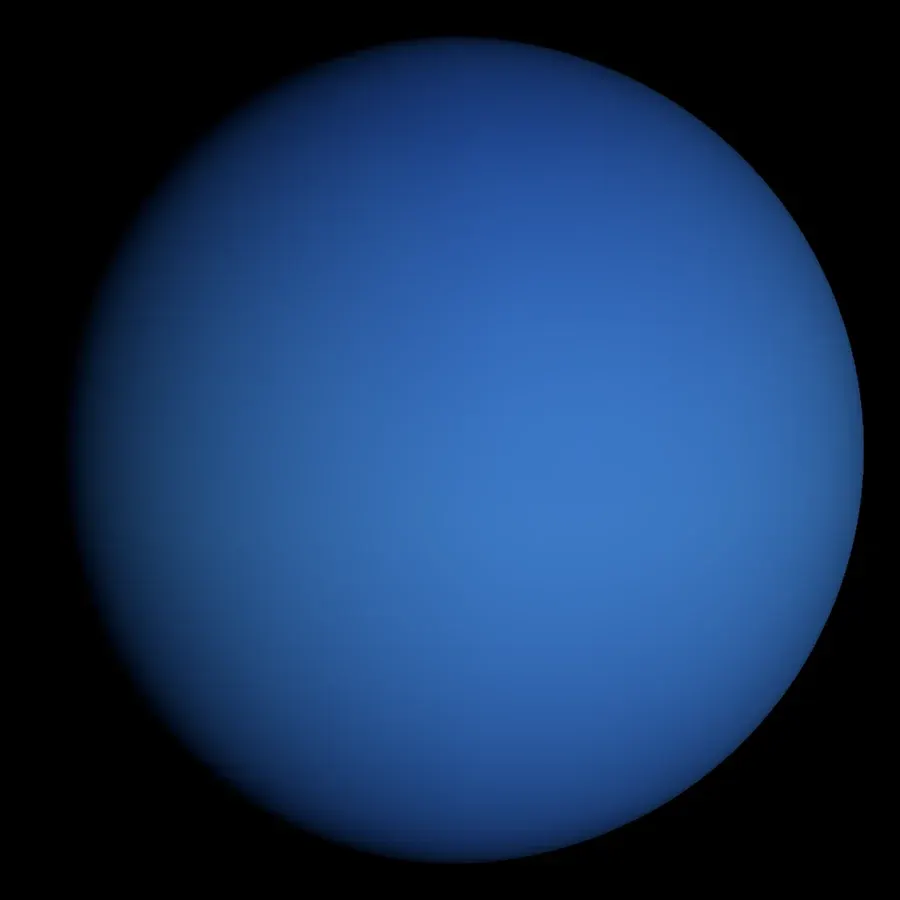 , open full size
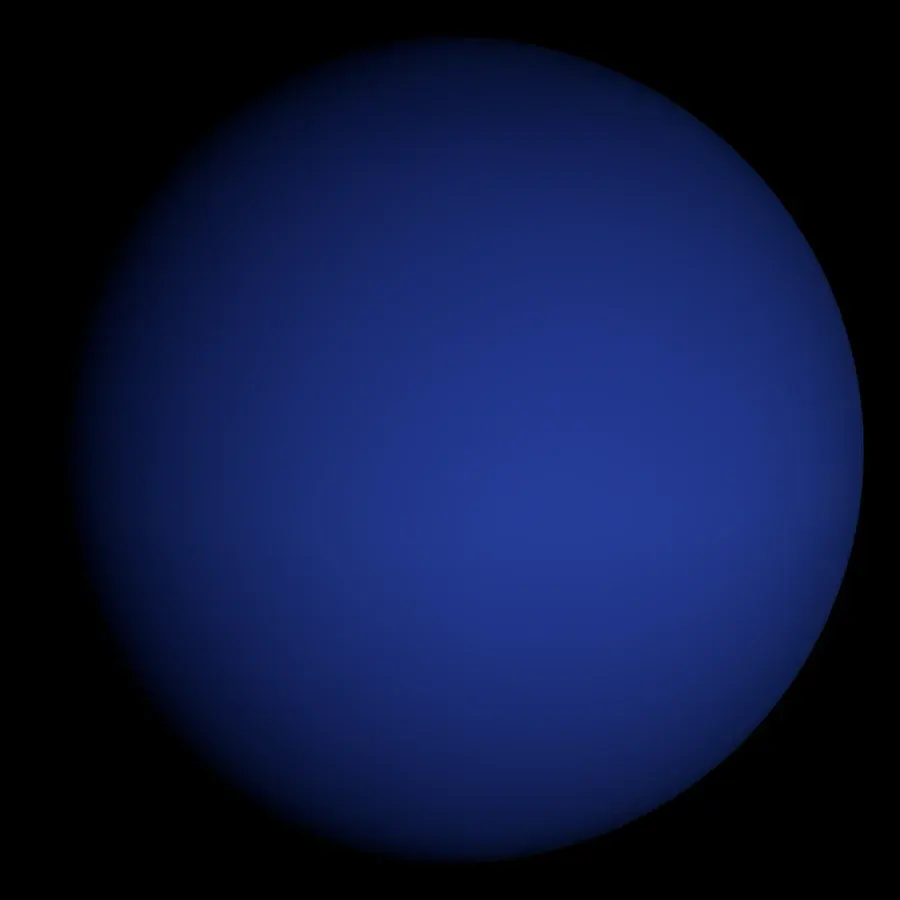 , open full size
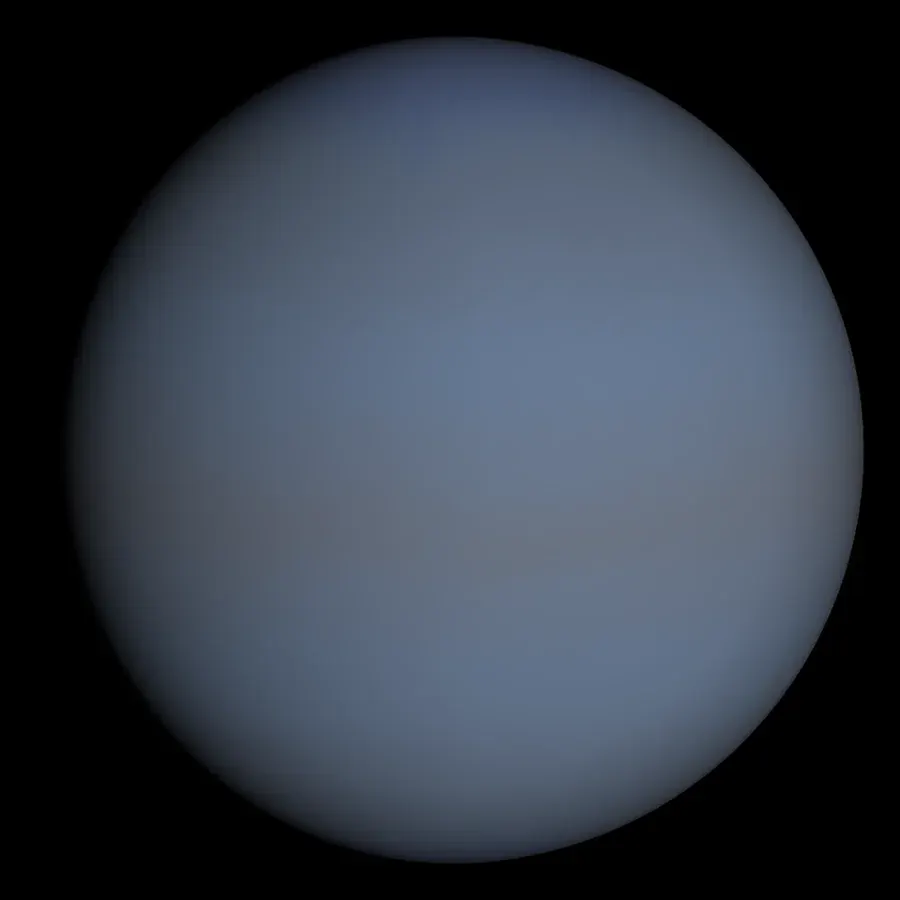 , open full size
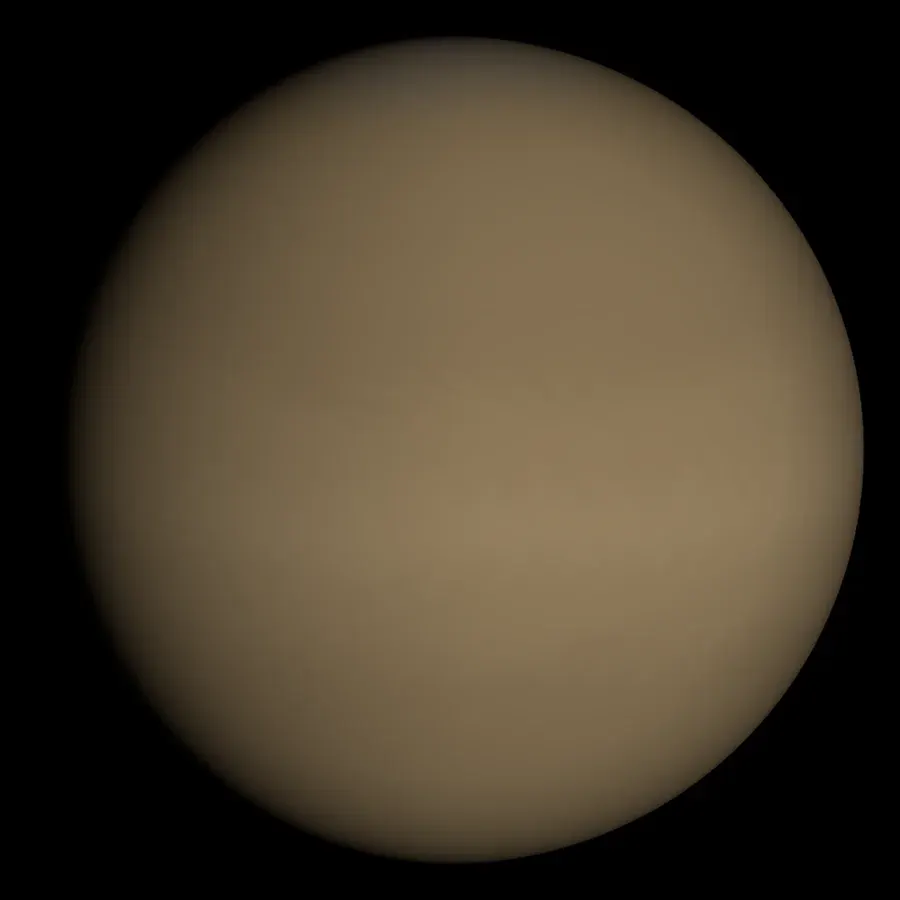 , open full size
Characteristics
From ammonia to water to clear air
The clouds a giant shows depend on which gases can condense in its upper atmosphere (see Cold gas giant for the three decks of Jupiter and Saturn). As a giant warms past about 150 K, the ammonia deck forms deeper and fades from view. Around 250 K, in the models, water condenses high enough to become the top cloud, and a giant covered in water-ice cloud would be the most reflective planet of any kind: Sudarsky's Class II model reflects 81% of the light that reaches it 1. It would look like a larger, whiter Venus with faint pale-blue bands and none of Jupiter's browns, because the coloured compounds that stain Jupiter's belts form above or among ammonia clouds, not water.
Above about 350 K, water no longer condenses in the upper atmosphere. Starlight penetrates deep. Hydrogen molecules scatter blue light back out, and sodium, potassium, methane and water absorb the red and near-infrared, so the model planet turns dark and blue, reflecting only about 12% of the incoming energy around a Sun-like star 1. With no cloud tops to trace the winds, it would look nearly featureless. Photochemical hazes, made by ultraviolet light breaking up methane and other molecules high in the atmosphere, can dull that blue toward grey or brown, and later models show how haze, metallicity and viewing angle move the colours of such planets around 2.
Normal sizes, useful densities
Many hot Jupiters are inflated beyond Jupiter's size by heat deposited in their interiors, but the effect switches off below an orbit-averaged stellar flux of about 2 × 10⁸ erg s⁻¹ cm⁻², roughly 150 times the sunlight Earth receives and an equilibrium temperature near 1,000 K 3. Temperate giants therefore have the radii their mass and composition predict. That makes them the best giants for weighing heavy elements: comparing a warm giant's measured mass and radius with structure models reveals how much rock and ice it contains, and more massive giants turn out to hold more heavy elements in total but a smaller fraction of their mass 4.
Eccentric orbits and neighbours
Warm Jupiters have more varied orbits than hot Jupiters. Many are eccentric, and about half of those found by Kepler have small planets orbiting close by, while hot Jupiters almost never do 5. That difference is one of the strongest clues to how giants reach the inner parts of their systems (below).
The most extreme case is HD 80606 b, whose orbit is so elongated (eccentricity 0.93) that its distance from its star changes by a factor of about 30 over its 111-day year. The Spitzer Space Telescope watched its atmosphere heat rapidly as it swung past the star 6; for most of its orbit it is a temperate giant and for a few days it is a hot Jupiter.
Formation and migration
Radial-velocity surveys found fewer giants with periods of about 3 to 10 days than with shorter or longer periods, a gap between hot and warm Jupiters called the period valley 7. Warm Jupiters are thought to reach their orbits in more than one way. Those with close, low-mass neighbours and circular orbits probably formed where they are, or migrated gently through the gas disc, since a violent history would have scattered their companions. Eccentric warm Jupiters may be hot Jupiters caught partway through high-eccentricity migration, in which a giant is flung onto an elongated orbit by another body and has its orbit slowly shrunk and circularised by tides raised at each close pass 5 8.
How we know
Warm Jupiters are found by radial-velocity surveys and, less often, by transits: a planet with a 100-day orbit is less likely to be aligned to transit and transits less often than one with a 3-day orbit. Their atmospheres are just starting to be measured. JWST detected methane throughout the atmosphere of WASP-80 b, an 825 K giant at the hot edge of this range, the gas the models expect to carry most of a temperate giant's carbon 9. Direct imaging reaches the same temperatures by another route: young giants still warm from formation reach the same temperatures by their own heat: GJ 504 b, at about 510 K, has colours that suggest a largely cloud-free atmosphere 10, and 51 Eridani b, at 600 to 750 K, shows strong methane and water absorption 11. One of the coldest giants imaged, epsilon Indi Ab at about 275 K, sits where water clouds might form, though it is warmed from inside rather than by its star 12. No temperate giant has yet had its reflected colour measured, so the white and blue worlds remain predictions.
A temperate giant at the right distance from its star could also host large moons in its star's habitable zone, whose habitability would depend on the planet's shadow, reflected light and tidal heating as well as on the star 13.
Notable examples
| Planet | Notes |
|---|---|
| HD 80606 b | Eccentricity 0.93, 111-day orbit; its atmosphere heats rapidly at each close pass 6 |
| WASP-80 b | 825 K; methane detected by JWST in both transmission and emission 9 |
| GJ 504 b | Young giant imaged directly; about 510 K and about 4 Jupiter masses, with colours that suggest few clouds 10 |
| 51 Eridani b | Young giant imaged directly; 600 to 750 K, strong methane and water absorption 11 |
| epsilon Indi Ab | About 275 K from internal heat; one of the coldest giants imaged, and a candidate for water clouds 12 |
See also
References
- 1Sudarsky, D., Burrows, A. and Pinto, P. (2000). Albedo and Reflection Spectra of Extrasolar Giant Planets. The Astrophysical Journal 538, 885-903. doi:10.1086/309160
- 2Cahoy, K. L., Marley, M. S. and Fortney, J. J. (2010). Exoplanet Albedo Spectra and Colors as a Function of Planet Phase, Separation, and Metallicity. The Astrophysical Journal 724, 189-214. doi:10.1088/0004-637X/724/1/189
- 3Demory, B. O. and Seager, S. (2011). Lack of Inflated Radii for Kepler Giant Planet Candidates Receiving Modest Stellar Irradiation. The Astrophysical Journal Supplement Series 197, 12. doi:10.1088/0067-0049/197/1/12
- 4Thorngren, D. P. et al. (2016). The Mass-Metallicity Relation for Giant Planets. The Astrophysical Journal 831, 64. doi:10.3847/0004-637X/831/1/64
- 5Huang, C., Wu, Y. and Triaud, A. H. M. J. (2016). Warm Jupiters Are Less Lonely than Hot Jupiters: Close Neighbors. The Astrophysical Journal 825, 98. doi:10.3847/0004-637X/825/2/98
- 6Laughlin, G. et al. (2009). Rapid heating of the atmosphere of an extrasolar planet. Nature 457, 562-564. doi:10.1038/nature07649
- 7Udry, S., Mayor, M. and Santos, N. C. (2003). Statistical properties of exoplanets. I. The period distribution: Constraints for the migration scenario. Astronomy & Astrophysics 407, 369-376. doi:10.1051/0004-6361:20030843
- 8Dawson, R. I. and Johnson, J. A. (2018). Origins of Hot Jupiters. Annual Review of Astronomy and Astrophysics 56, 175-221. doi:10.1146/annurev-astro-081817-051853
- 9Bell, T. J. et al. (2023). Methane throughout the atmosphere of the warm exoplanet WASP-80b. Nature 623, 709-712. doi:10.1038/s41586-023-06687-0
- 10Kuzuhara, M. et al. (2013). Direct Imaging of a Cold Jovian Exoplanet in Orbit around the Sun-like Star GJ 504. The Astrophysical Journal 774, 11. doi:10.1088/0004-637X/774/1/11
- 11Macintosh, B. et al. (2015). Discovery and spectroscopy of the young jovian planet 51 Eri b with the Gemini Planet Imager. Science 350, 64-67. doi:10.1126/science.aac5891
- 12Matthews, E. C. et al. (2024). A temperate super-Jupiter imaged with JWST in the mid-infrared. Nature 633, 789-792. doi:10.1038/s41586-024-07837-8
- 13Heller, R. and Barnes, R. (2013). Exomoon Habitability Constrained by Illumination and Tidal Heating. Astrobiology 13, 18-46. doi:10.1089/ast.2012.0859