A field guide to the giants
Pax Abyssi sorts every giant planet it generates into 41 types, from calm pinstriped Jupiters to worlds that glow by their own heat. This guide shows every one of them as our gas giant generator draws it, what you are looking at, the physics that paints it, and why we grow them rather than paint them.
By The Pax Abyssi team

A Turbulent cold giant in Pax Abyssi, two and a half planetary radii out, white oval storms in its belts and one of its moons at the edge of the frame.
Pax Abyssi
Arrive at a giant planet and almost everything you see is the top of one cloud. There is no ground, no ocean, no coastline. What reaches the eye is the highest layer of cloud the atmosphere can make, whatever has stained it, whatever haze lies over it, and the pattern the winds have drawn in it. Everything else about the planet, its mass, its interior, its age, shows only through that one surface.
Our classification of giant planets is built on that idea, and it is why Pax Abyssi can draw a galaxy of them from physics. Every giant the simulation generates is sorted into one of five families and 41 types by what a pilot would see, and each type has recipes our gas giant generator turns into weather. This is a tour of all of them: what you are looking at, and why it looks that way.
Reading a giant from the top down
The classification asks four questions, in the order the physics answers them.
What is it made of? A gas giant, like Jupiter or Saturn, is mostly hydrogen and helium. An ice giant, like Uranus or Neptune, is mostly water, methane and ammonia under a thinner envelope of hydrogen. They are different kinds of planet and separate series in the game, each with its own physics engine.
How warm is it? This is the question that matters most, because temperature decides which substances can condense into cloud, and the highest cloud decides the face. Cold gas giants lie below 150 K, temperate ones between 150 and 700 K, hot ones from 700 K up; ice giants split into a cold family like Uranus and Neptune and a hot family above 350 K. The same sequence of clouds (ammonia, then water, then none, then rock under absorbing sodium and potassium, then rock high enough to see) is the backbone of the five classes David Sudarsky, Adam Burrows and Philip Pinto proposed in 2000 1. Their scheme stops at this question; ours goes on to two more, and "The colours of the giants" maps every one of our subtypes to its nearest Sudarsky class.
What colours or hides the cloud? Here each family asks its own question, because a different physical process is in charge. In cold gas giants it is trace chemistry, which sets the stains. In temperate ones it is haze, the smog ultraviolet starlight makes from methane. In hot ones it is the dayside temperature, which walks a planet through a sequence of condensing minerals. In cold ice giants it is the heat escaping from inside, which decides whether the weather is violent or veiled.
What is the weather doing? The last level separates planets that share their chemistry and differ in their jets and storms: a calm young Jupiter from a storm-torn old one, a thin haze from a thick one.
After that, every giant is its own. The generator gives each planet a random seed and one of up to four variants of its type, so two worlds of the same type share a character and differ in their weather.
From painted maps to procedural planets
Our first simulator dressed its giants in painted maps: a picture for each type, wrapped around the sphere and painted to match our research on that type. The painted maps gave beautiful fine detail. They also had two limits that no amount of painting could fix. A given map always looks the same, so every giant of a type was the same planet, however many of them the galaxy held. And a map holds a fixed number of pixels, so the closer you fly, the softer it gets, until the picture breaks down into blur.
Procedural generation promises to lift both limits: planets computed from rules, each one different, with as much detail as you are willing to compute. In practice procedural planets tend to look alike, and to look dull, smooth noise stretched into stripes. So we set our generator a harder target than variety. Every interesting feature the painted maps carried had to grow out of the modelled physics: the belts and zones, the festoons that hook off Jupiter's equatorial zone, hooked vortices, great spots, Saturn's polar hexagon, layers of haze. Each look was then matched to its painted original. The sliders in this guide set the two side by side.
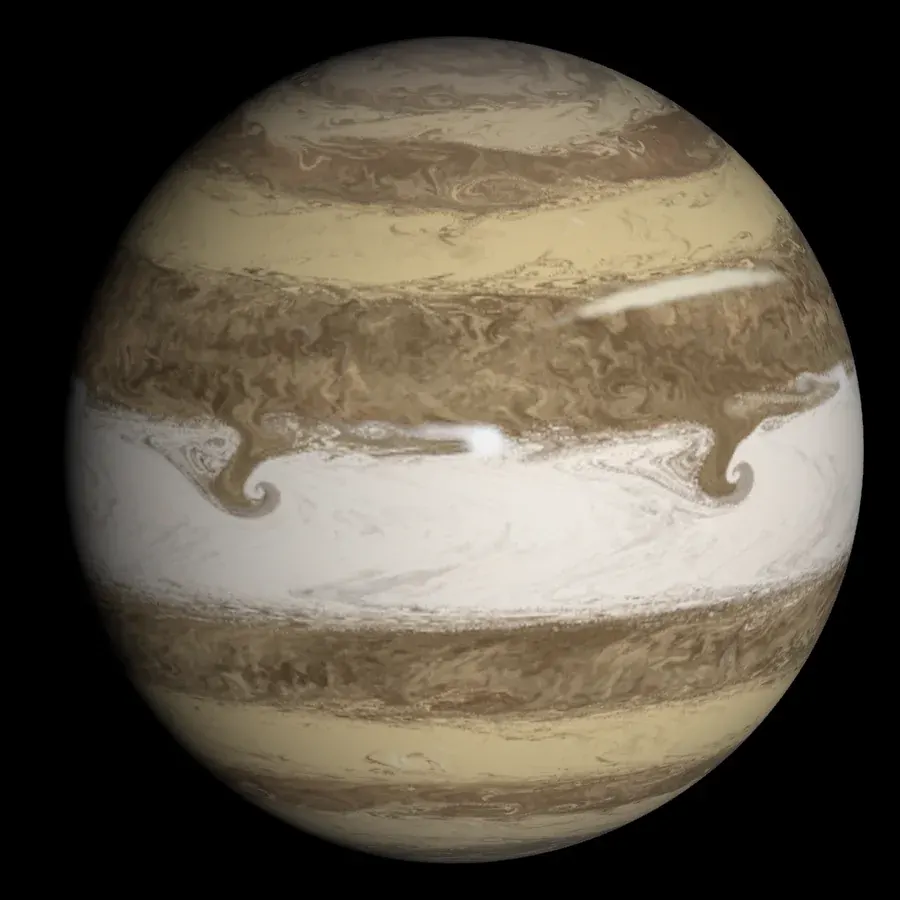
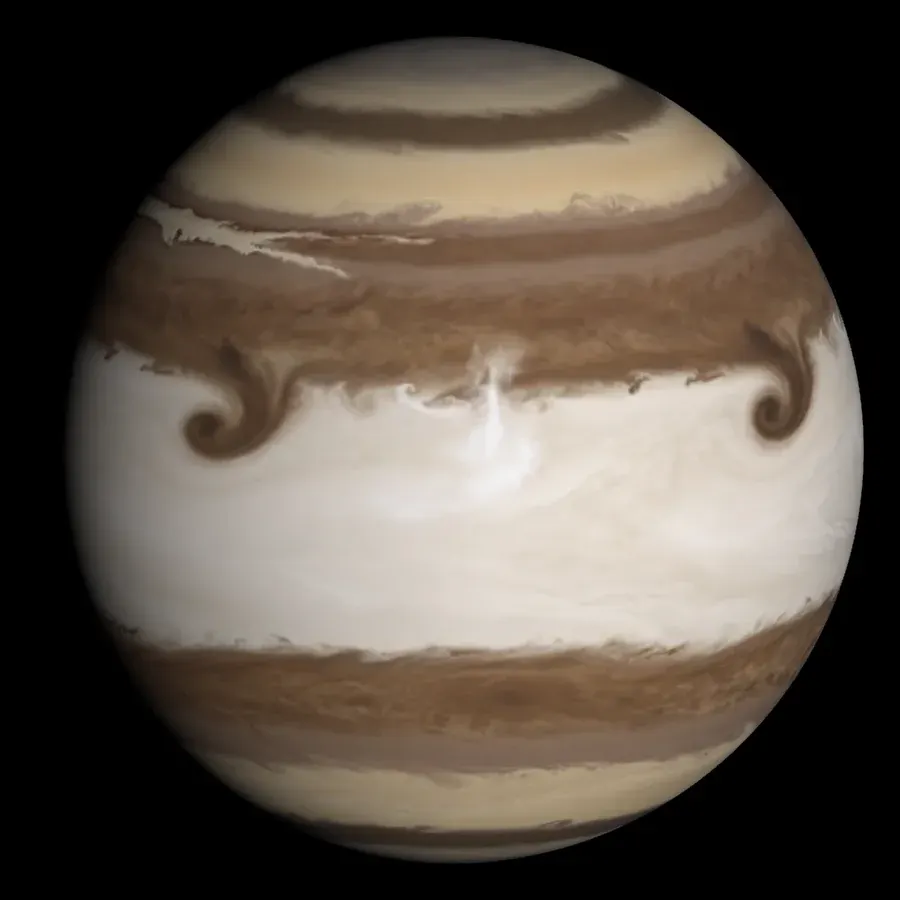
Two things change. Every giant is now its own world: planets of one type share a character, and each planet's own seed gives it its own weather. And the detail holds as you close in, because the weather can be computed again, finer, wherever you are looking, so you can skim low over the cloud tops and they stay sharp. The same approach carries over to rocky worlds, where it takes a ship from orbit to the ground without a break and gives it a whole planet to walk.
How the generator paints a giant
The generator starts from a written description of each type, drawn from the game's science documents: its band colours, how many belts and zones, its storms, the chemistry of its cloud decks, and the papers behind them. From that it builds a wind for the planet.
The wind is the part that makes the pictures look like weather. At every boundary between a bright zone and a dark belt runs a narrow jet, eastward on the zone's poleward edge and westward on its equatorward edge, so that zones turn one way and belts the other, as spacecraft have measured on Jupiter and Saturn 4. Each jet is flanked by a staggered row of vortices, the pattern Voyager filmed along Jupiter's jets, and the jet snakes between them, which is what scallops the edges of the bands. Eddies are added at many sizes, and the named storms from the description are placed as vortices whose cores trap their own air and colour.
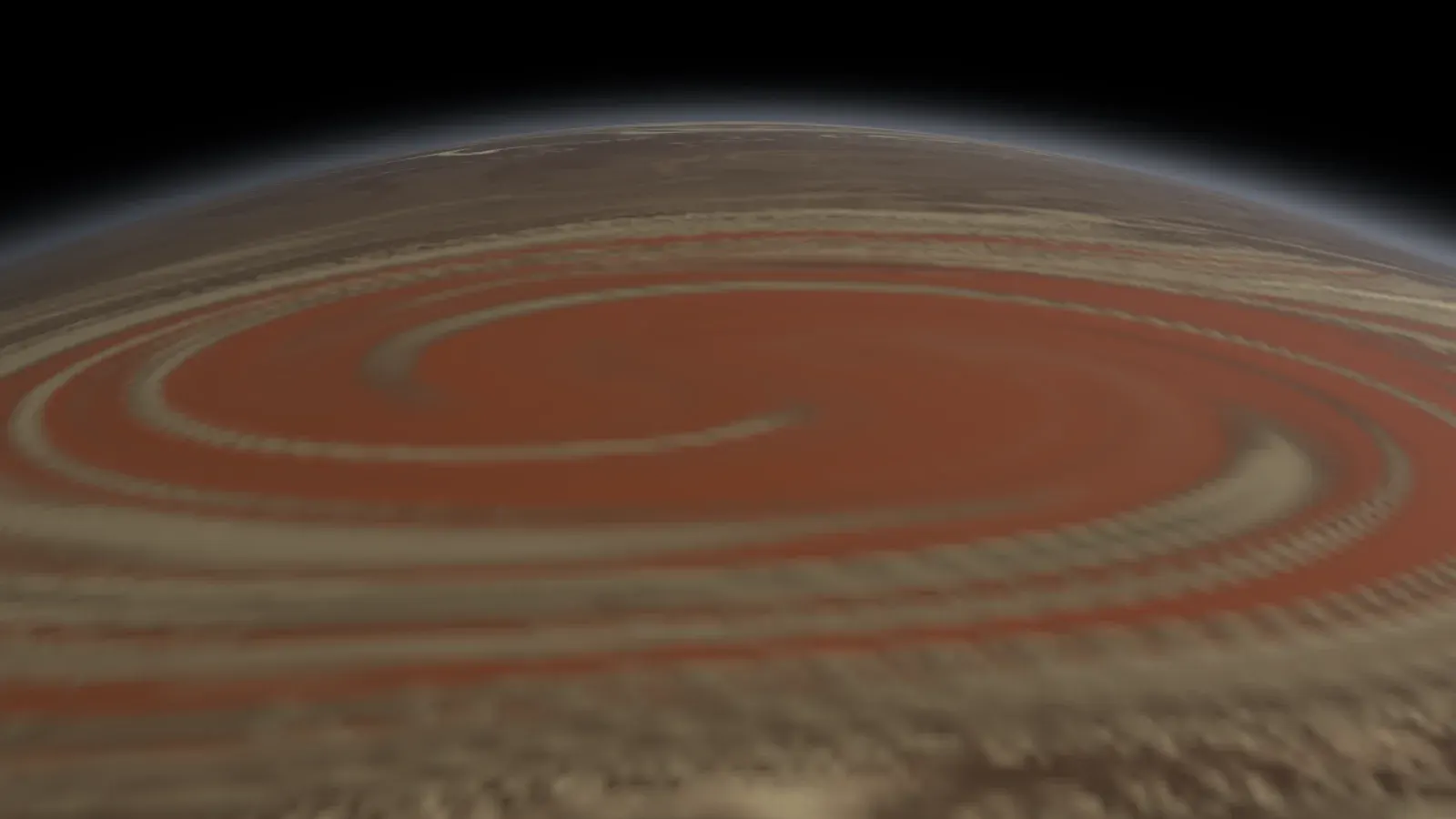
Then, for every point on the planet, the generator follows the wind backwards for forty steps of simulated time and reads the cloud where that parcel of air began. Belts roll up where vortices caught their edges. Plumes grow sheared tails because the jets drew them out. A great storm winds its surroundings into spiral arms because it turns in the shear of its own latitude. None of those shapes is painted; each is where the modelled wind carried the cloud.
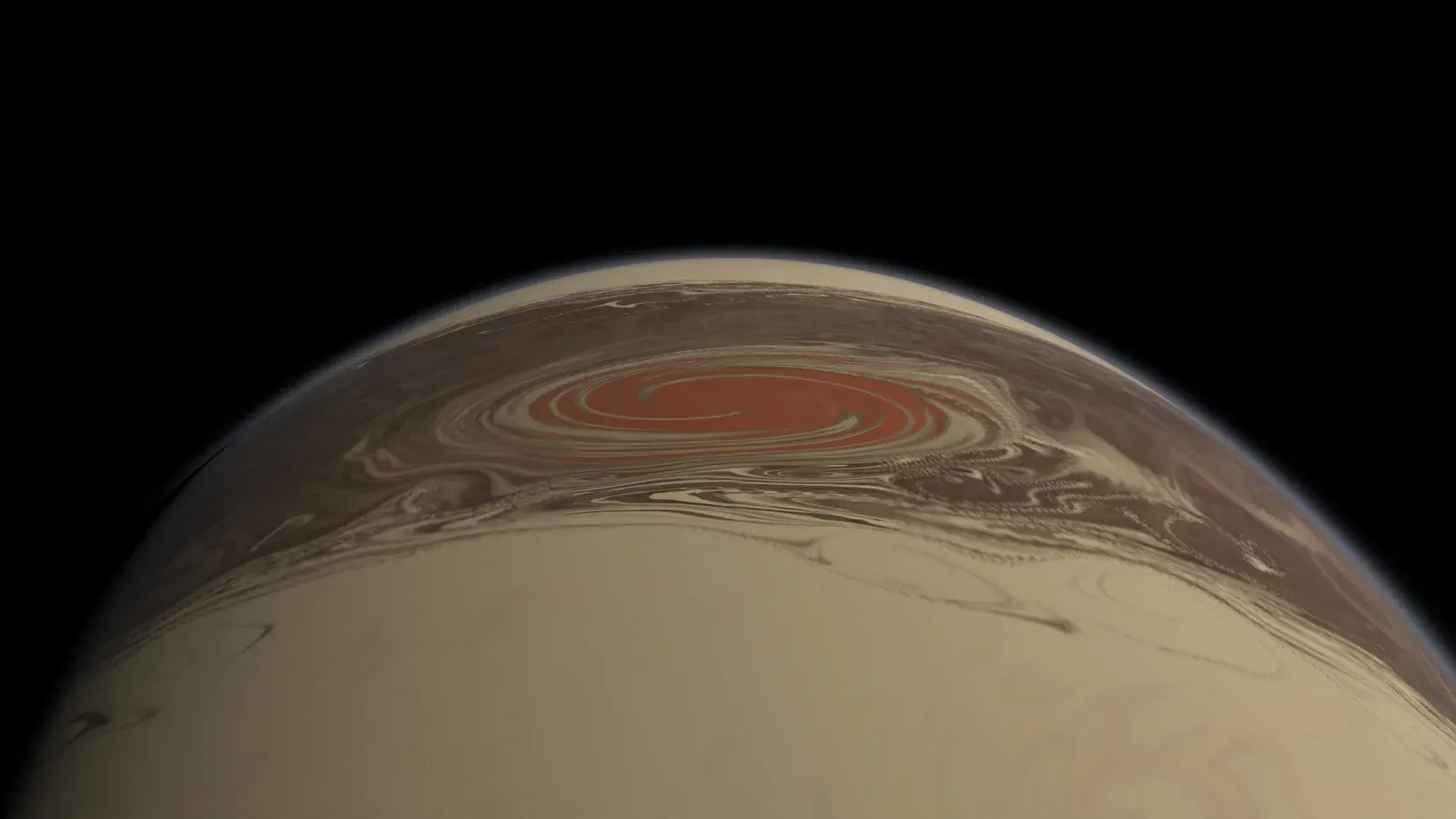 , open full size
The cloud itself is one quantity: how high the cloud tops stand. Zones are high, thick ammonia ice; belts are deep and stained. Where the flow lifts a patch of belt air, it takes the zone colour, so a plume in a belt is white, and every gradient the wind has sharpened becomes a crisp filament. A separate staining field carries the chromophores, and a thin haze above everything scatters light at the limb, where the disc darkens toward its edge by Minnaert's law 5.
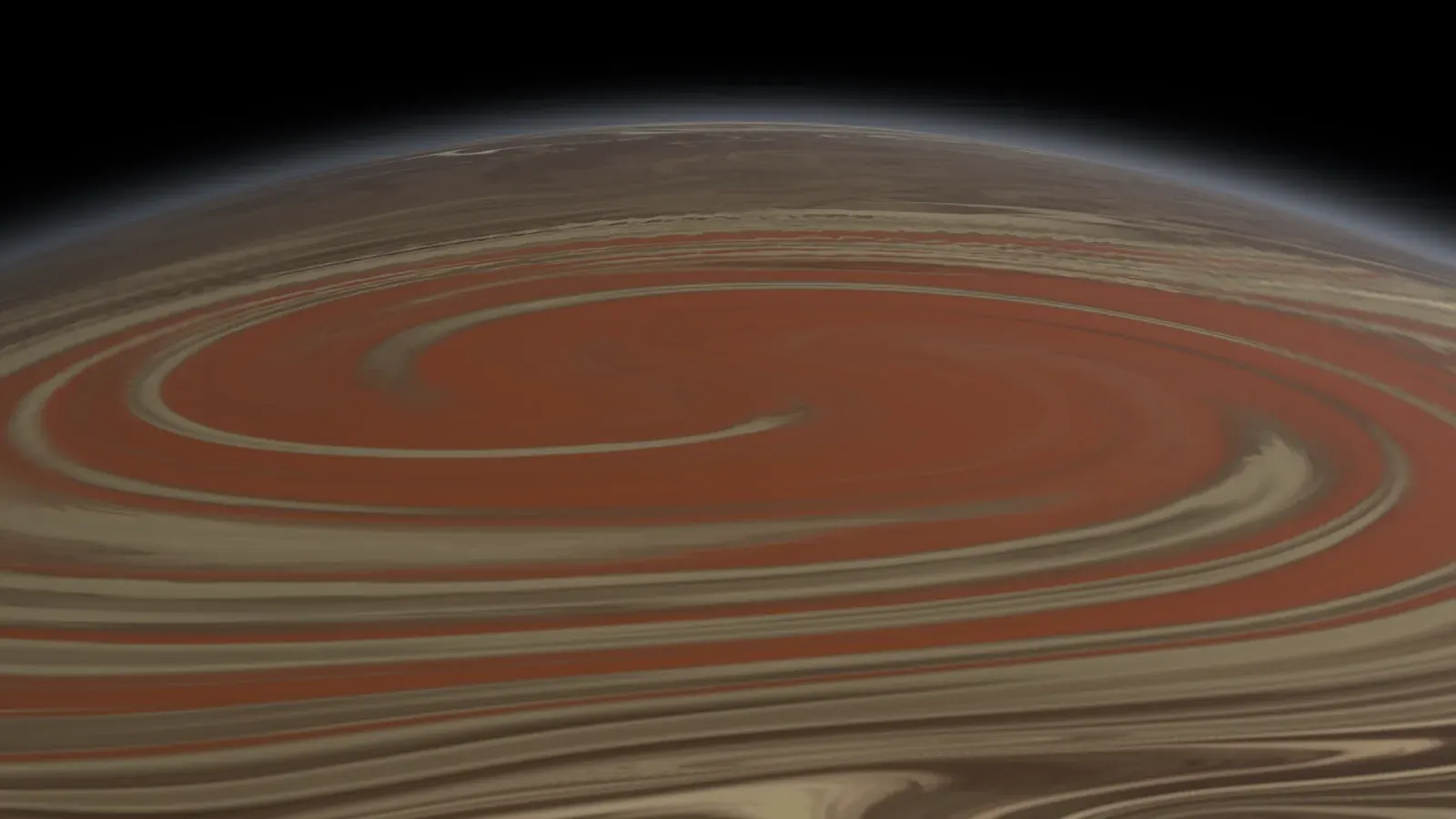
Because the weather is a calculation and not a painted map, it can be run again at any resolution. On a planet the size of Jupiter the global map has a pixel about 110 kilometres across. As a ship closes in, the game computes finer patches beneath it, each about four times finer than the last, down to about 210 metres a pixel, with smaller eddies that the global map is too coarse to hold.
The cold giants
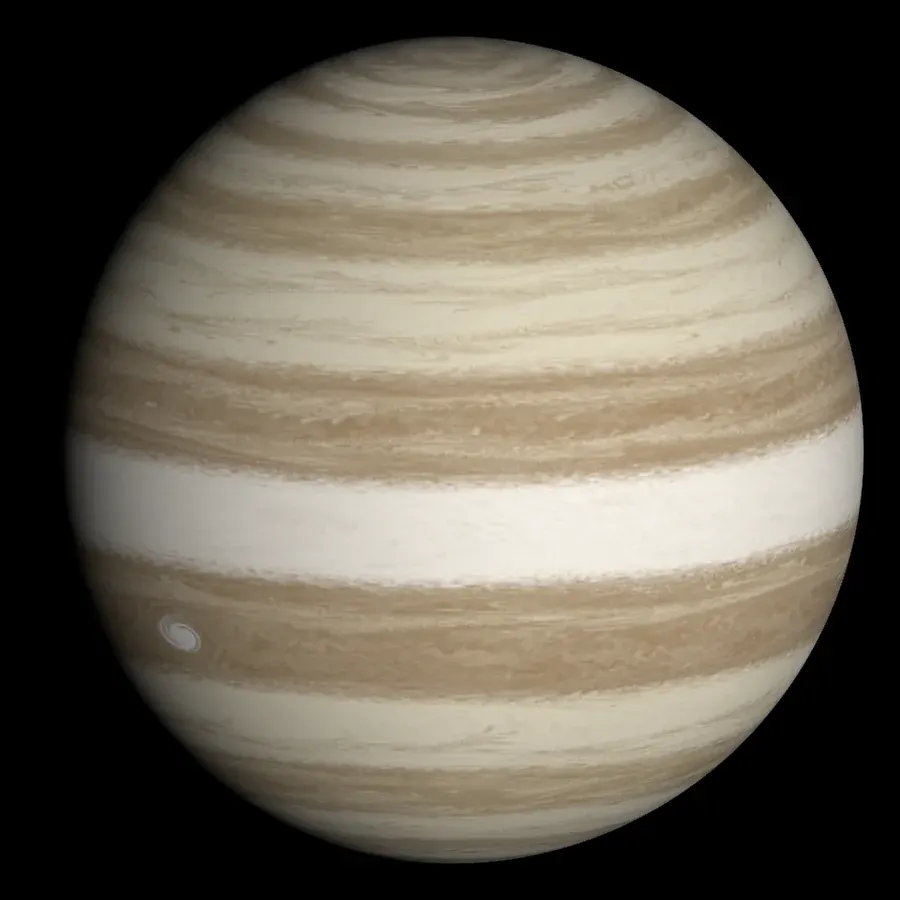
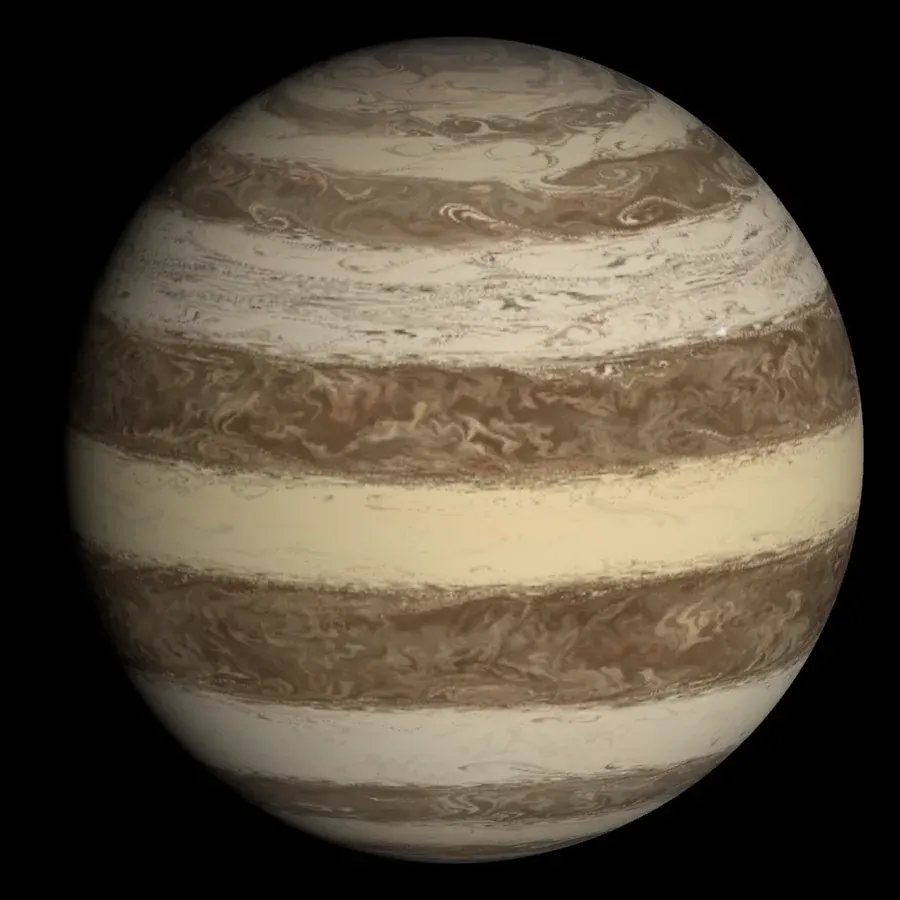
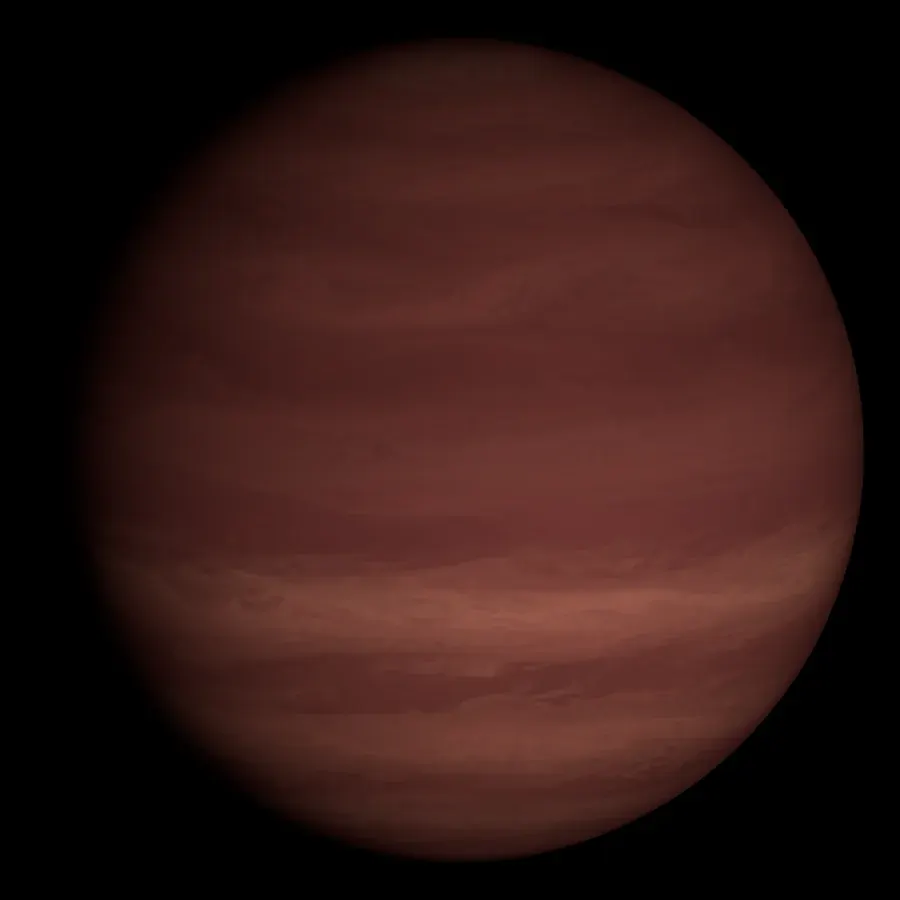
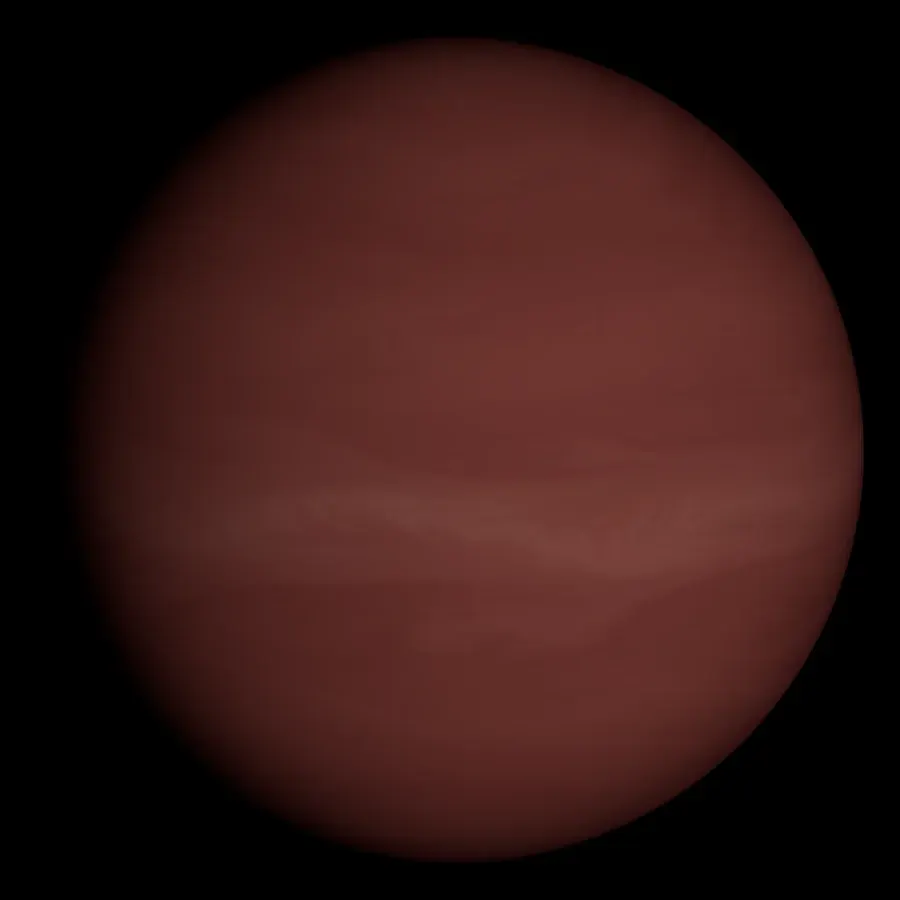
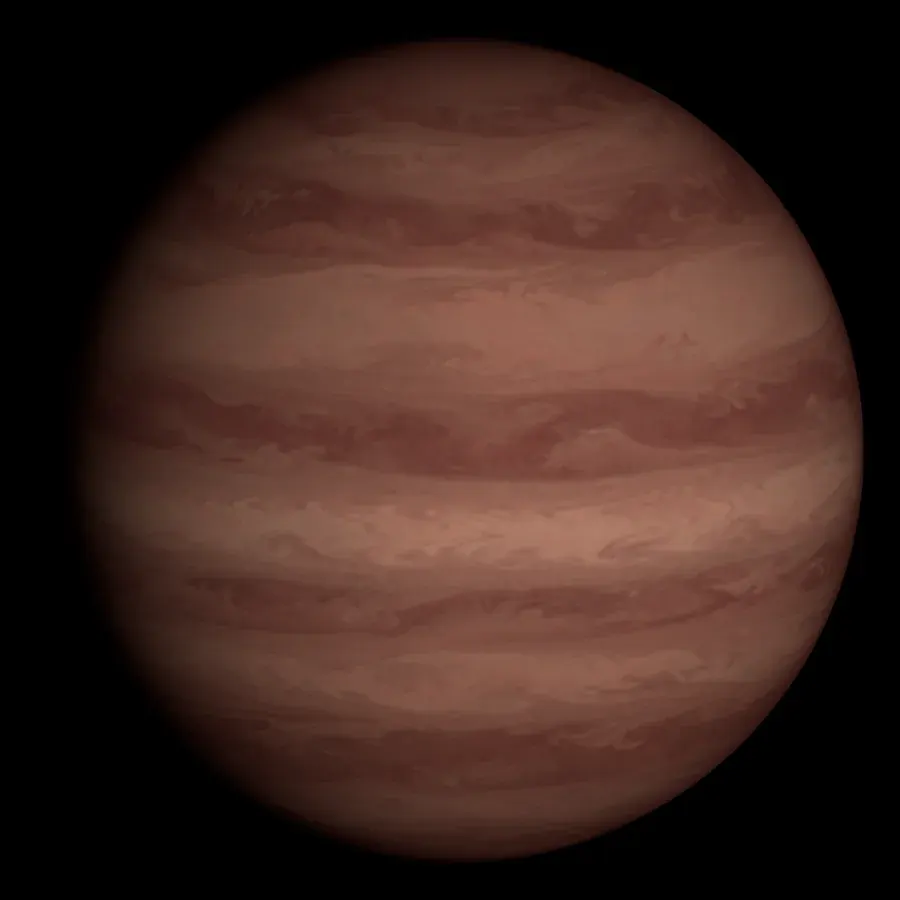
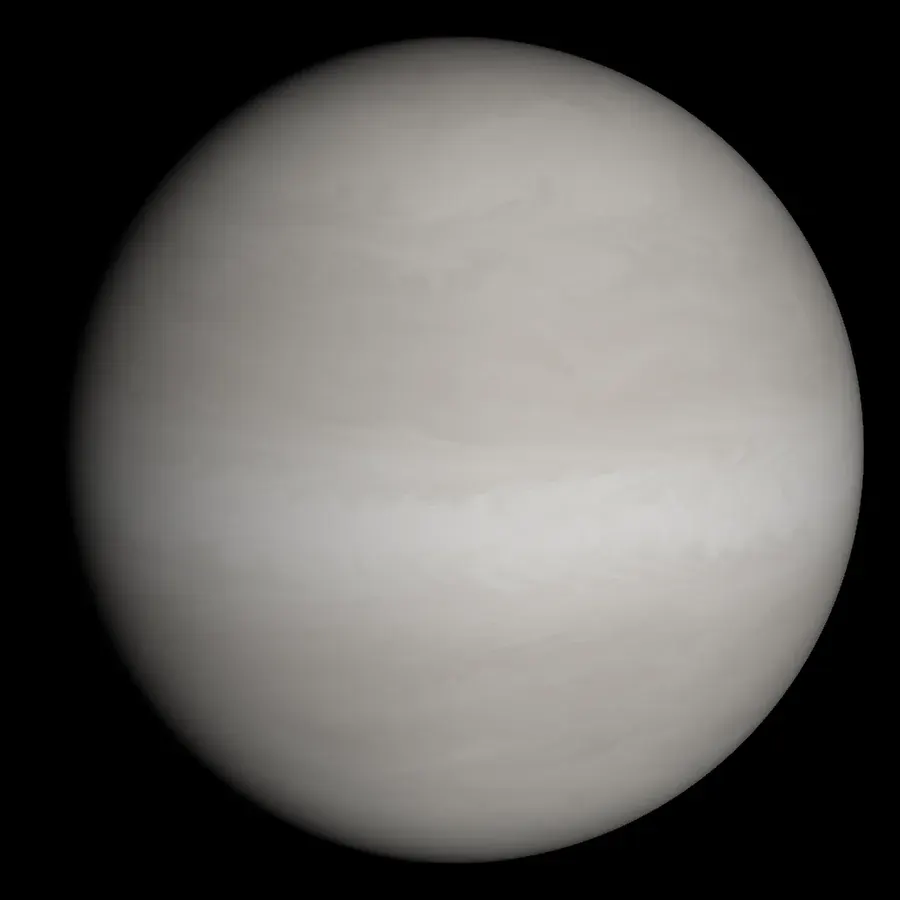
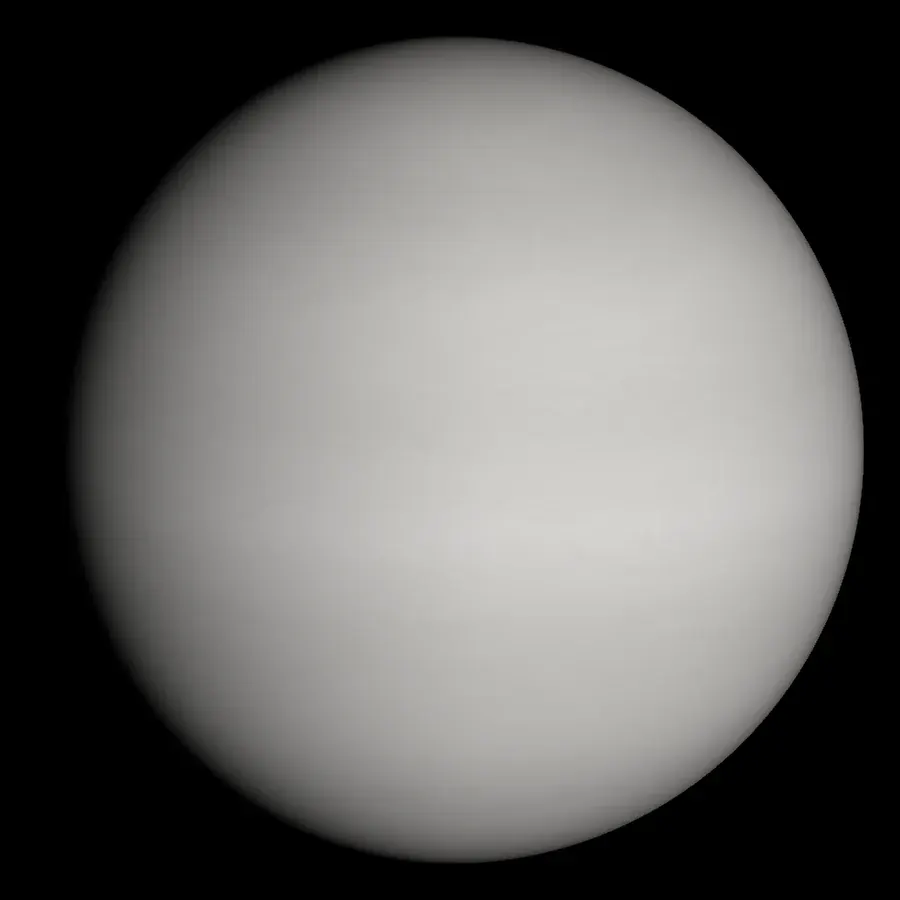
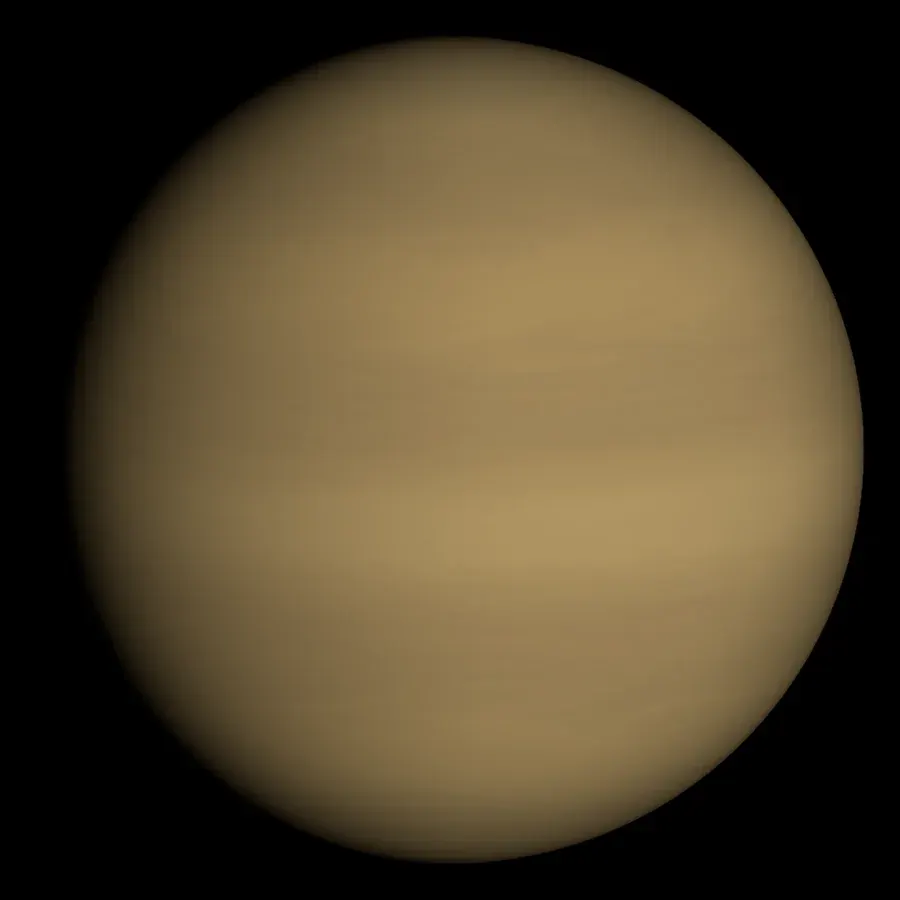
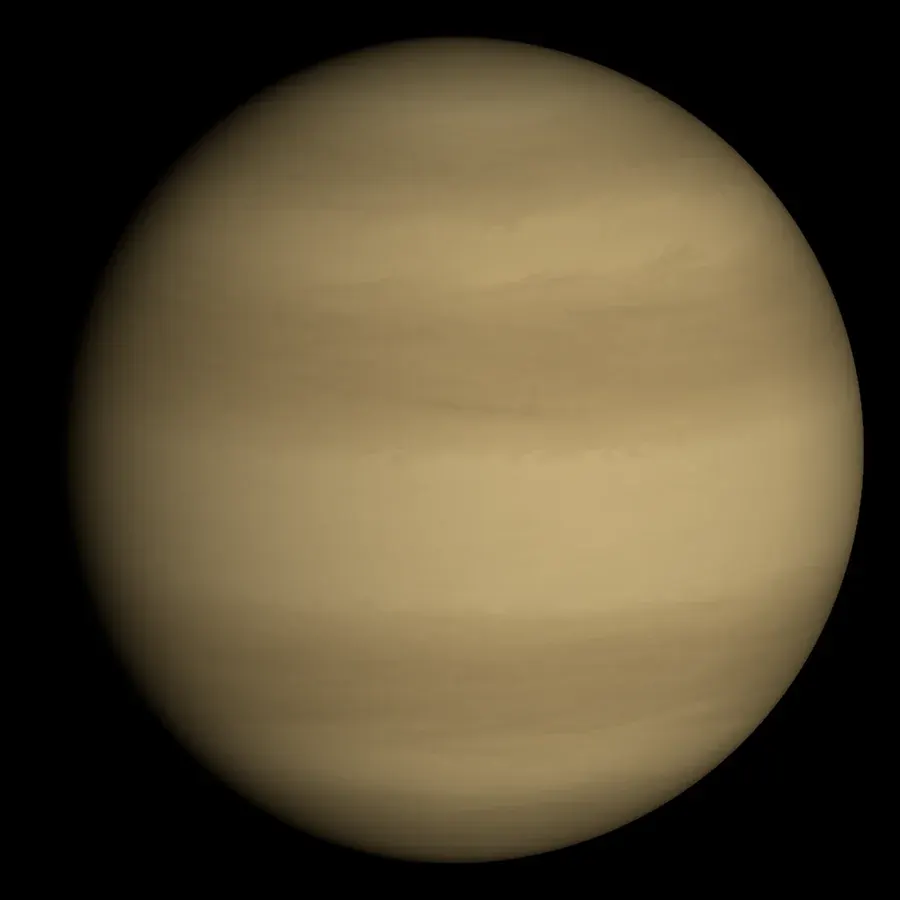
Ten types, all with ammonia ice on top. Sudarsky's scheme has one class for all of them, Class I; ours has four subtypes and ten types, because what separates them, what stains or veils that white deck, is what a pilot sees. The real colouring agents on Jupiter, the chromophores, have not been identified: a leading laboratory candidate forms when sunlight breaks up ammonia and the fragments react with acetylene 6, and sulfur and phosphorus compounds are other candidates. We turn that open question into a rule. A giant rich in ammonia bands cream and brown, like Jupiter; one rich in hydrogen sulfide wears a gold haze, like Saturn; one rich in phosphine a rust-red haze; and a giant poor in all three stays pale. The chemistry the physics engine computes for a planet decides its colour.
 , open full size
 , open full size, open full size
 , open full size
 , open full size
 , open full size
 , open full size
 , open full size
 , open full size
 , open full size
Within each chemistry the weather sets the type. Calm Banded giants are young, their belts still light ochre and their jets laminar. Storm Active ones are older and darker, their belt edges scalloped and a great red anticyclone lifting coloured material above the ammonia cloud. The Phosphine-Ruddy family runs from a thin veil, through which the bands still show, to a haze so thick the planet reads as one deep brick-red globe.
The temperate giants
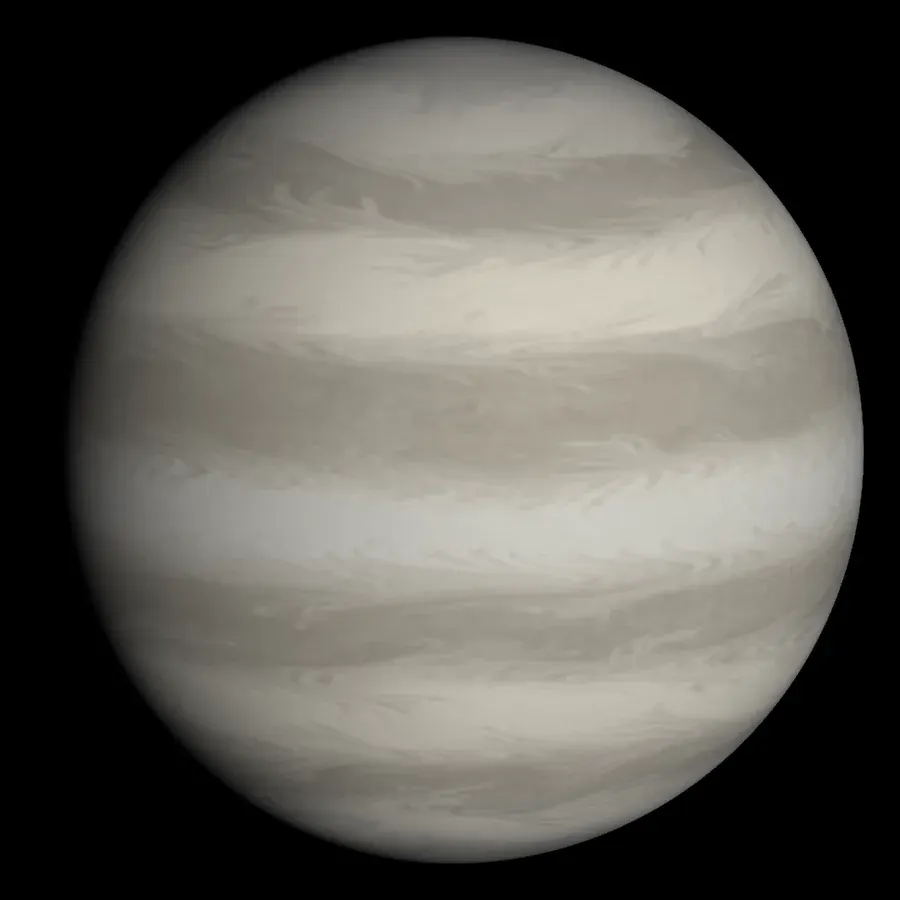
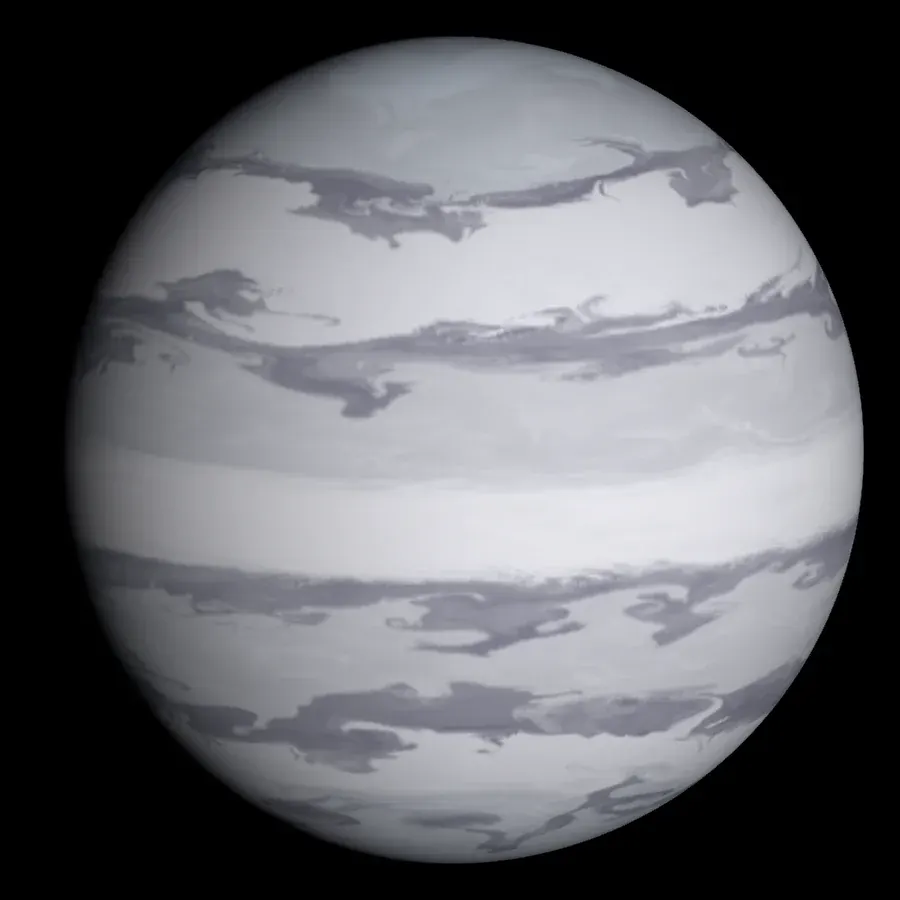
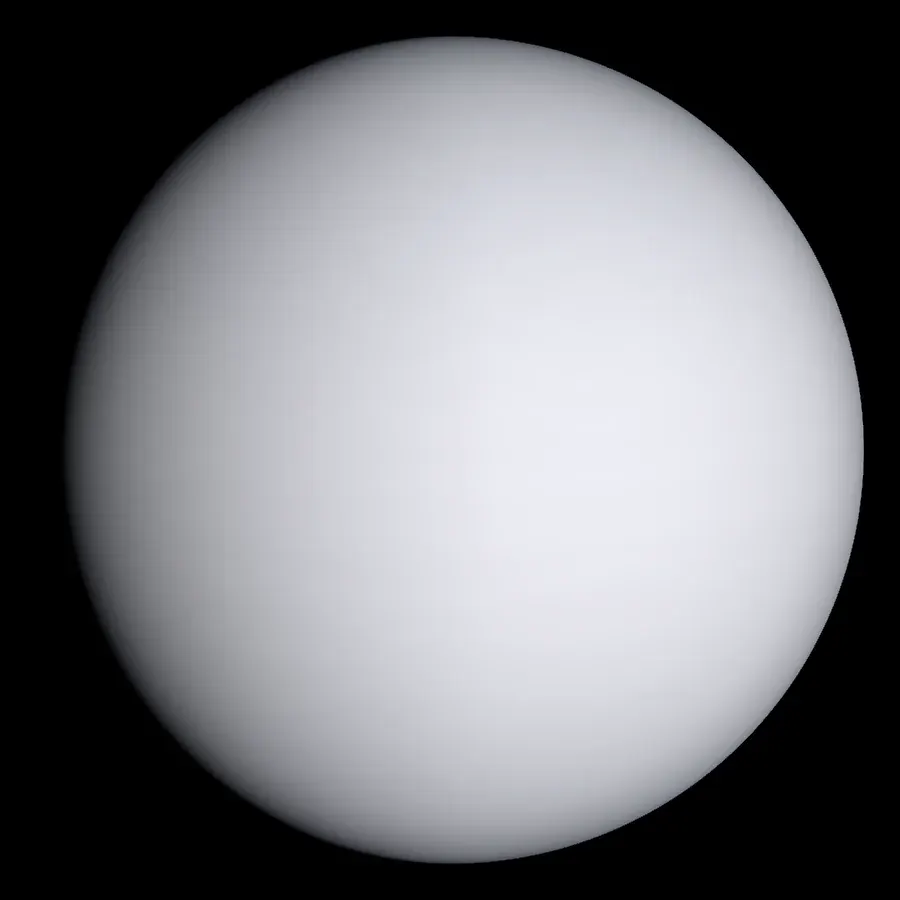
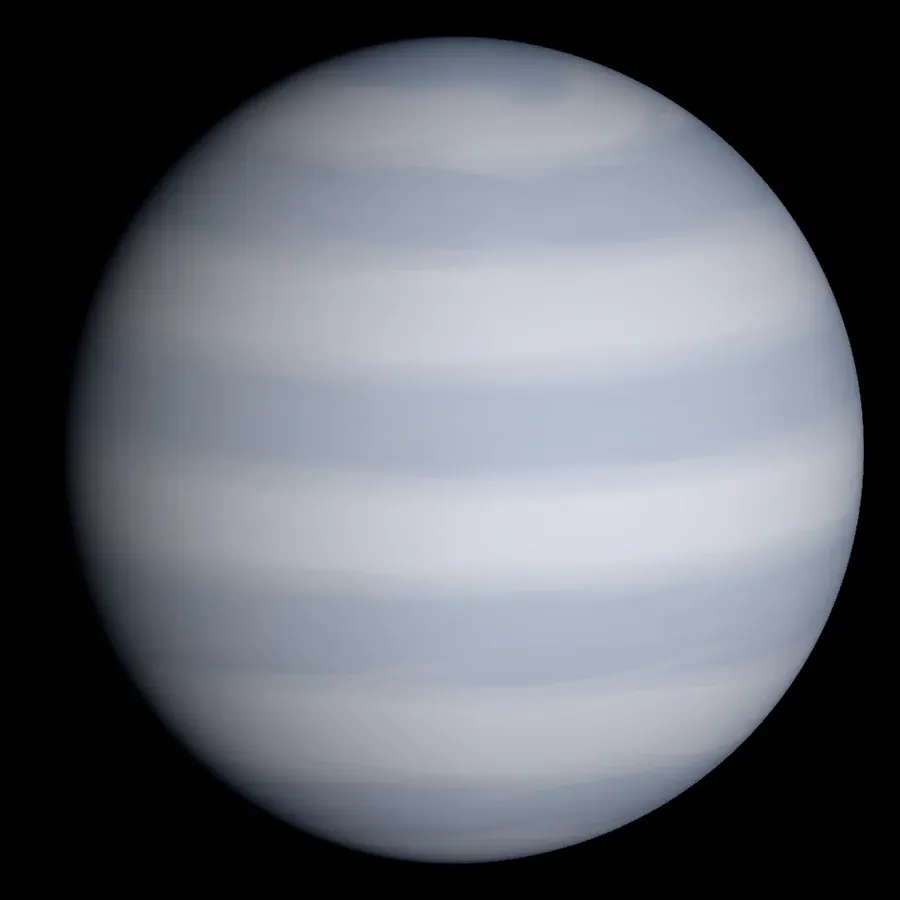
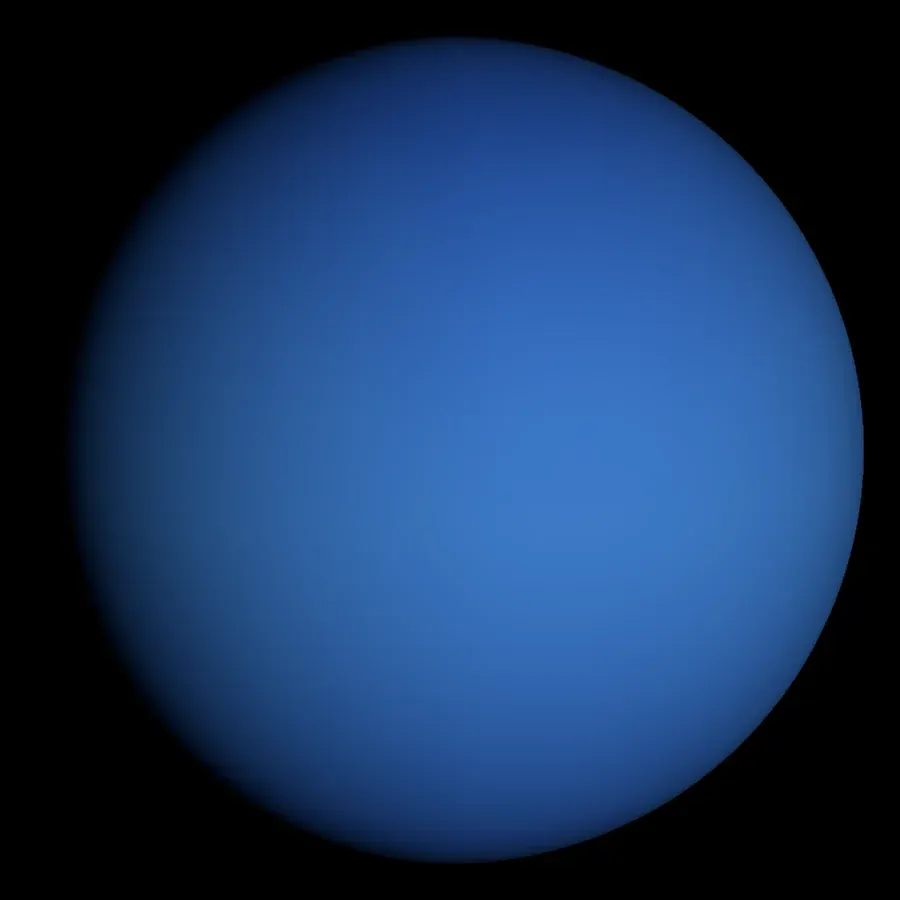
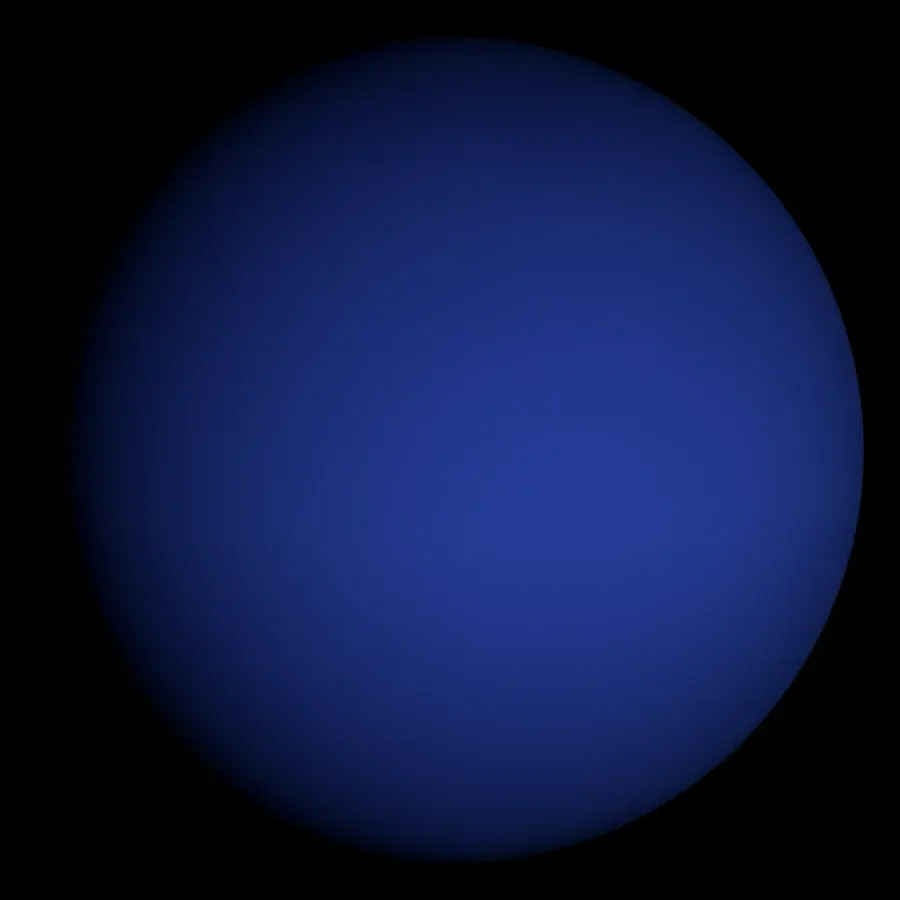
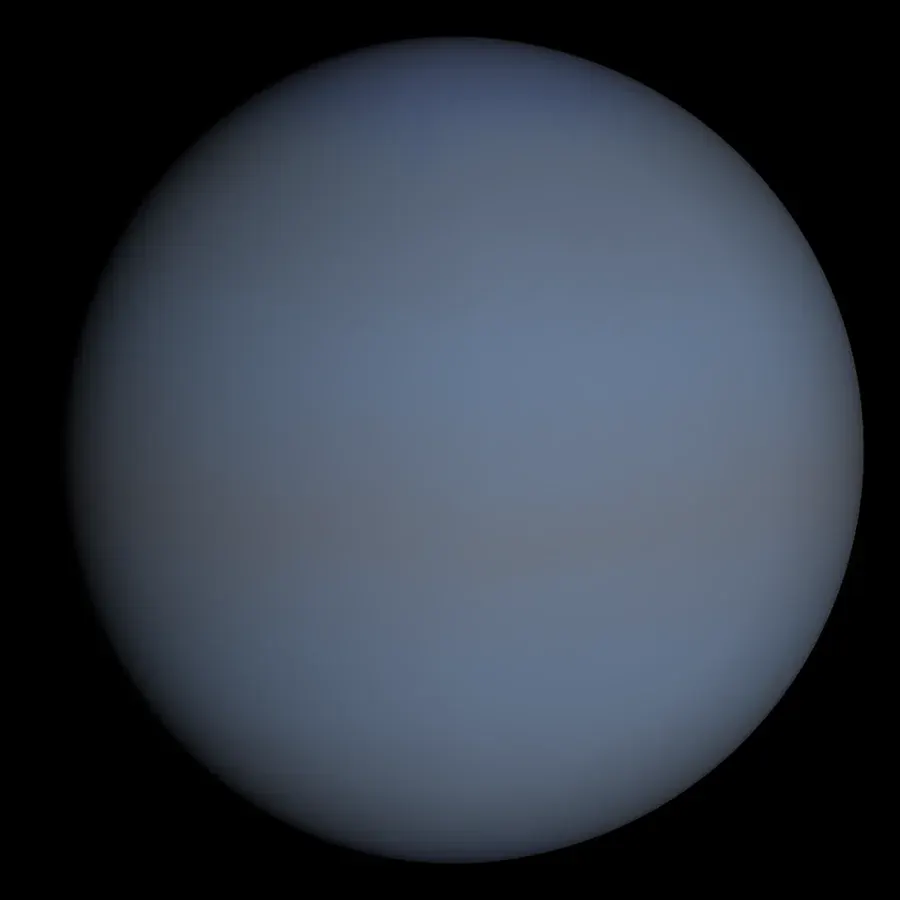
Between 150 and 700 K a giant changes more than anywhere else, and the eight temperate types follow it through. This one family spans two of Sudarsky's classes, II and III, and the changeover between them. First the ammonia cloud sinks and thins, and the bands bleach. Then, near 200 to 250 K, water starts to condense high enough to become the top cloud, breaking through the grey in brilliant white patches. A planet covered in water-ice cloud would be the most reflective of any kind: Sudarsky's model for it reflects 81 per cent of the light that falls on it 1. Above about 350 K the water evaporates too, and nothing condenses high in the atmosphere at all. Starlight sinks deep, hydrogen scatters the blue back and methane absorbs the red, and the planet turns a dark, featureless azure.
 , open full size
 , open full size
 , open full size
 , open full size
 , open full size
 , open full size
 , open full size
 , open full size
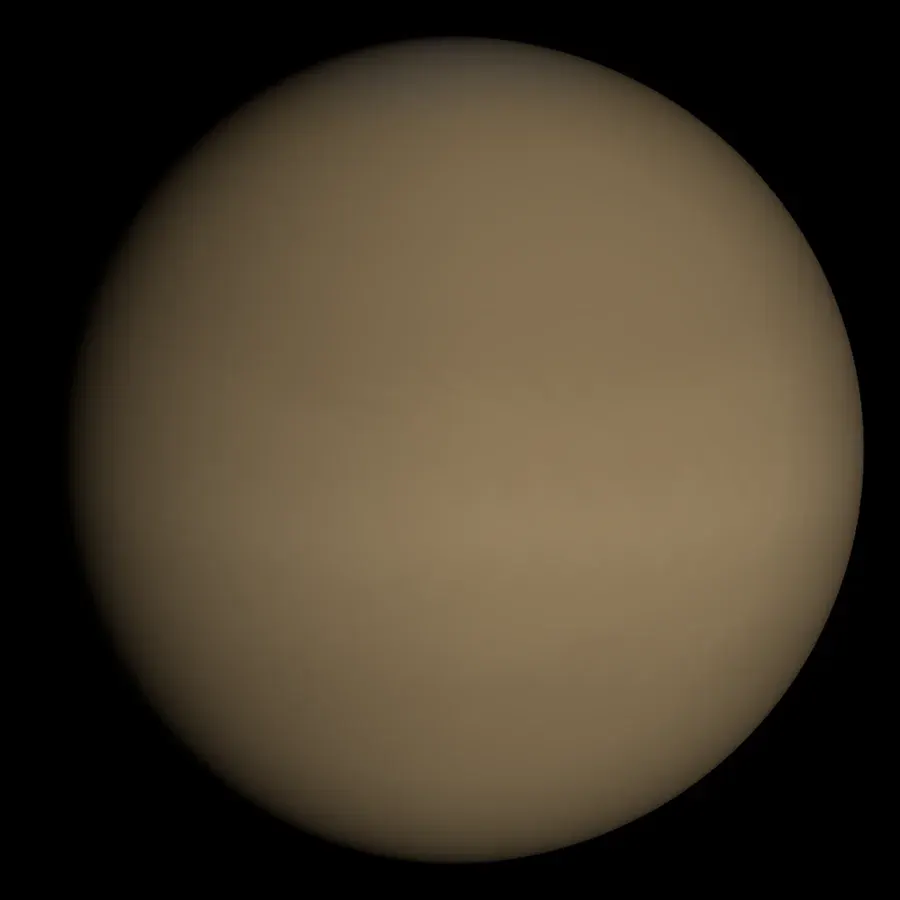
Photochemical haze complicates the blue end. Ultraviolet light breaks methane apart high in the atmosphere and the fragments build smog, which greys the blue and, when it is thick, buries it under tawny brown 7. Haze grows with the star's ultraviolet output and the planet's metallicity, so in the game most giants warmer than 350 K end up hazy and the vivid blue ones are rare finds. No real giant in this temperature range has yet had its colour measured by a telescope.
The blue giant has no bands because it has no cloud high enough to trace its winds. The jets and storms are all still there, turning, invisible.
The hot giants
From 700 K up the cloud sequence continues into minerals, through the range of Sudarsky's Classes IV and V. Sulfides and salts condense first, then silicate rock, then iron, and at the top of the range no cloud survives at all 3 8. Most hot Jupiters measured so far are very dark, darker than Sudarsky's brightest predictions, because sodium, potassium and molecules such as water soak up the light before it can reflect 1. Our hot giants follow the measurements.
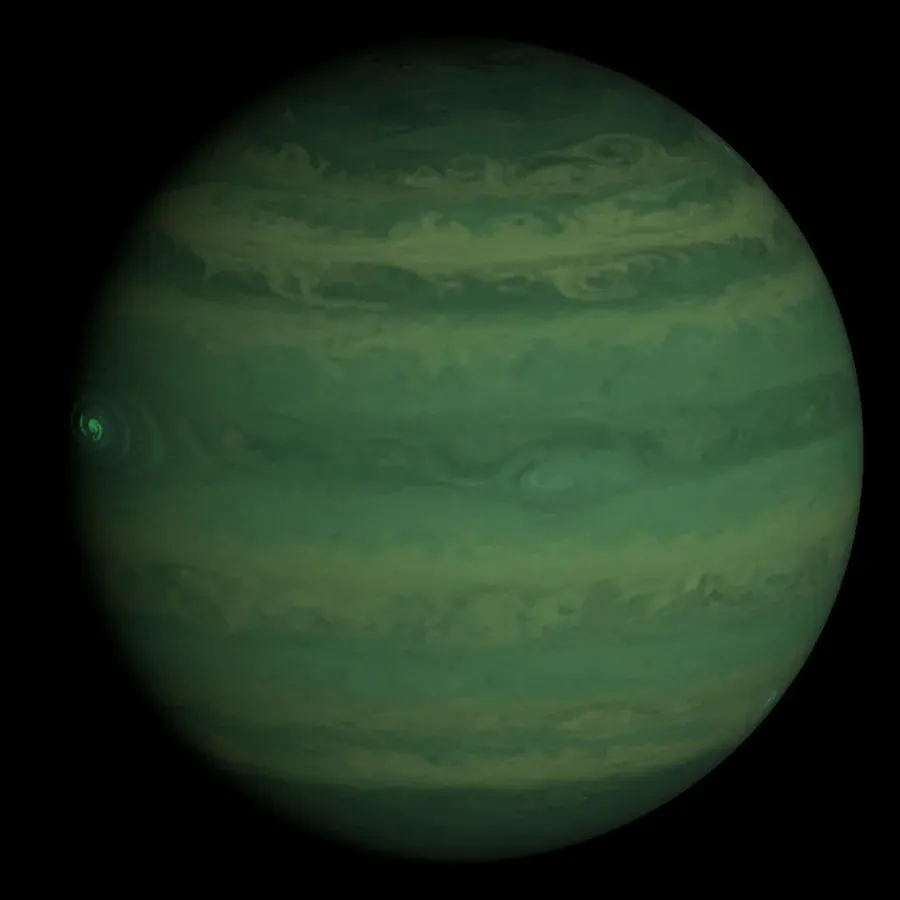
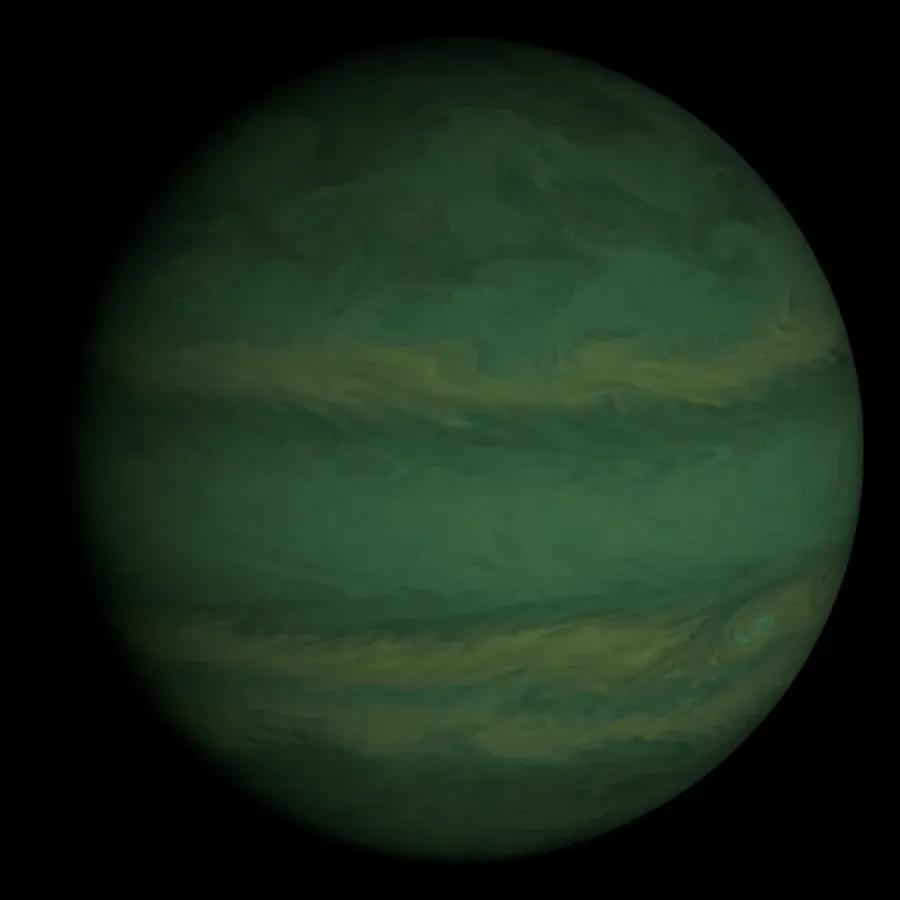
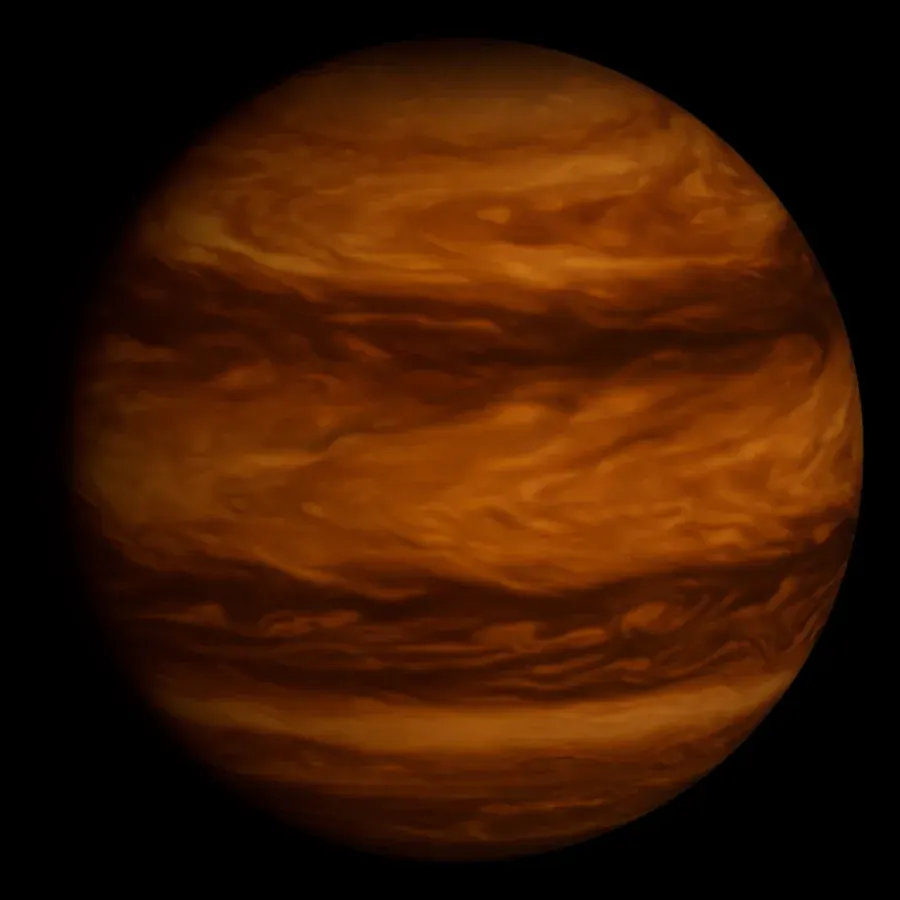
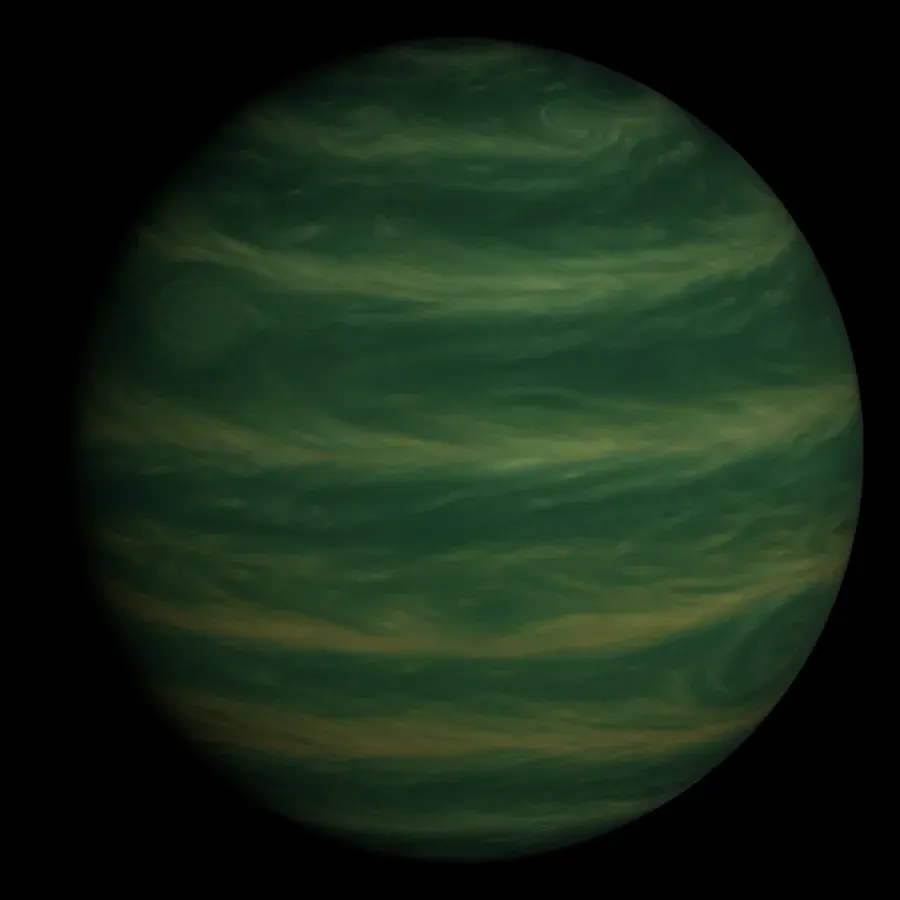
The simulation sorts hot giants into six subtypes by dayside temperature: Methane-Jade, Silicate-Sapphire, Ferro-Copper, Opaline, Ashen and Ultra-Dark. The coolest, Methane-Jade, is our boldest palette: methane still survives there, it absorbs red light, and we draw the result as green, a colour no telescope has measured on a real planet. Silicate-Sapphire takes the deep blue Hubble measured on HD 189733 b, where a high haze scatters blue light and sodium absorbs the rest 9. Ferro-Copper is hot enough that iron is vapour by day and condenses where the air cools, as it is thought to on WASP-76 b 10. The hottest, Ultra-Dark, reflects almost nothing.
 , open full size
 , open full size
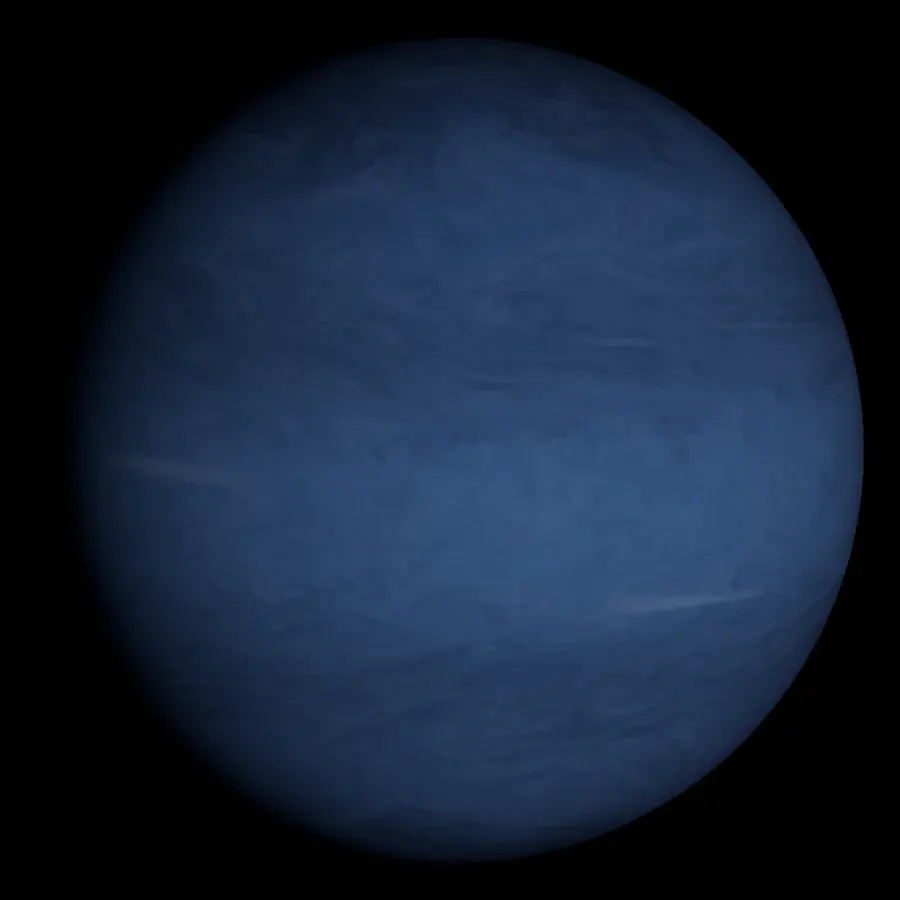 , open full size
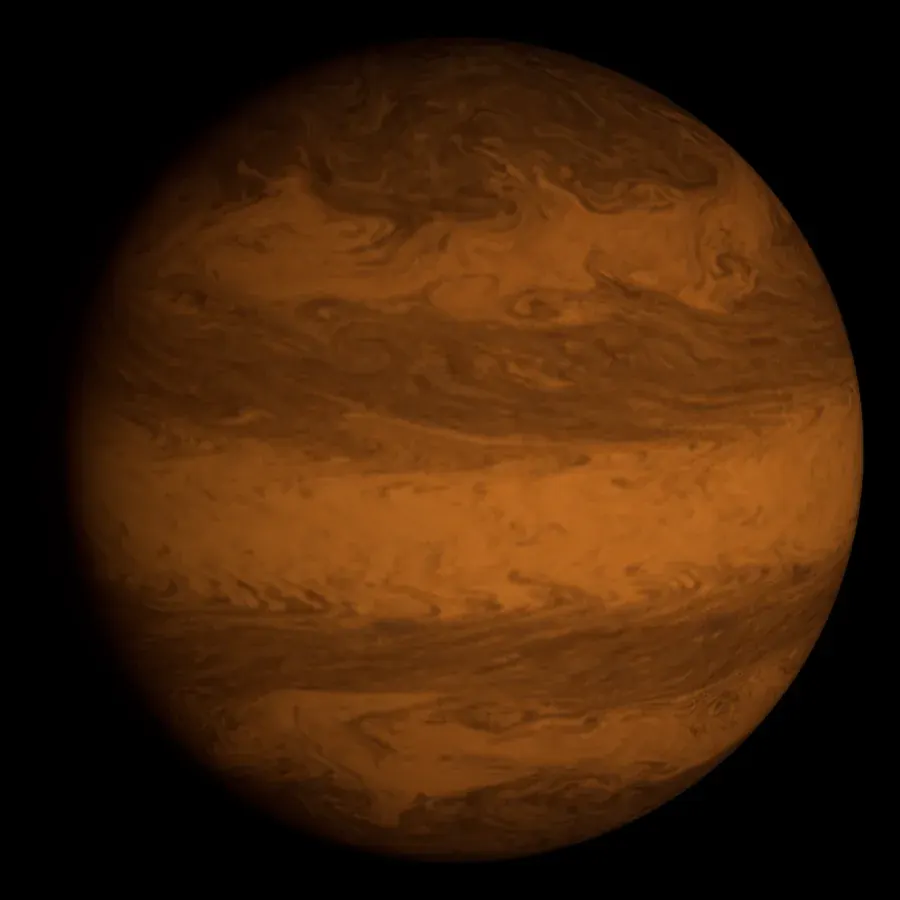 , open full size
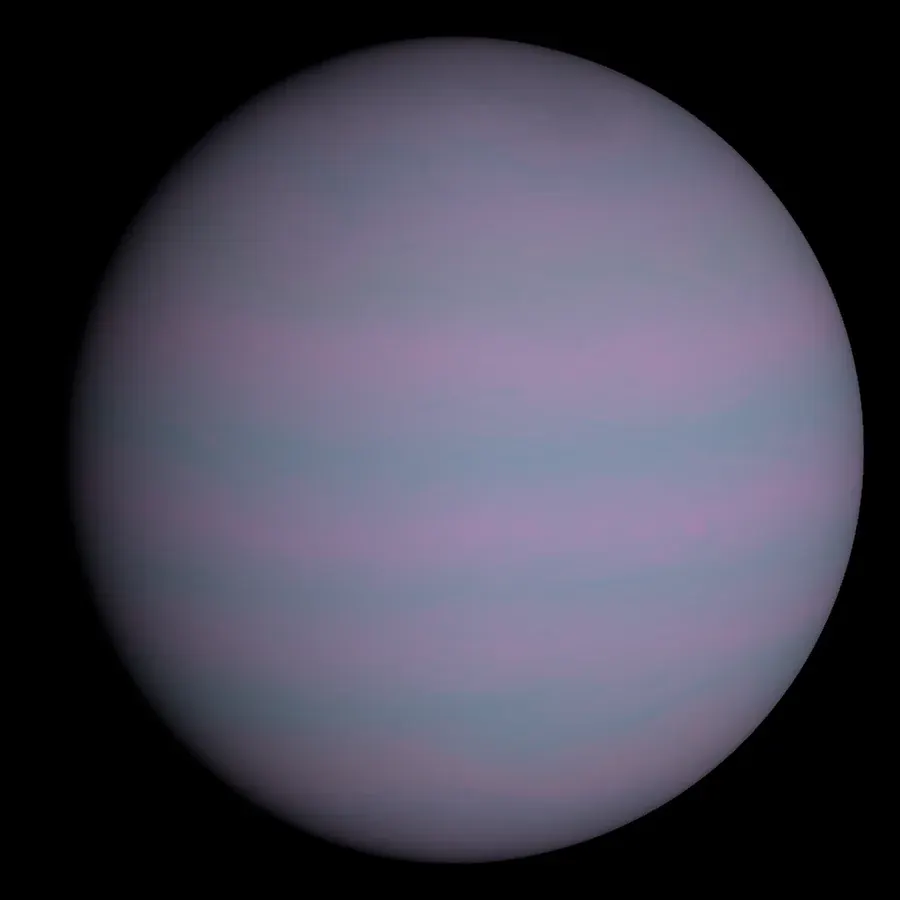 , open full size
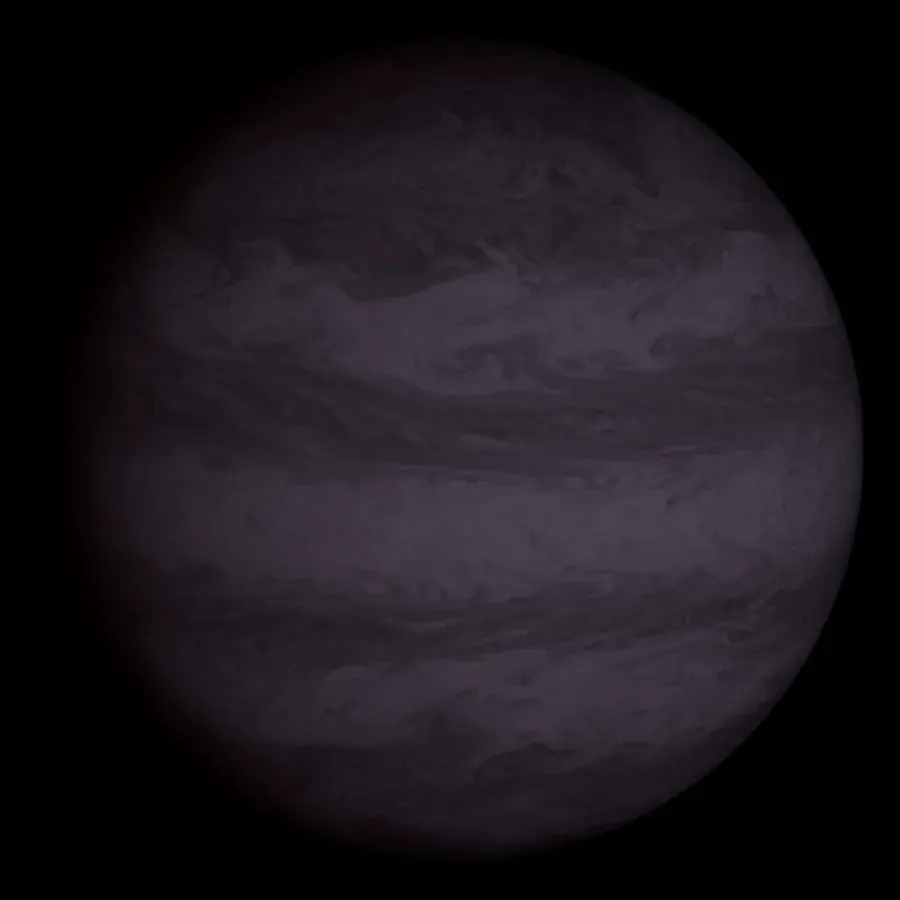 , open full size
 , open full size
The hot giants were the hardest test for the generator, because their painted maps lean on colour and soft structure rather than on sharp storms. Here are two of them, painted and grown.
The ice giants
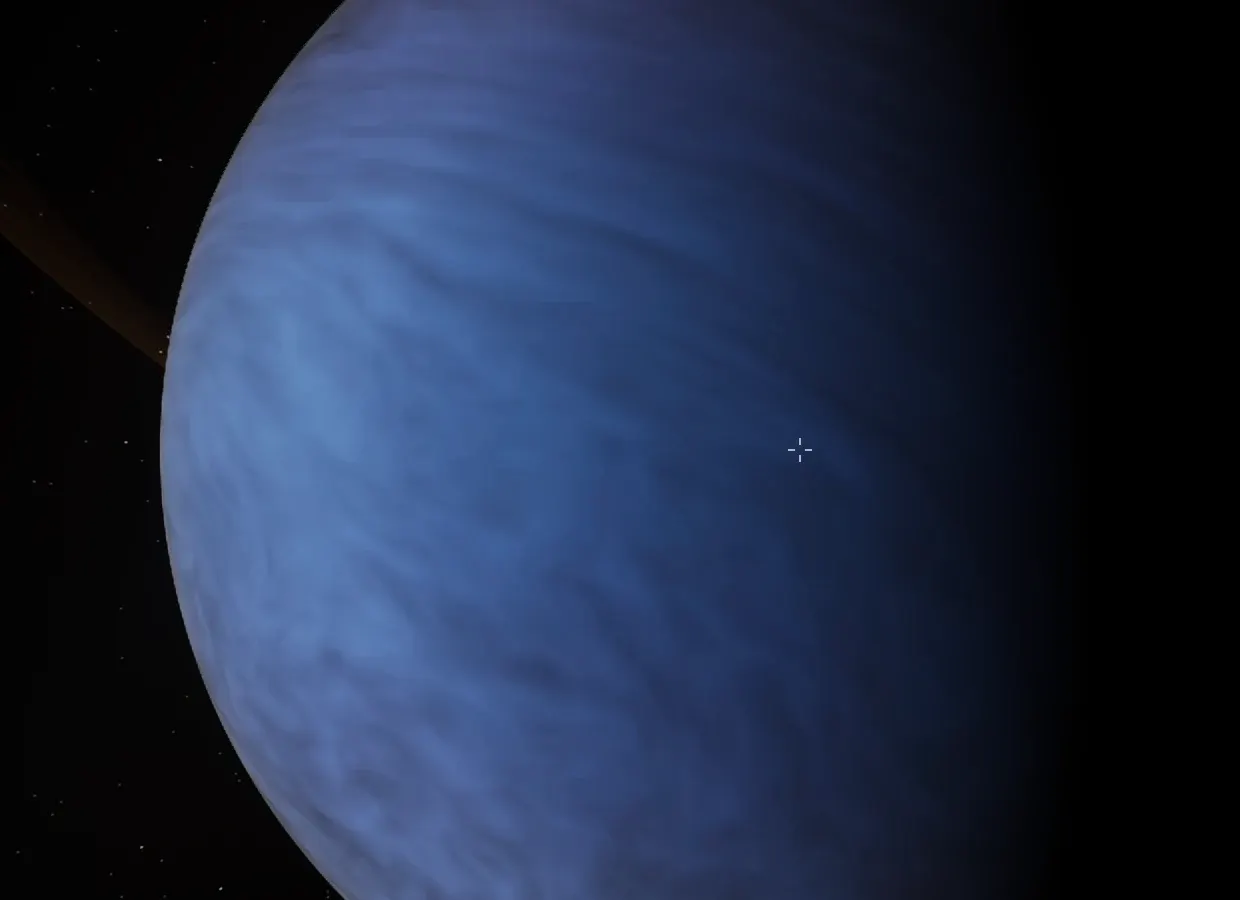
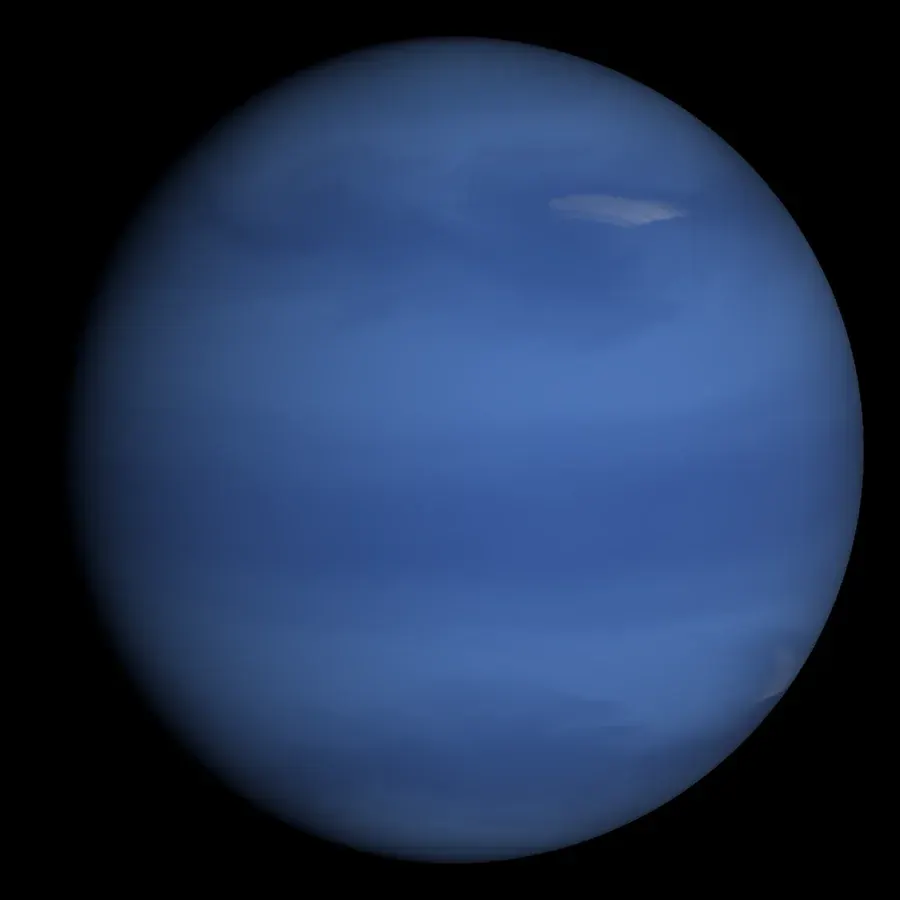
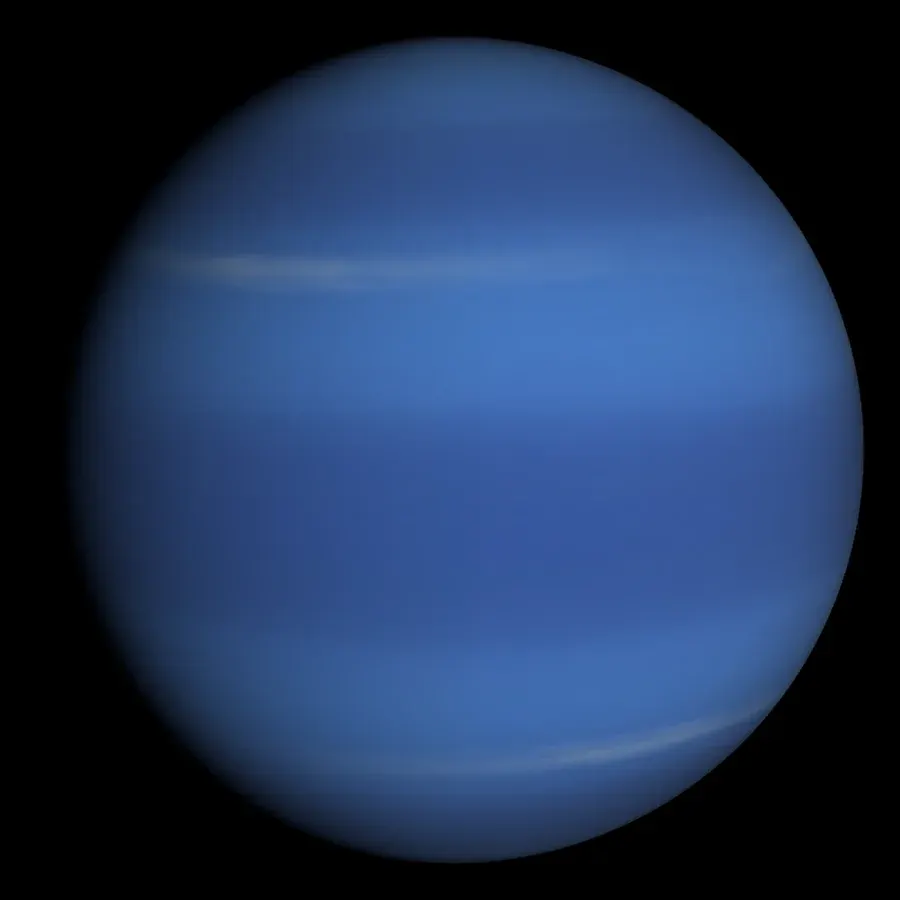
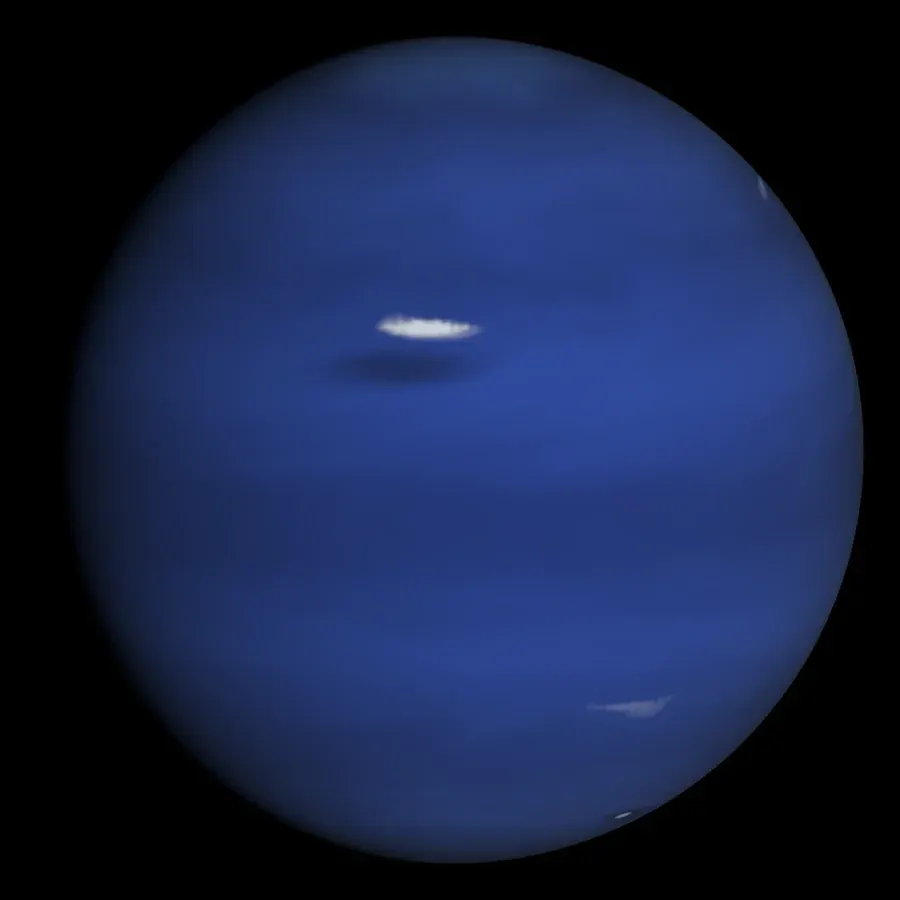
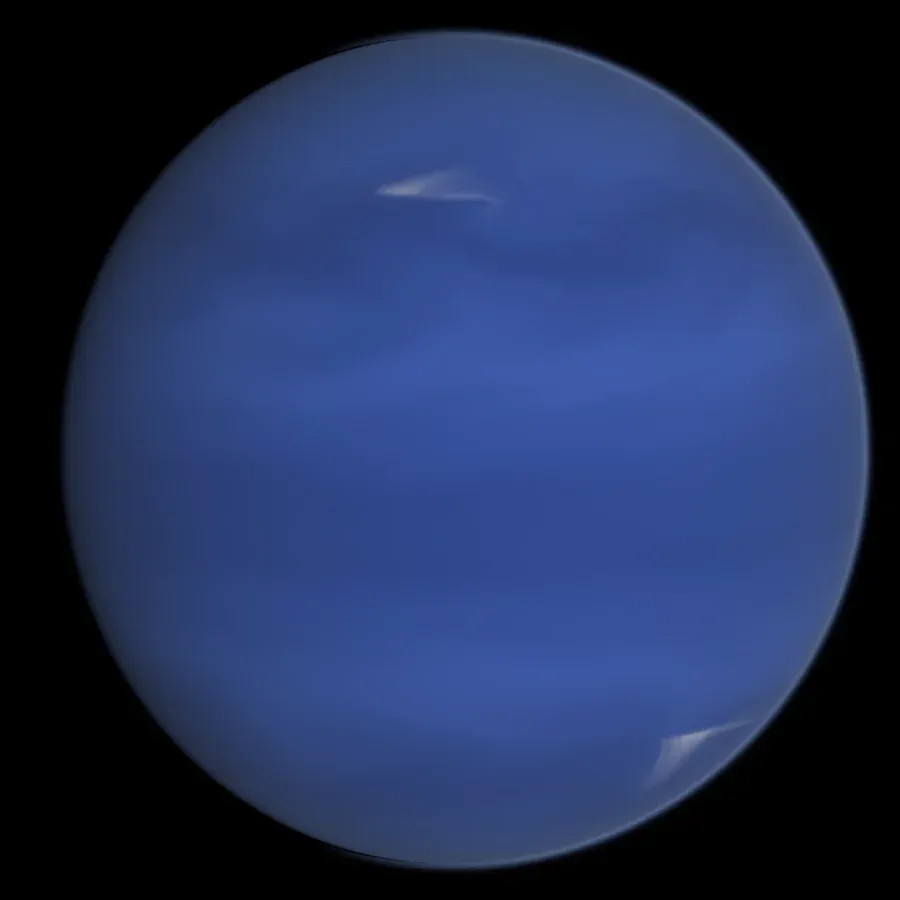
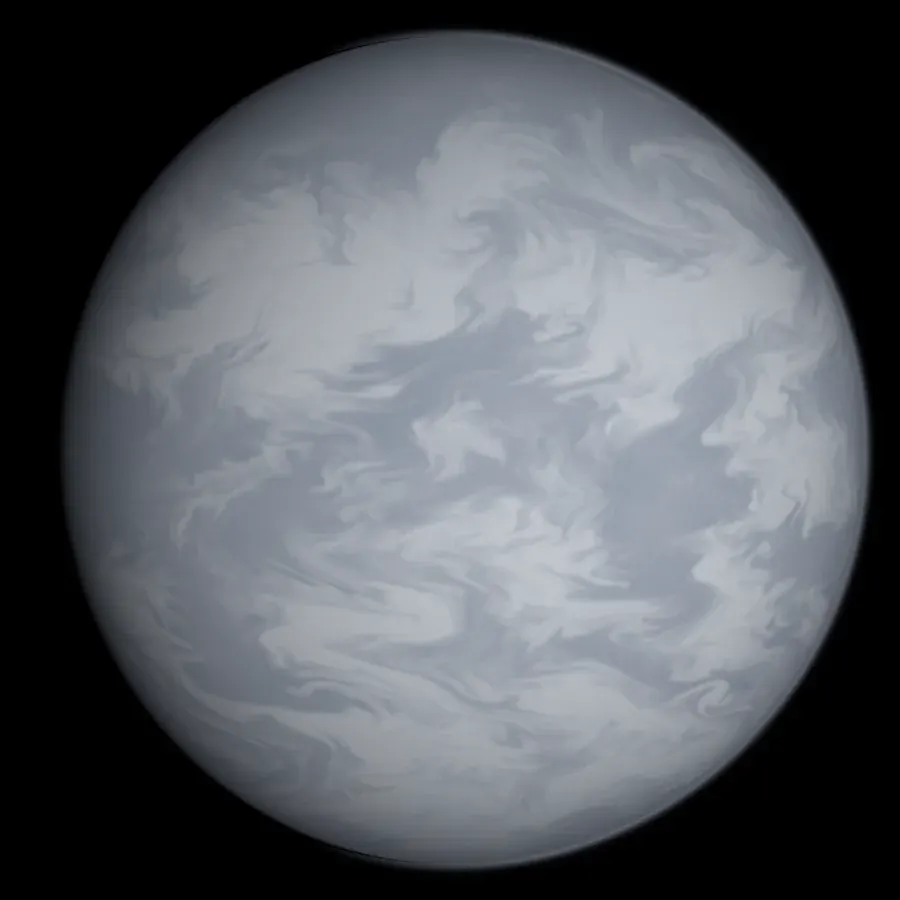
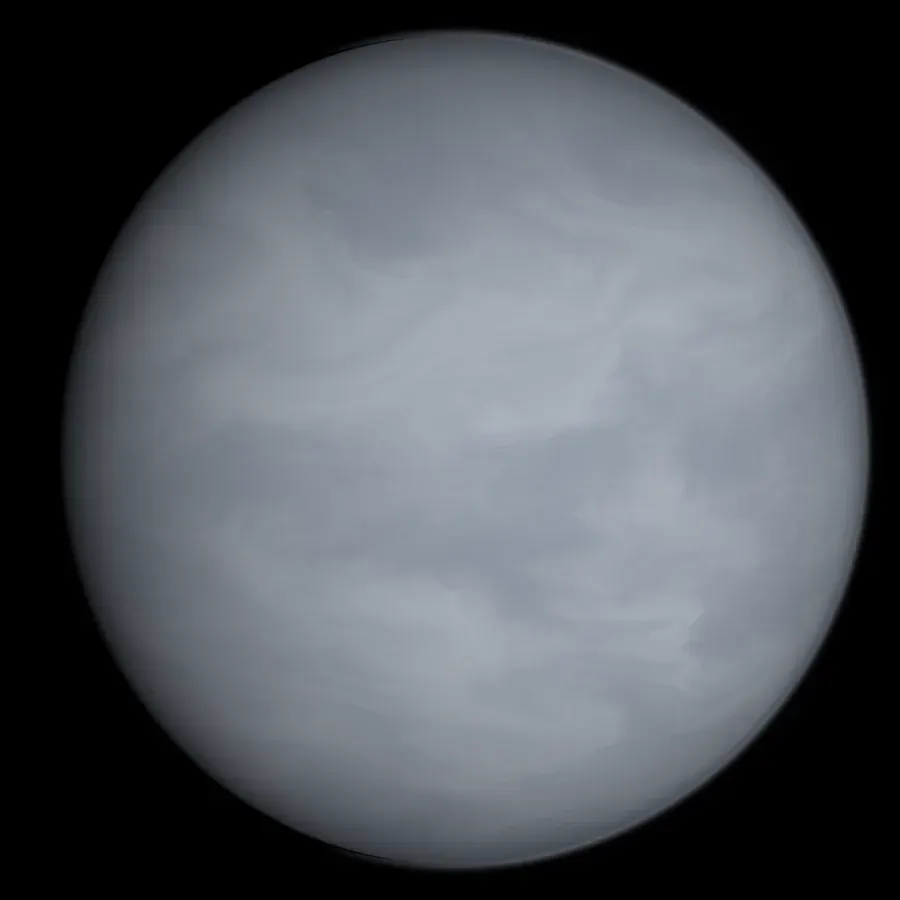
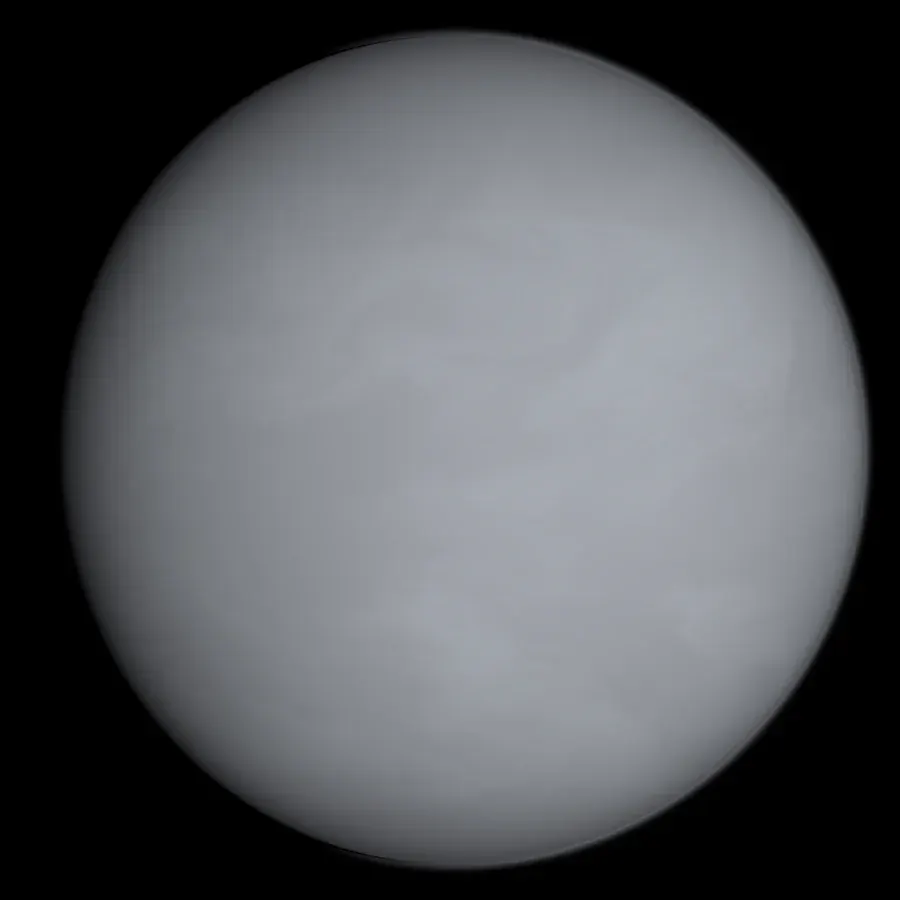
Uranus and Neptune are near twins in size and mass, and they look different because of heat. Neptune radiates about 2.6 times the energy it absorbs from the Sun 11, and it has the fastest winds in the Solar System and dark storms the size of Earth; Voyager 2 photographed one in 1989 that was gone five years later 12. Uranus gives off little heat of its own, wears a thicker haze and shows far fewer storms. Our cold ice giants take that as their dividing line: Active, with strong internal heat, thin haze and dark spots, and Quiescent, with little heat and thick haze. The haze sets the type. Thin haze lets light reach deep enough for methane to strip out the red; thick haze reflects it first, which is why Uranus is paler than Neptune 13.
Our Active ice giants wear the deep blue of Voyager's Neptune portraits, because it is the Neptune most people picture and it shows the storms well. The real Neptune is a paler greenish blue, only a shade bluer than Uranus; Voyager's images were contrast-enhanced to bring out the clouds 13. The Quiescent giants show that paler end of the range. Ice giants are a series of their own in our scheme; Sudarsky's classes, built for hydrogen and helium giants of Jupiter's mass, do not cover them.
 , open full size
 , open full size
 , open full size, open full size
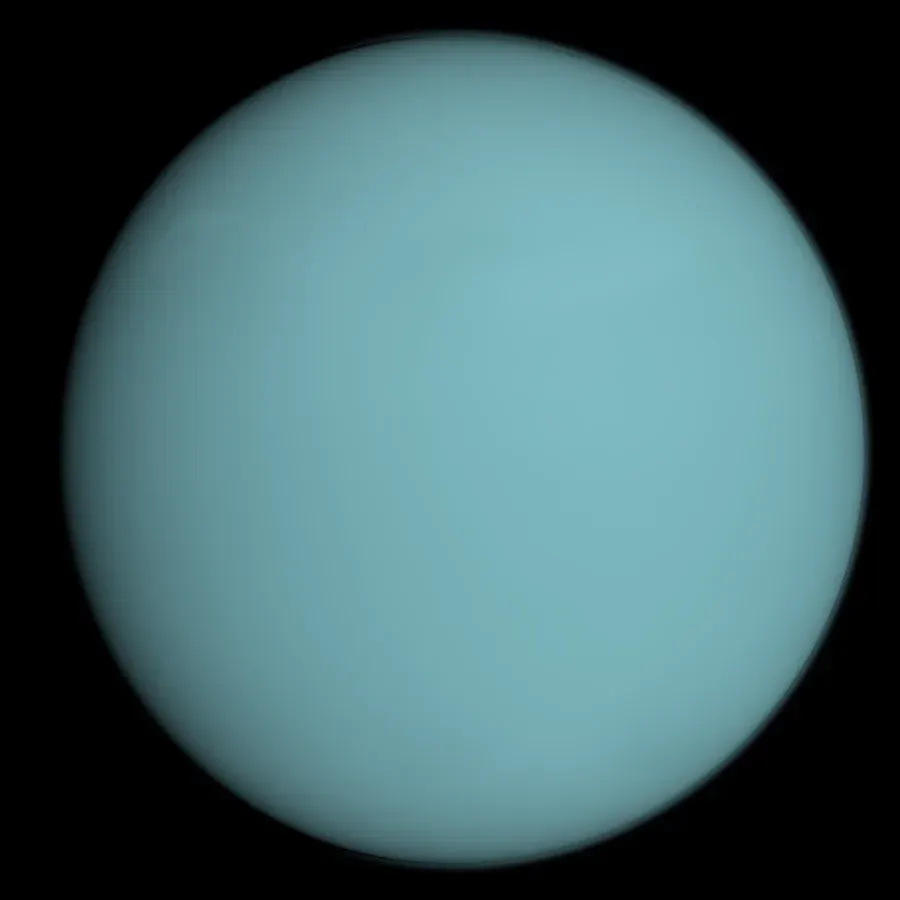 , open full size
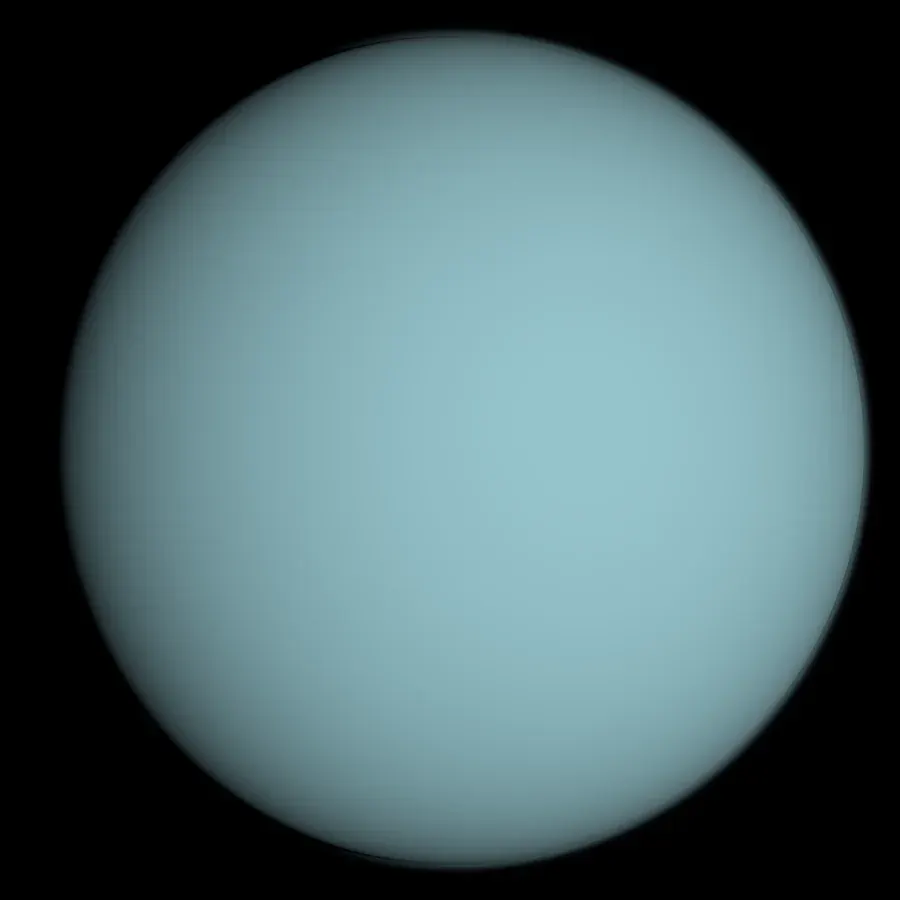 , open full size
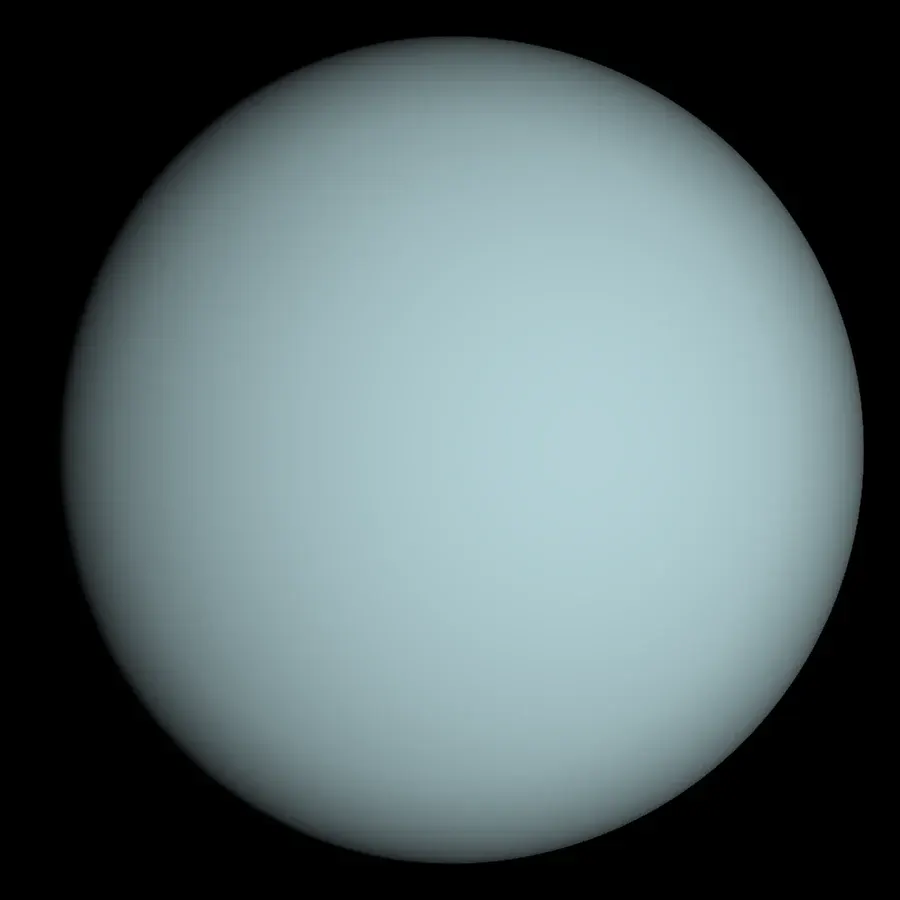 , open full size
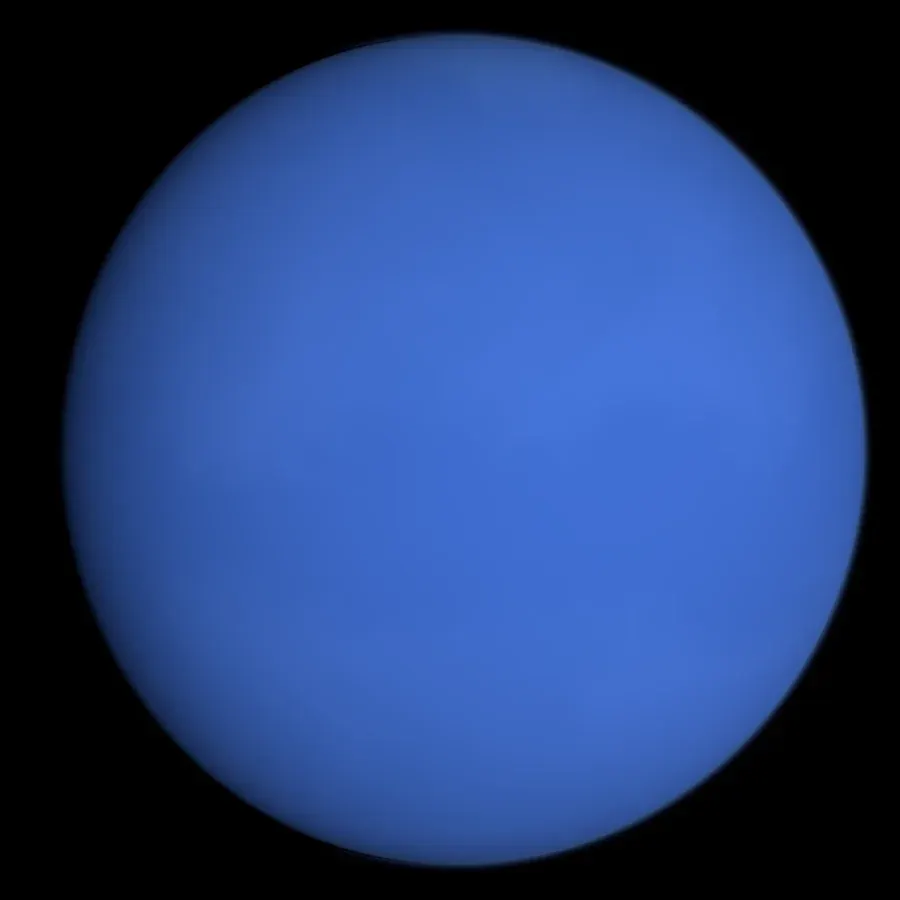
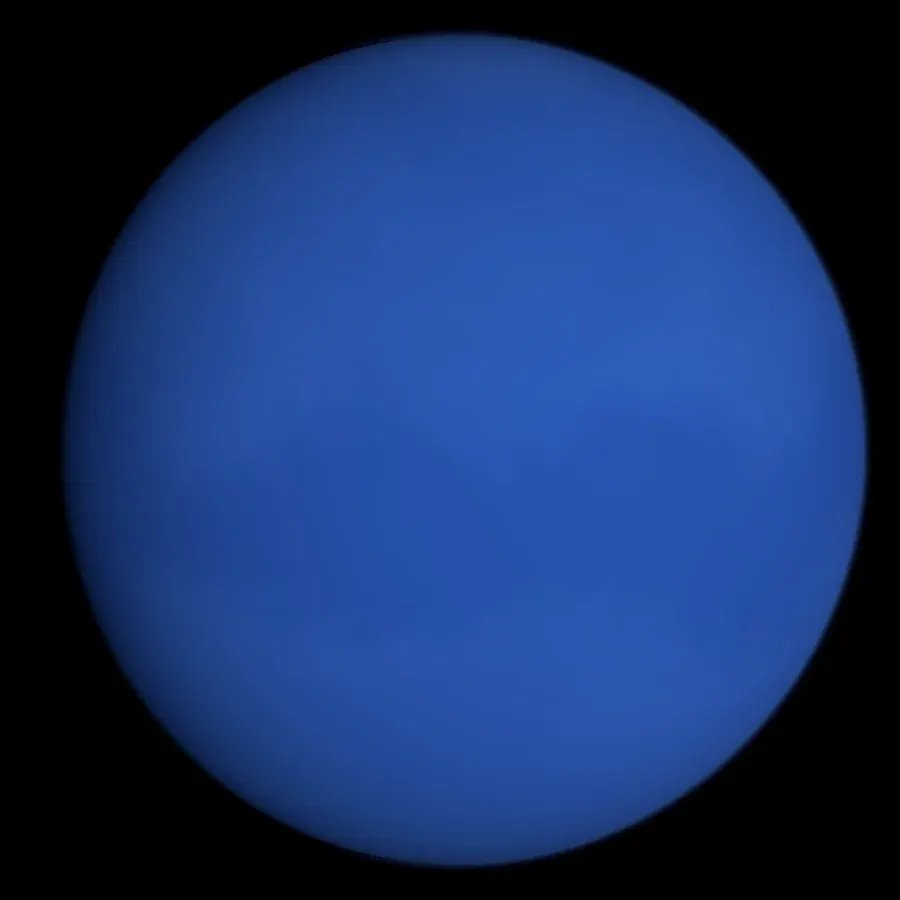
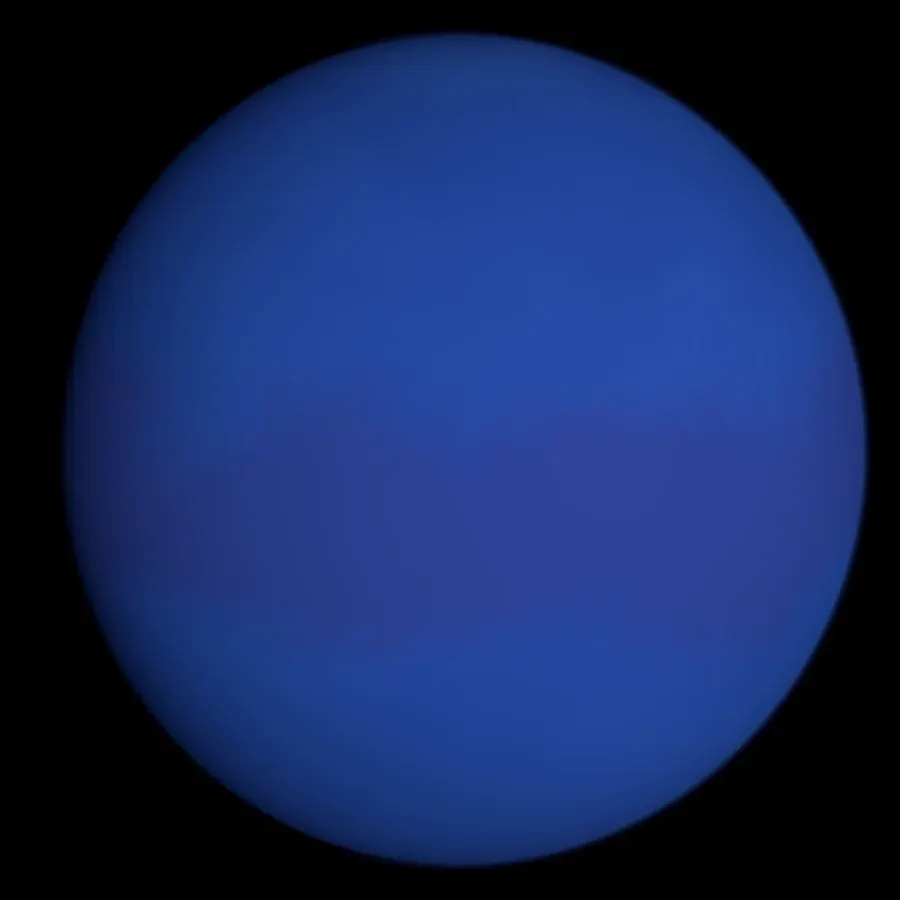
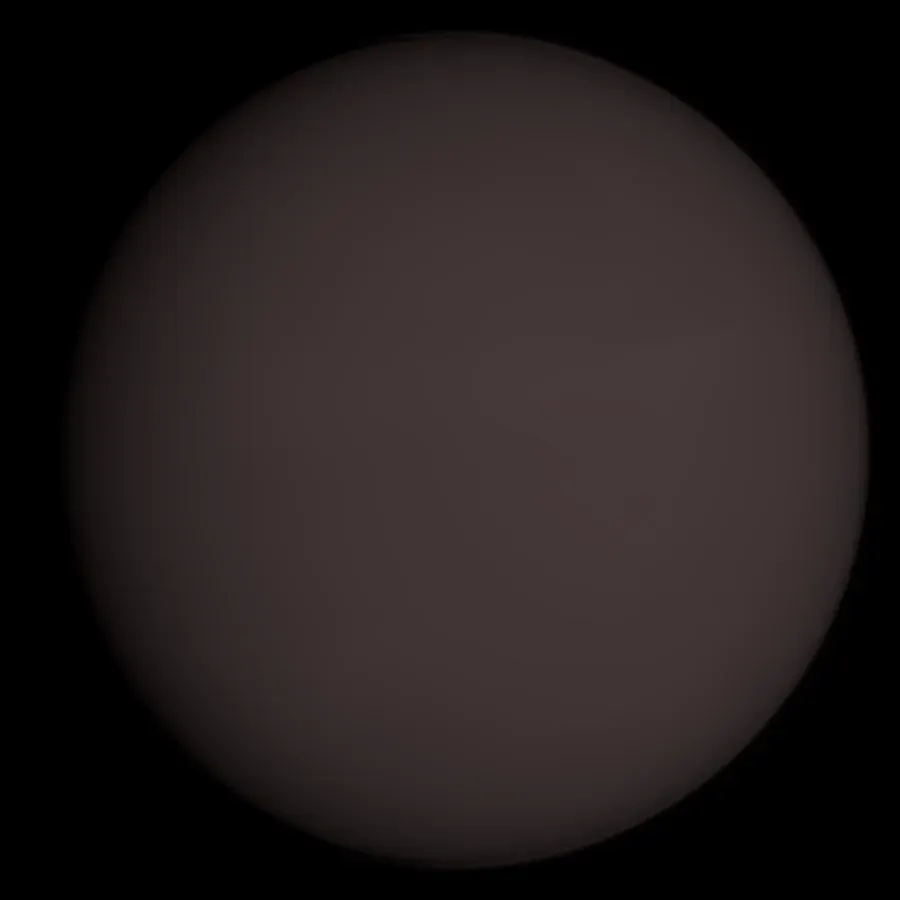
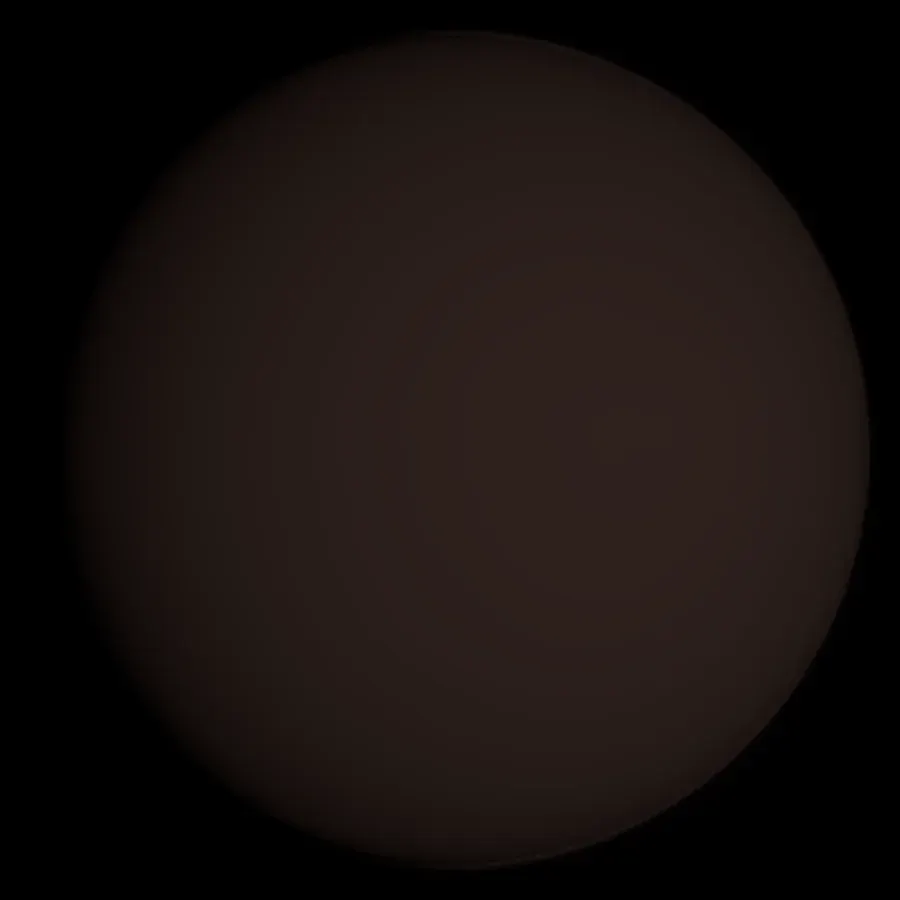
Move a Neptune-mass planet close to its star and methane can no longer freeze. The hot ice giants run through three regimes as they warm. The coolest are veiled in cloud, with water as the top cloud at the cool end. Then the clouds and hazes are gone and the clear hydrogen atmosphere scatters blue light back, a vivid blue with nothing on it. Hottest of all, sodium and potassium vapour absorb across the visible, as on the dark hot Jupiters, and the planet turns grey-brown, then copper, then almost black. It is the walk the gas giants take, from water cloud to clear sky to alkali-darkened air, in a smaller planet.
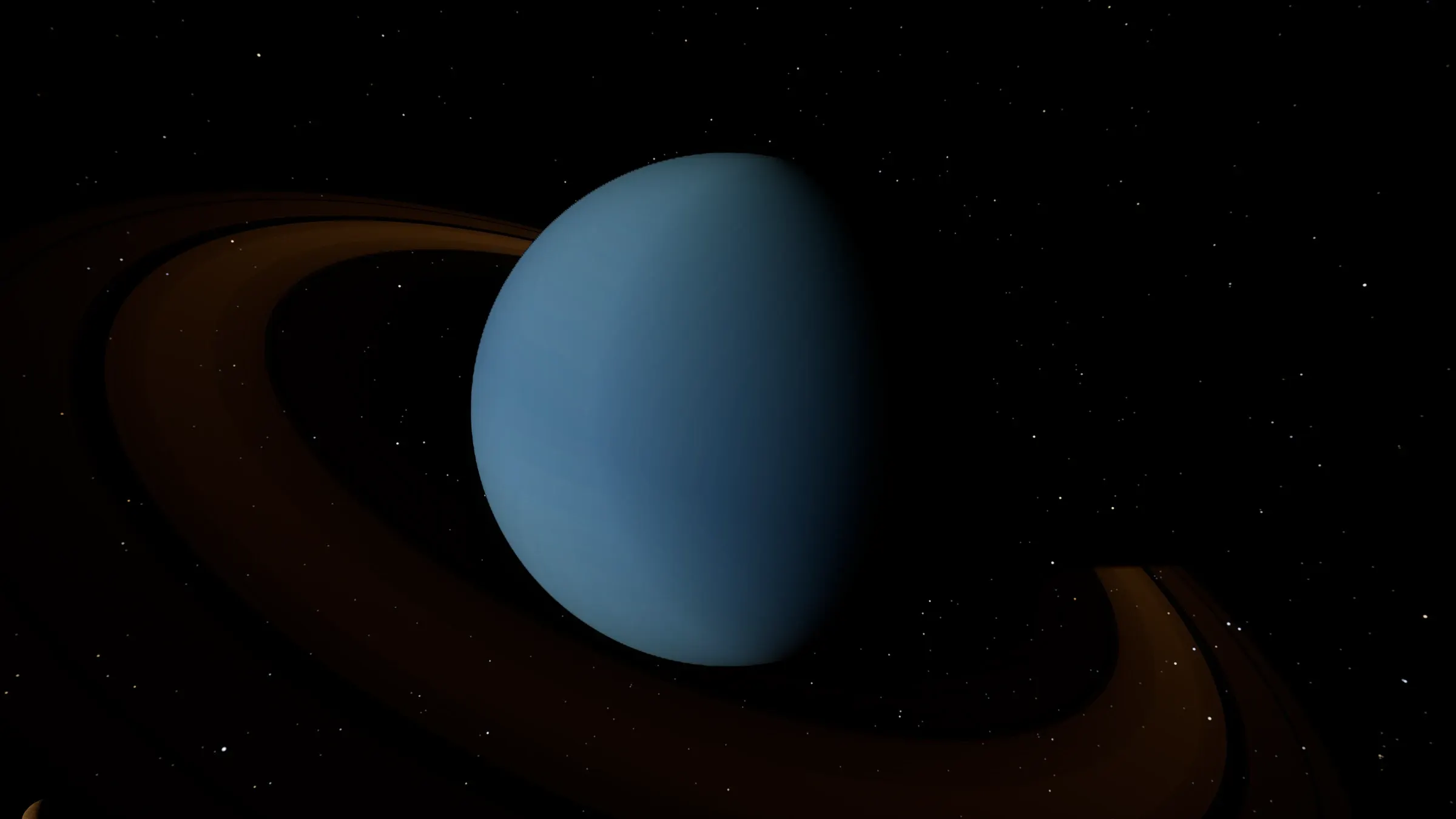 , open full size
 , open full size
 , open full size
 , open full size
 , open full size
 , open full size
 , open full size
 , open full size
 , open full size
 , open full size
 , open full size
Forty-one
That is the whole field guide: ten cold gas giants, eight temperate, seven hot ones, six cold ice giants and ten hot ones, drawn from 93 looks in the generator. Every giant in the generated star systems wears one, with a seed and weather of its own. Fly low enough and the ship enters the cloud deck itself, towers and wisps rising past the canopy until the view closes in, while the hull reads the pressure climbing toward its crush depth.
IN DEVELOPMENT: every feature a giant shows, its band count, its storms and their colours, read from numbers its own physics computes, so the simulation's science is the single source of what each planet looks like; and weather that moves, each storm drifting at the speed of its own latitude's wind.
References
- 1Sudarsky, D., Burrows, A. and Pinto, P. (2000). Albedo and Reflection Spectra of Extrasolar Giant Planets. The Astrophysical Journal 538, 885-903. doi:10.1086/309160
- 2Lewis, J. S. (1969). The clouds of Jupiter and the NH3-H2O and NH3-H2S systems. Icarus 10, 365-378. doi:10.1016/0019-1035(69)90091-8
- 3Visscher, C., Lodders, K. and Fegley, B. (2010). Atmospheric Chemistry in Giant Planets, Brown Dwarfs, and Low-mass Dwarf Stars. III. Iron, Magnesium, and Silicon. The Astrophysical Journal 716, 1060-1075. doi:10.1088/0004-637X/716/2/1060
- 4Ingersoll, A. P. et al. (2004). Dynamics of Jupiter's atmosphere. Jupiter: The Planet, Satellites and Magnetosphere 105-128.
- 5Minnaert, M. (1941). The reciprocity principle in lunar photometry. The Astrophysical Journal 93, 403. doi:10.1086/144279
- 6Carlson, R. W. et al. (2016). Chromophores from photolyzed ammonia reacting with acetylene: Application to Jupiter's Great Red Spot. Icarus 274, 106-115. doi:10.1016/j.icarus.2016.03.008
- 7Cahoy, K. L., Marley, M. S. and Fortney, J. J. (2010). Exoplanet Albedo Spectra and Colors as a Function of Planet Phase, Separation, and Metallicity. The Astrophysical Journal 724, 189-214. doi:10.1088/0004-637X/724/1/189
- 8Parmentier, V. et al. (2018). From thermal dissociation to condensation in the atmospheres of ultra hot Jupiters: WASP-121b in context. Astronomy & Astrophysics 617, A110. doi:10.1051/0004-6361/201833059
- 9Evans, T. M. et al. (2013). The Deep Blue Color of HD 189733b: Albedo Measurements with Hubble Space Telescope/Space Telescope Imaging Spectrograph at Visible Wavelengths. The Astrophysical Journal Letters 772, L16. doi:10.1088/2041-8205/772/2/L16
- 10Ehrenreich, D. et al. (2020). Nightside condensation of iron in an ultrahot giant exoplanet. Nature 580, 597-601. doi:10.1038/s41586-020-2107-1
- 11Pearl, J. C. and Conrath, B. J. (1991). The albedo, effective temperature, and energy balance of Neptune, as determined from Voyager data. Journal of Geophysical Research: Space Physics 96, 18921-18930. doi:10.1029/91JA01087
- 12Hammel, H. B. et al. (1995). Hubble Space Telescope Imaging of Neptune's Cloud Structure in 1994. Science 268, 1740-1742. doi:10.1126/science.268.5218.1740
- 13Irwin, P. G. J. and et al. (2024). Modelling the seasonal cycle of Uranus's colour and magnitude, and comparison with Neptune. Monthly Notices of the Royal Astronomical Society 527, 11521-11538. doi:10.1093/mnras/stad3761
Related in the wiki
Credits
- The Pax Abyssi team
- Author
Spotted an error? Tell us in the forum thread or on the talk page of a related wiki article; corrections are noted at the top of the piece.