Devlog 3: lava and greenhouse worlds, weather from physics, and a refinery in the hold
The third devlog, covering 7 to 10 October 2026. Every lava world in the galaxy is now procedural, the greenhouse worlds arrive as the game's first procedural worlds with a thick atmosphere, every gas giant's weather comes from its own physics, and the Calliope's hold gains hoppers, a refinery and a casting line for the ore she mines.
By The Pax Abyssi team

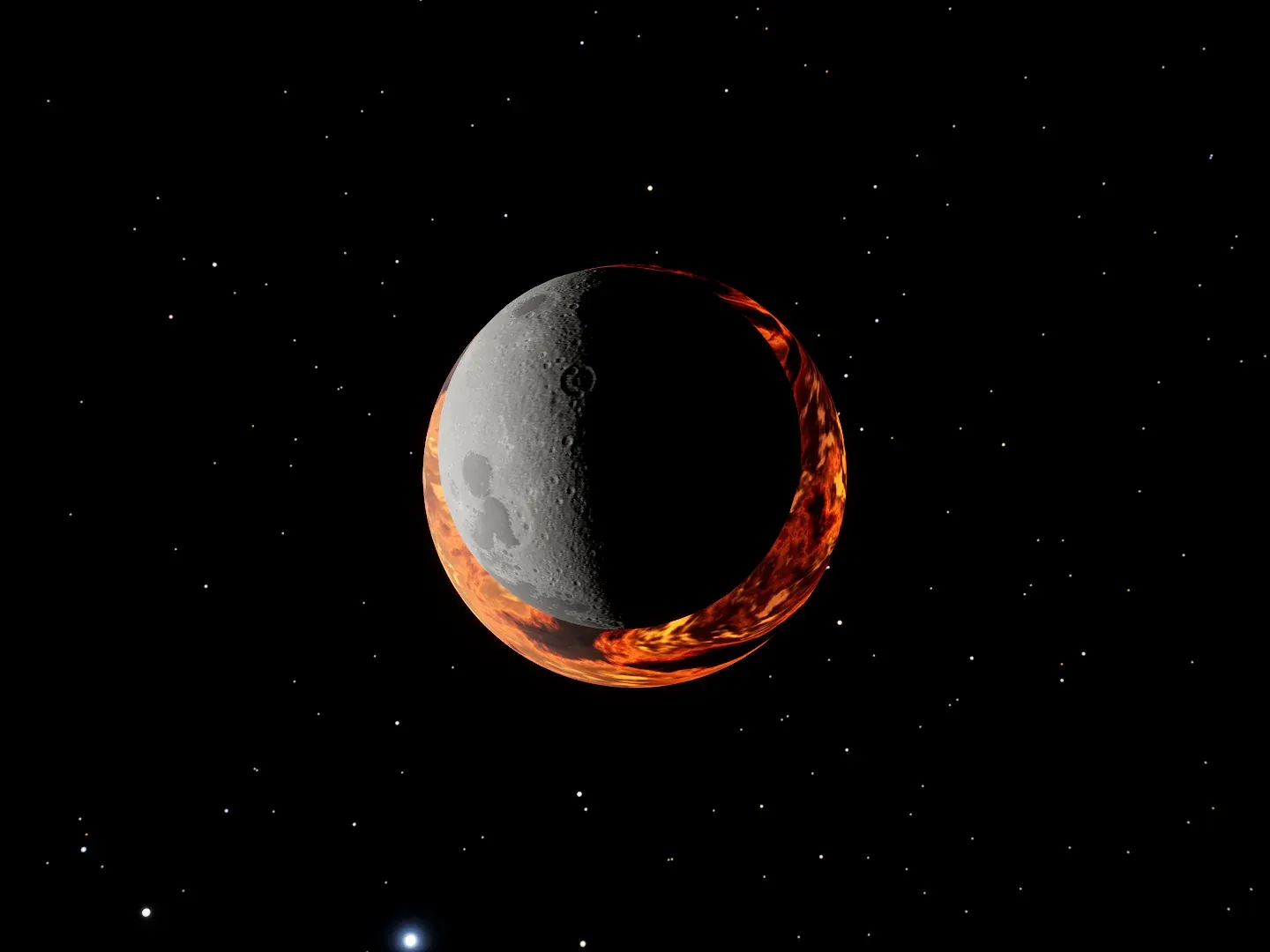
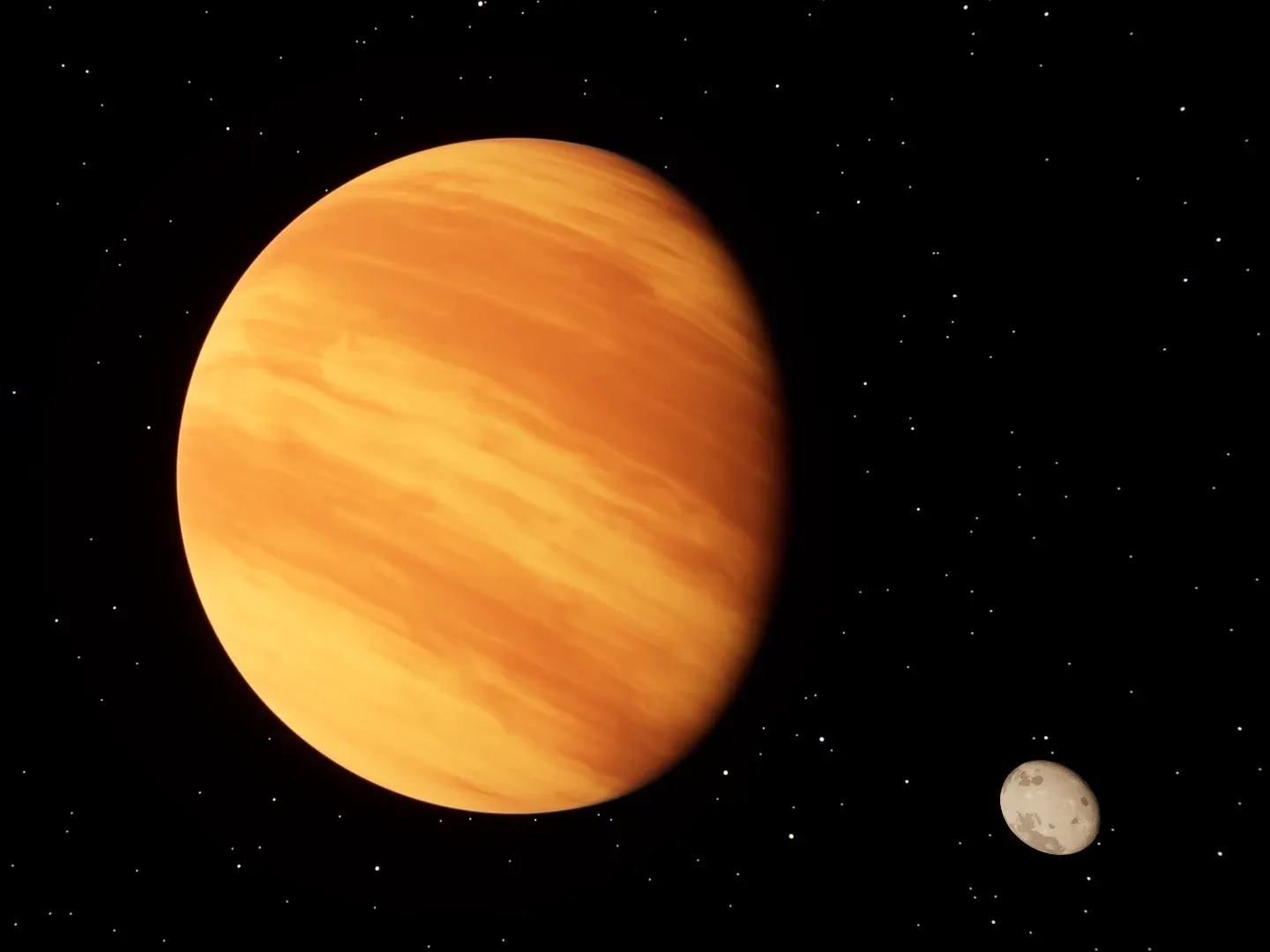
HYG 67063 II, one of the new greenhouse worlds: its ground at about 1,090 K glows through the gaps in a deck of dark smoke, right round to the night side, with one of its two moons at lower left.
Pax Abyssi
Four days, 126 commits to the game and 40 to this site, 61 of the game's on Wednesday alone. Devlog 2 promised giant weather from science, the planetary spin transition on the test bench and more worlds coming down from the map. All three landed, and the biggest arrivals of the week are two whole new families of worlds: the lava worlds, and on Saturday the greenhouse worlds. Here is what changed, area by area.
Lava worlds
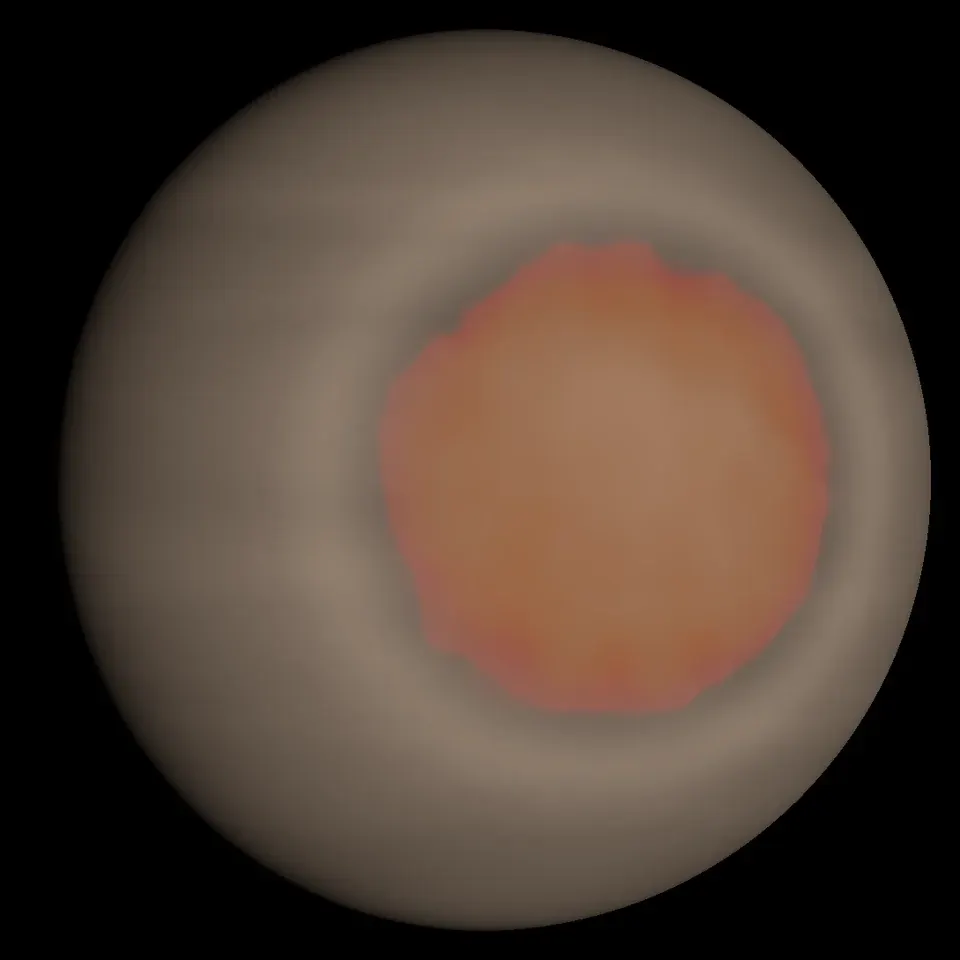
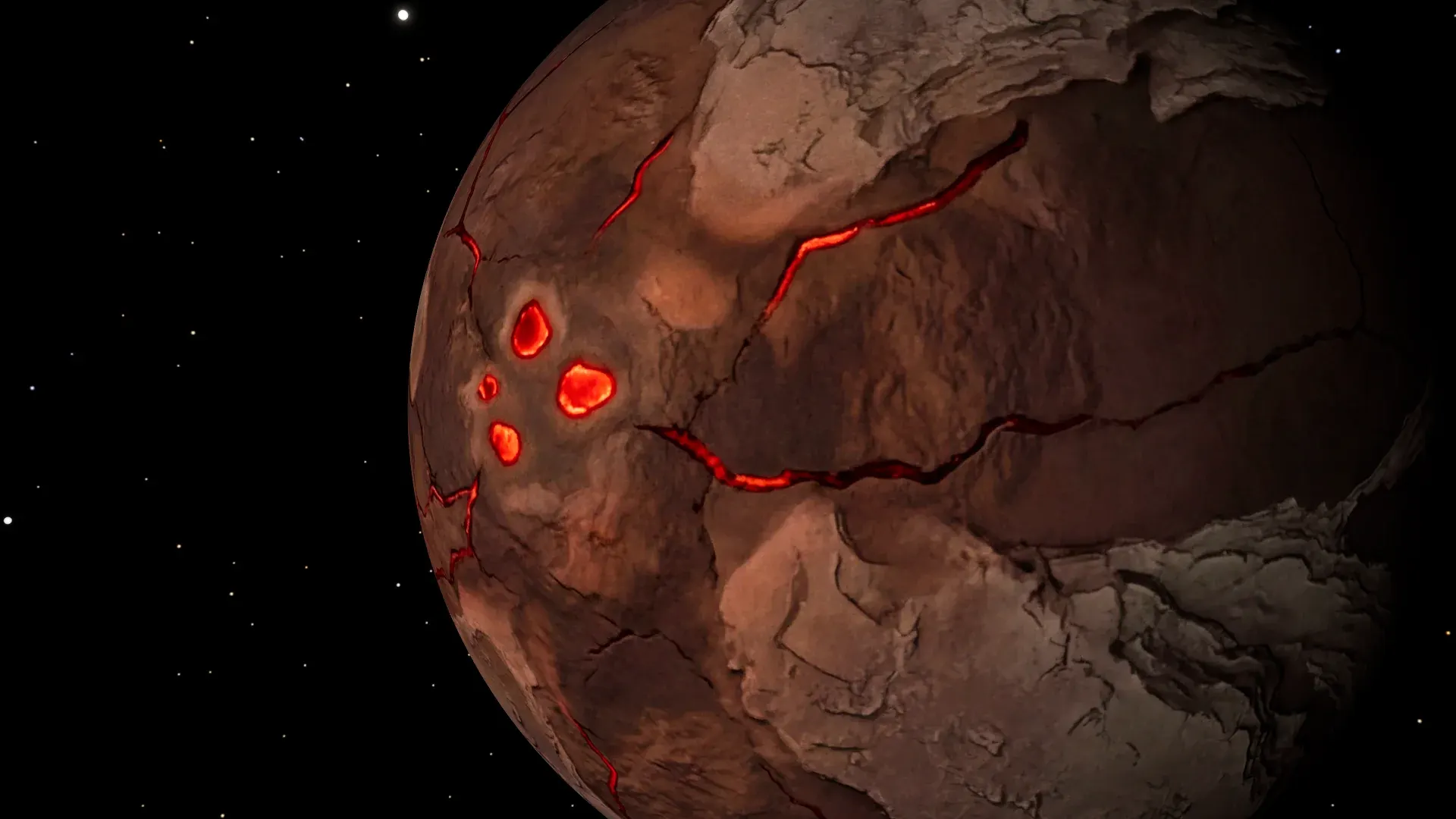
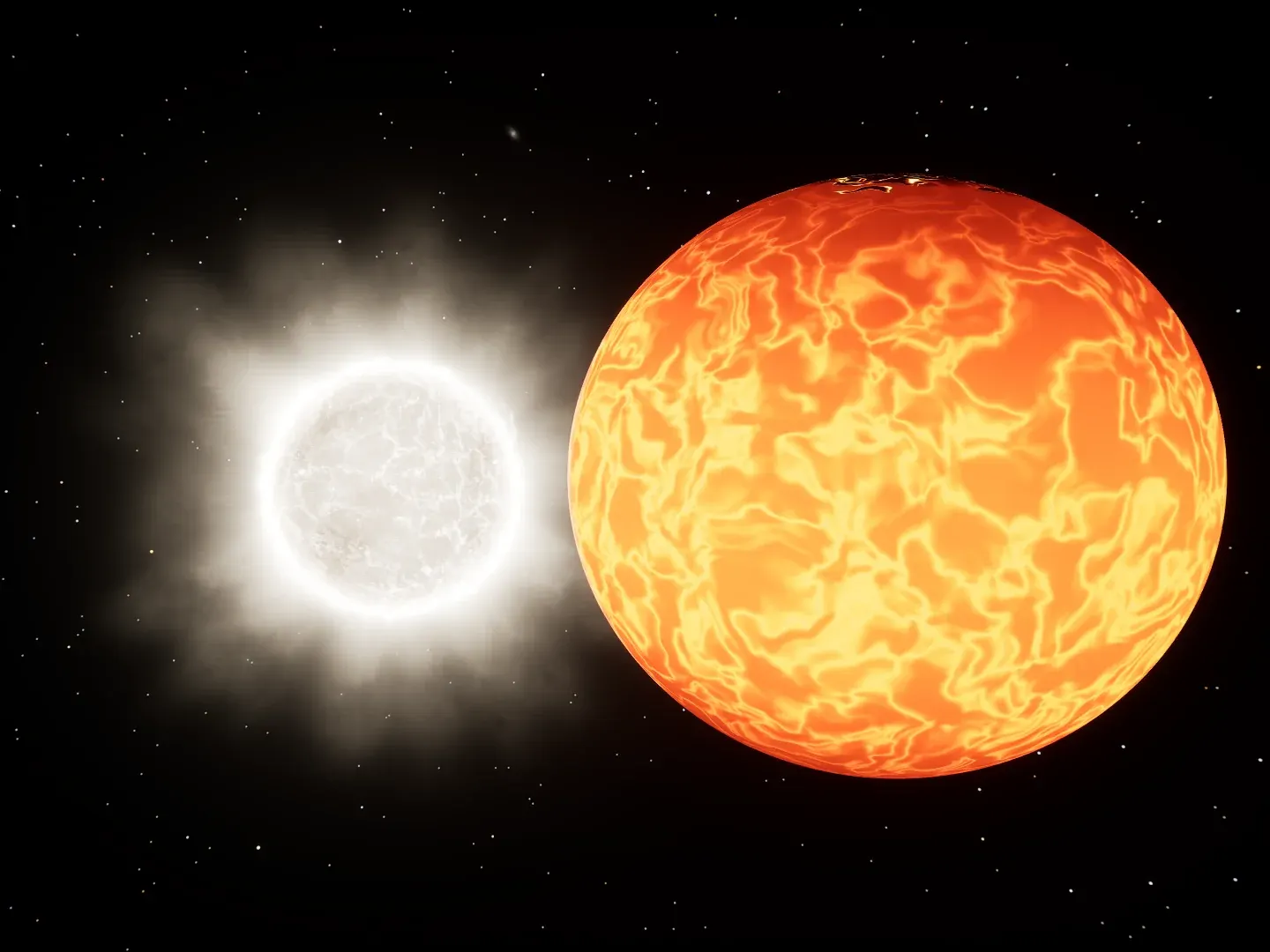
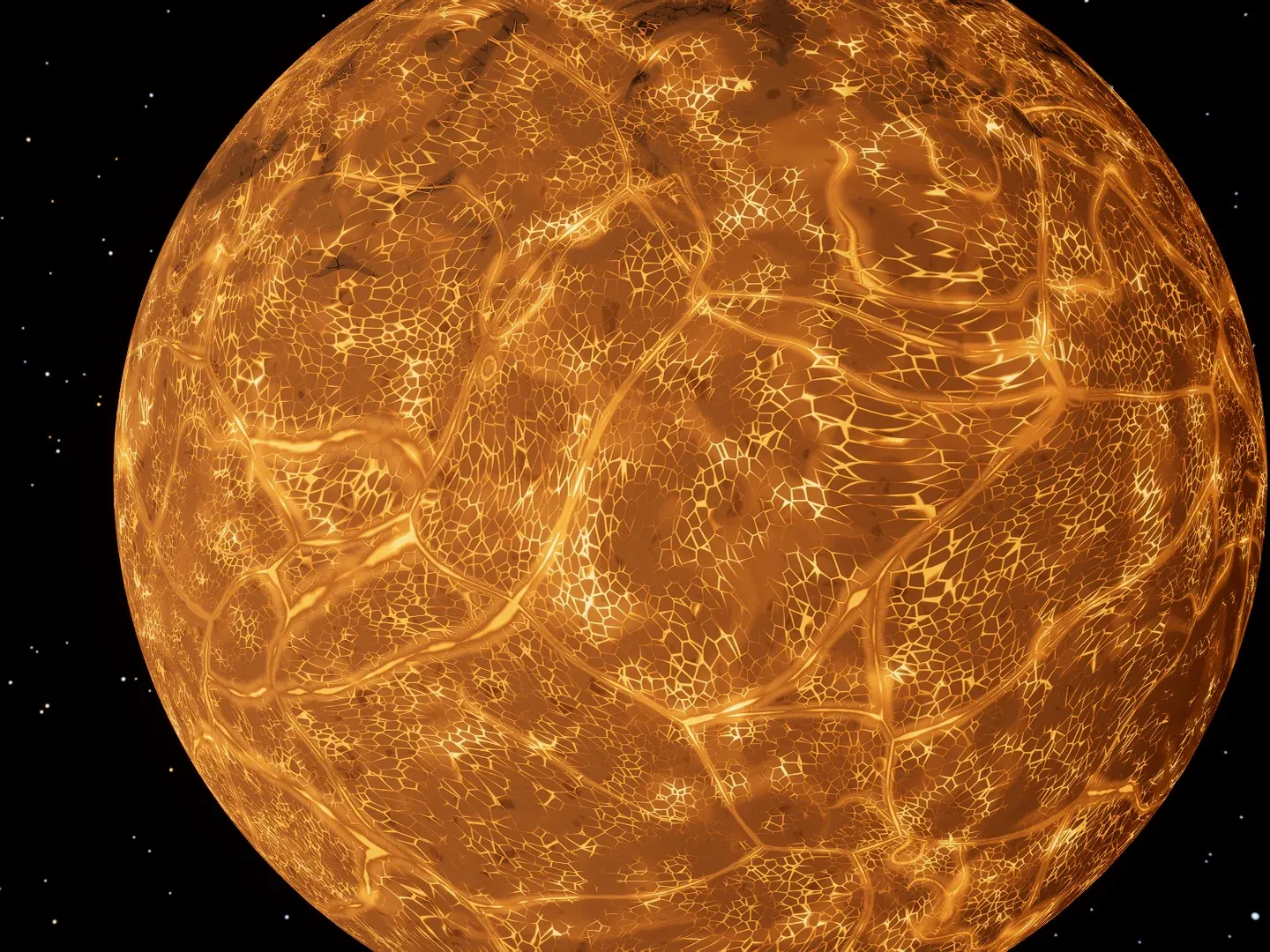
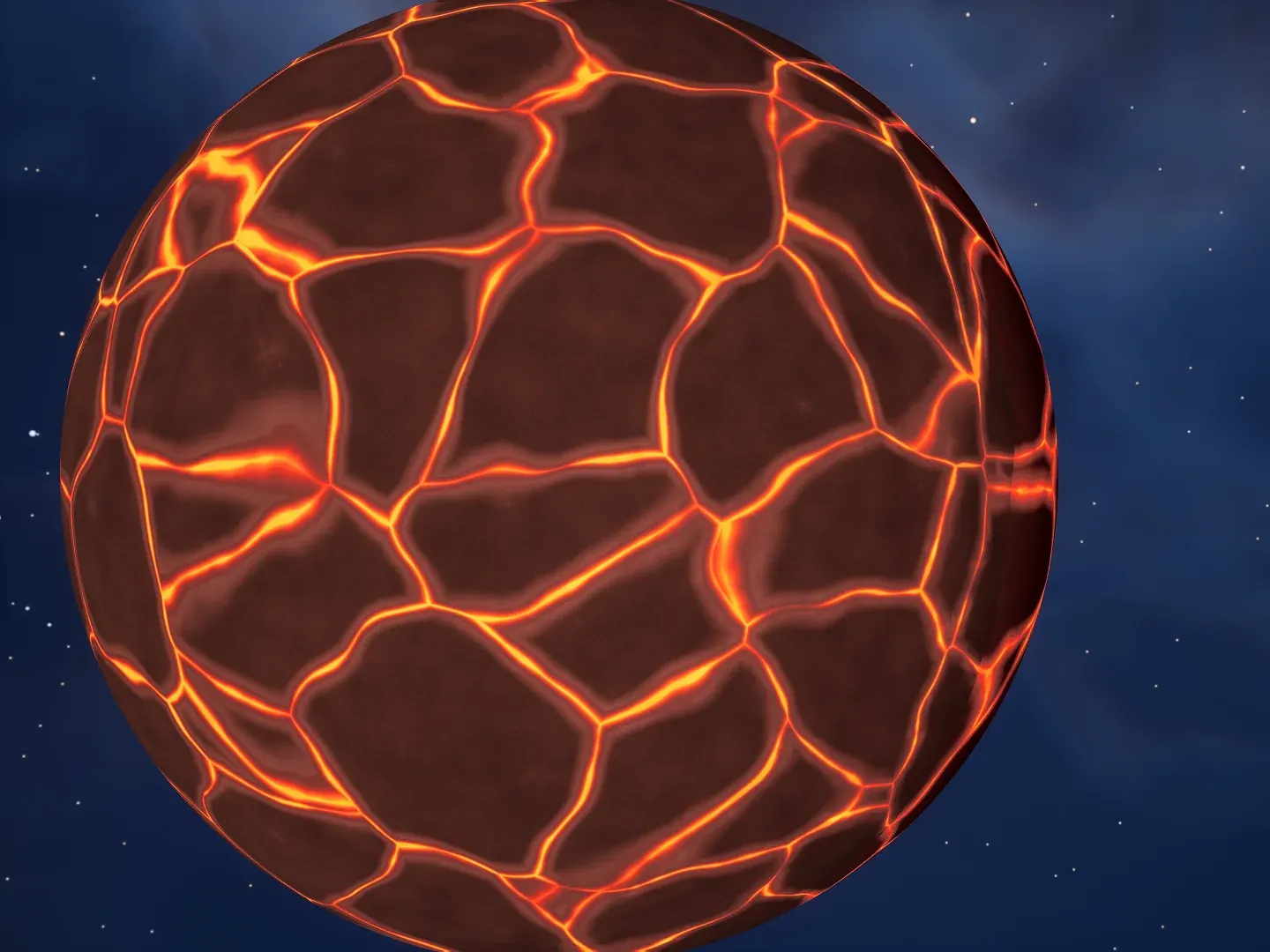
A lava world is a rocky planet so close to its star that its day side melts. As of Friday every one is procedural, and on Saturday the system generator learned to place them as the surveys find them: about one Sun-like star in two hundred holds a small planet that circles it in less than a day, as Kepler measured, which leaves 705 lava planets around the catalogue stars, in eighteen types. One process draws them all: each point's temperature from the star, set against the temperatures at which basalt melts, decides where the sea lies, where its shore stands, where rafts of crust float and which cracks glow. Each planet then wears that process with its own numbers: its day-side and night-side temperatures, its raft coverage and a seed of its own, so no two seas share a coastline.
 , open full size
 , open full size
 , open full size
The sea is level ground, so you can land on a raft at its shore. The lock is solved exactly, so every sea sits beneath its star: measured on four planets, within 1 to 5 degrees of the substellar point. And there are two ways to see them. By default a lava world is drawn the way our painted studies of each type show it, the glow fitted to those paintings; LAVA LOOK on the SPACE page of the options switches to the scientific look, the black body at its true brightness against the light of the star, in which a lava world's day side is a dull brown, its sea only a shade warmer than the land. The science, the types and how one process draws them all are in this week's feature, Seas of molten rock.
Then the look rounds. Every type was flown to and judged in the game beside its painted study, from its fast-travel stop's own camera, and the process gained what the paintings ask for: long fractures in crossing families across the dark plates of the vein worlds, terraced sheets of crust round the hot point of the heavily crusted worlds, lit by their star, lakes where three floes meet, and veins with hotter cores that pinch out as they run. A rotating world's lava band now lies on its own equator, and the two rotating types the new catalogue formed, an ultra-hot magma world whose open sea is seamed with hotter currents and a moderate crusted world of golden crust grained by a fine bright web, wear looks of their own. Every type has its tile on the new lava worlds page, under large frames from the game.
 , open full size
 , open full size
 , open full size
 , open full size
Greenhouse worlds
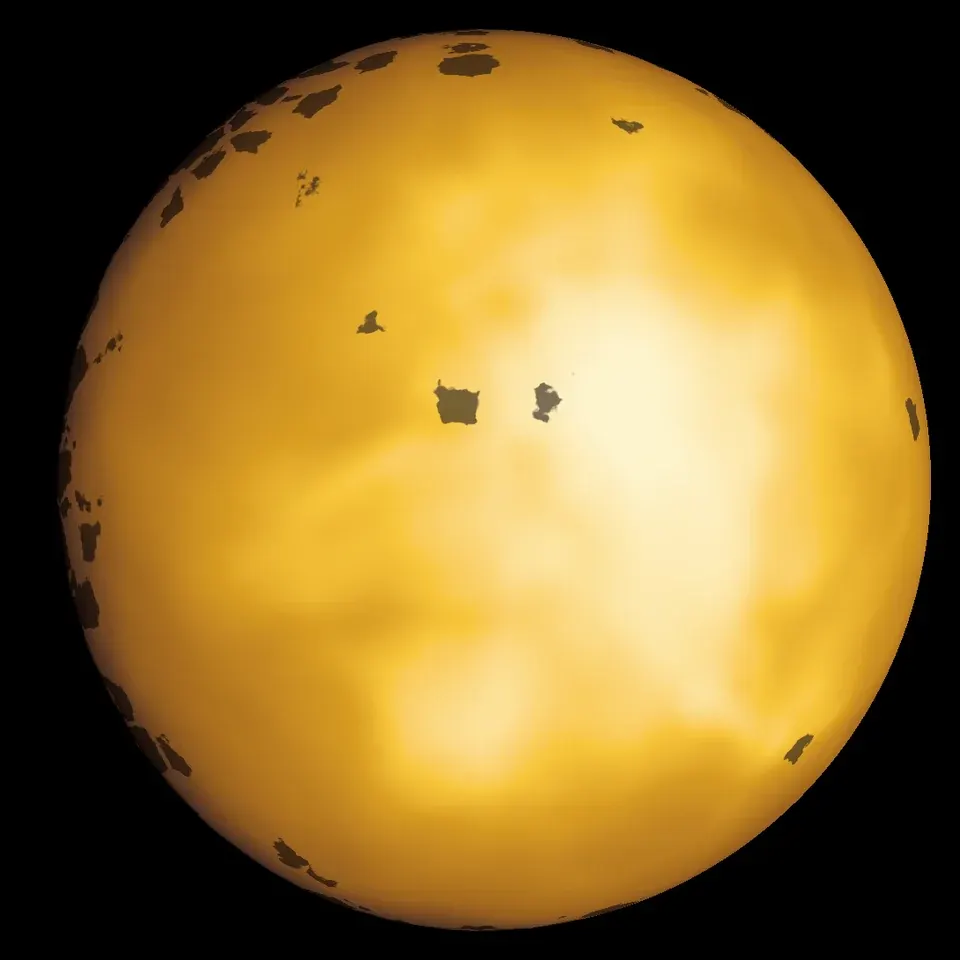
The week's second new family is Venus's kind: rocky planets smothered by their own air. They are the first procedural worlds in the game with a thick atmosphere, 458 planets around the catalogue stars in eight types, and you can fly down to every one.
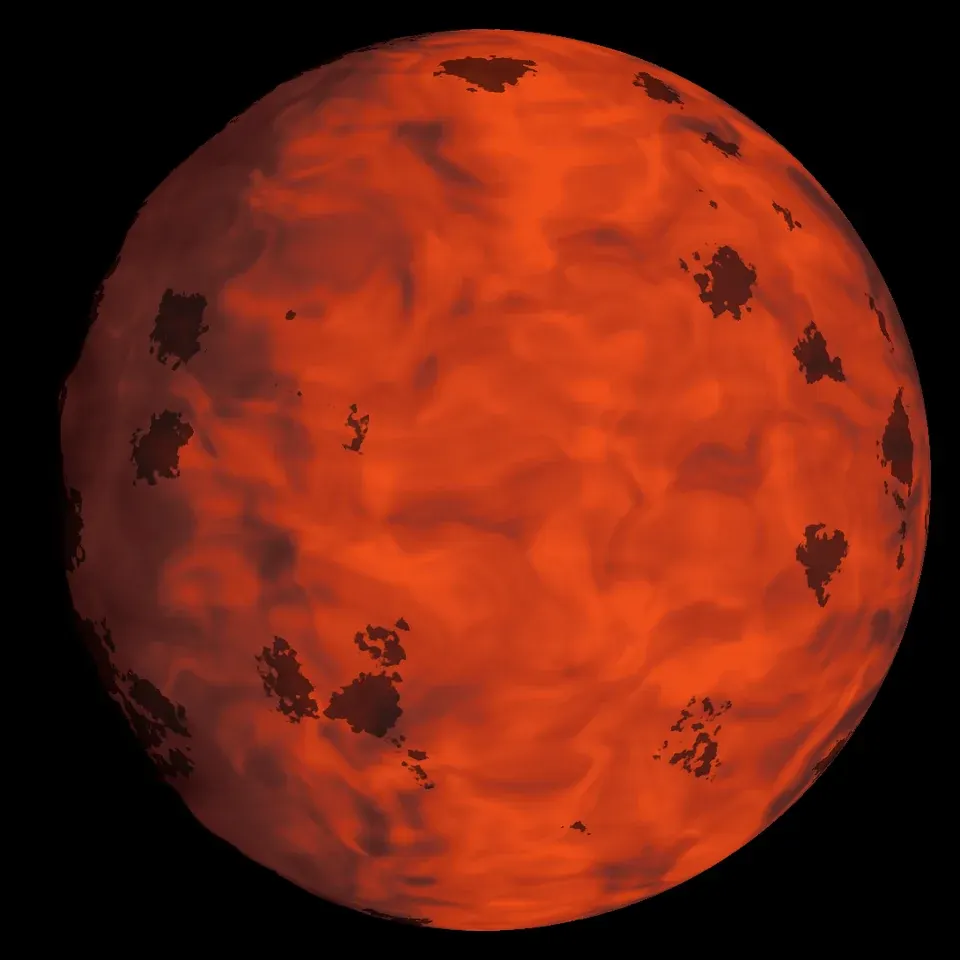
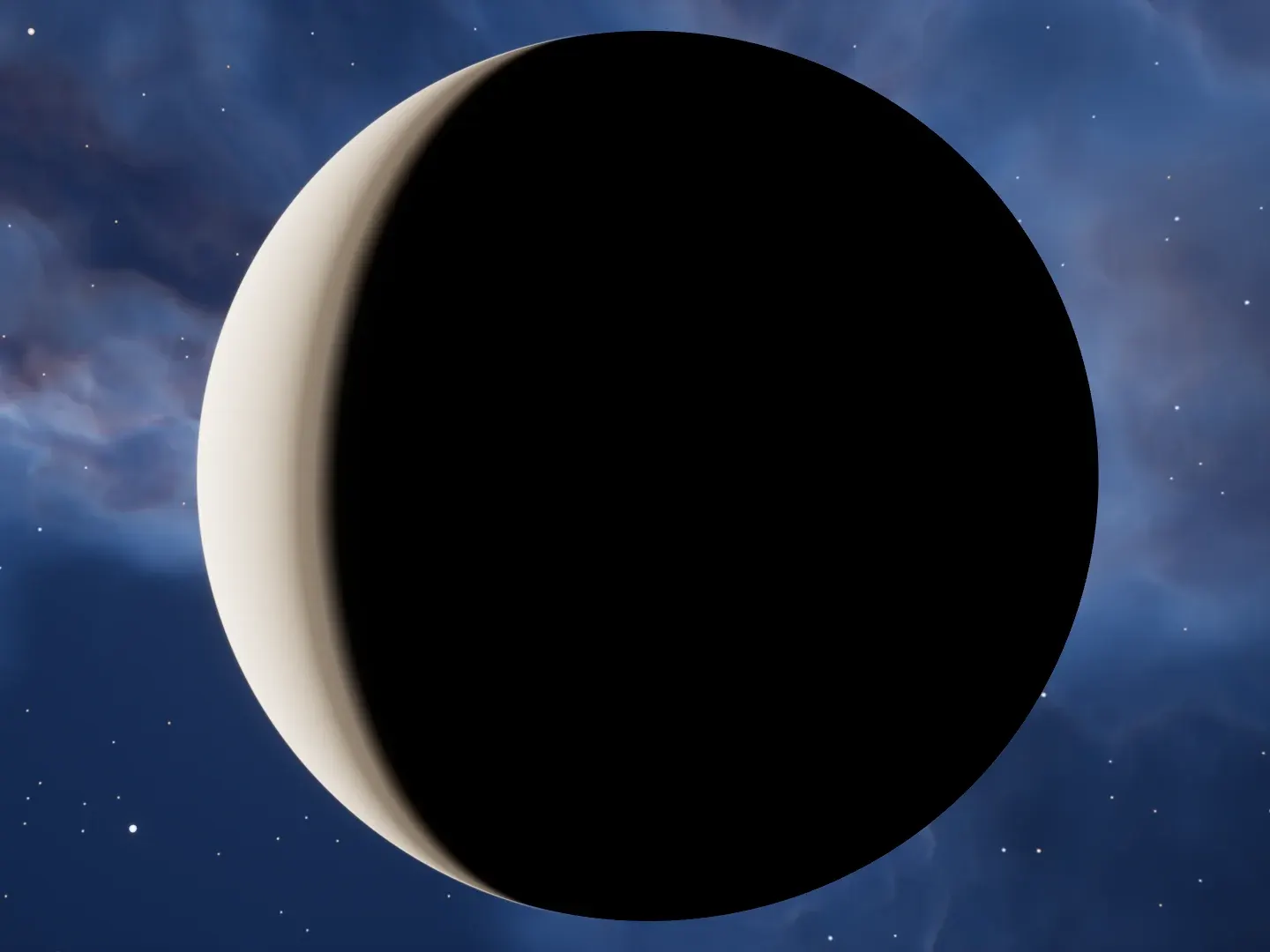
A greenhouse world is built in three layers. From orbit you meet the deck, a layer of cloud 30 to 85 km up whose pattern is the wind's and whose colour is the chemistry's: water cloud white, sulfuric acid cream to salmon, sulfur gold to olive. Each of the twelve looks takes its colours from our painted study of its type, measured, never picked, and each planet then moves its look by its own science: its heat, its pressure, the wind at its cloud tops, its sulfur dioxide and its spin. A fast wind draws long streaks and chevrons, a slow turner opens wide gaps, more sulfur greys the smoke. The deck stands where the planet's own temperature profile puts it, and it turns at the speed of its cloud-top wind, far faster than the ground beneath, as Venus's clouds circle that planet every four days.
 , open full size
 , open full size
 , open full size
Under the deck lies the air, 16 to 250 bar of carbon dioxide, so deep that the blue is scattered away above you. The descent passes through all of it: the deck from 60 km up, a bright fog inside it, its base glowing overhead, then a red-orange haze that opens onto the ground a few kilometres down. The light there comes from the whole sky at once, a few per cent of the sunlight on the cloud tops, over a Venus surface of lava plains, wrinkle ridges, broad shields and pancake domes. On the thermal emission worlds, the commonest kind, the rock glows at its own temperature by Planck's law, at its true ratio to the daylight that reaches it. These worlds sit far closer to their stars than Venus, so the glow matters by day only on the hottest; on the night side it is the only light, a dark red plain.
One fix shows from orbit. The air over the deck had laid a pale veil across the whole disc, washing the acid decks to salmon and the smoke of the glowing worlds to pink; it now stands only where it belongs, a luminous ring at the limb. Every look is on the new greenhouse worlds page.
Giant weather from physics
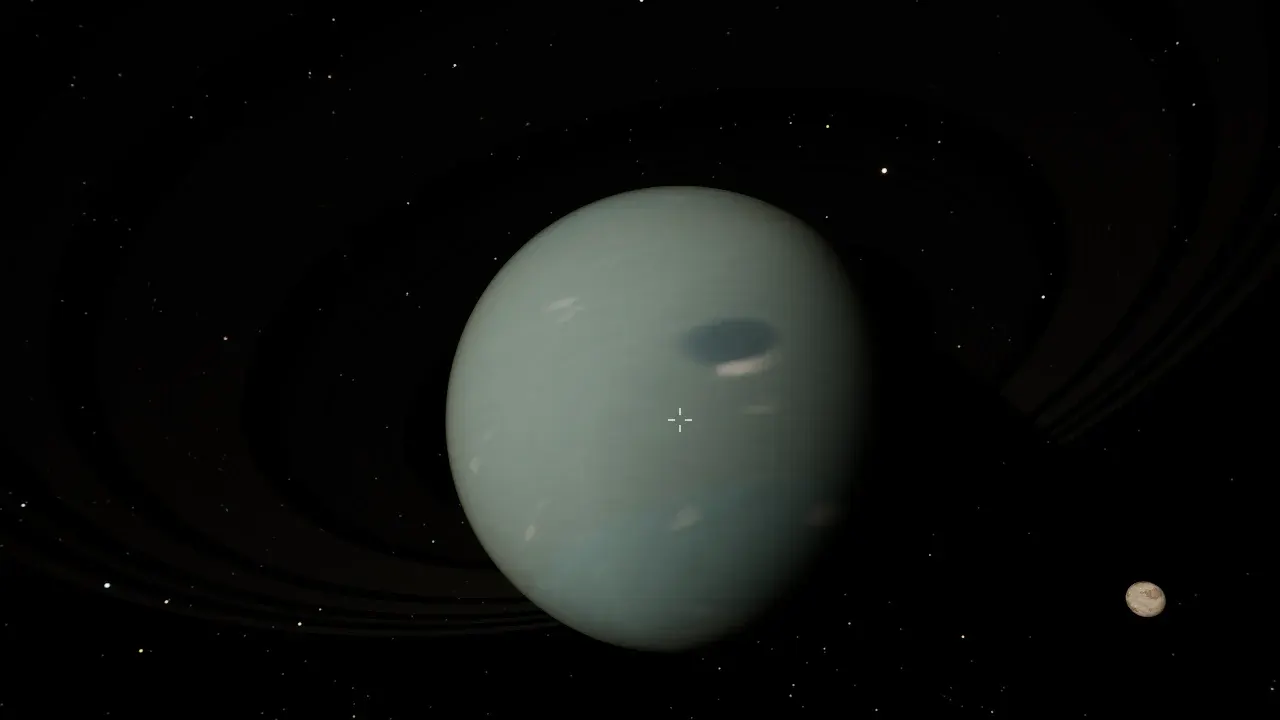
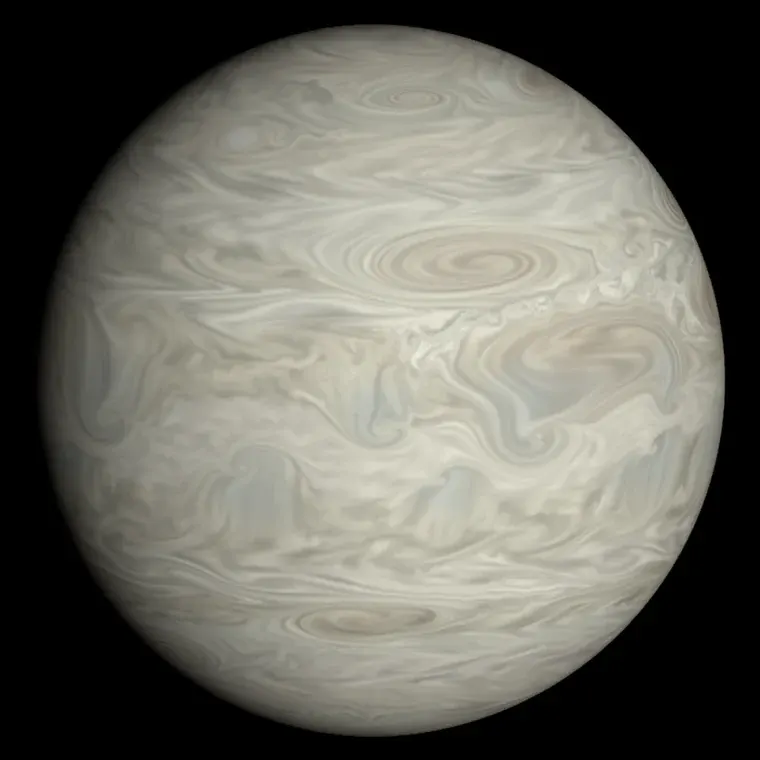
Last week a giant's look was built from a look row and a random stream. This week every one of the 2,107 gas and ice giants around the catalogue stars carries a weather block derived from its own physics: its jets, bands, storms, haze, poles and rings, from its spin, its temperature, its chemistry, its star and its moons. The renderer draws the block and nothing else, with no random stream of its own, and its C++ twin in the game matches the desk's version bit for bit.
The width of a giant's storms is set by the deformation radius, the scale on which a spinning, layered atmosphere organises itself, and it now stiffens only where something condenses. Haze is made by photochemistry, its colour by what makes it: tholins, soot, sulfur or methane ice. An ice giant's deck is whatever condenses first in its air, hydrogen sulfide on half of the cold ones and methane on a third, seen through the methane above it. No closed cyclone forms within 10 degrees of the equator, where the Coriolis force vanishes. Great spots follow a merger clock: among gas giants, 44 per cent have none, 46 per cent one or two, and one in a thousand has eleven or more.
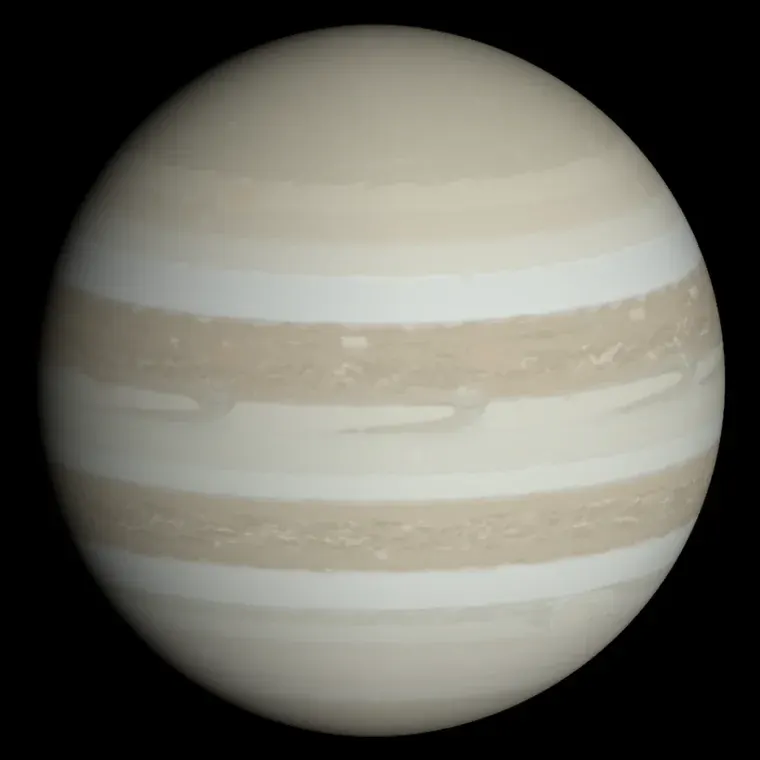
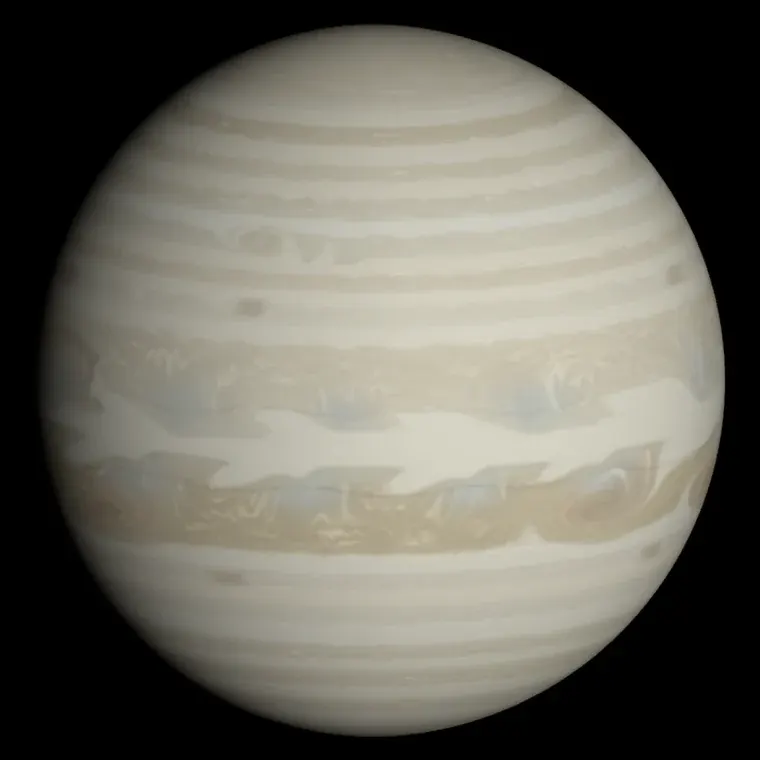
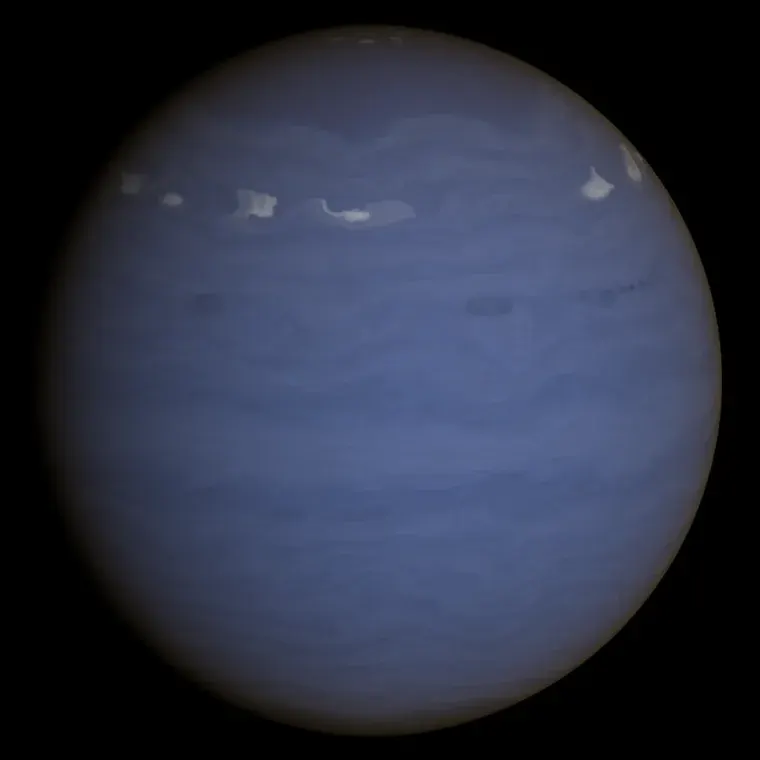
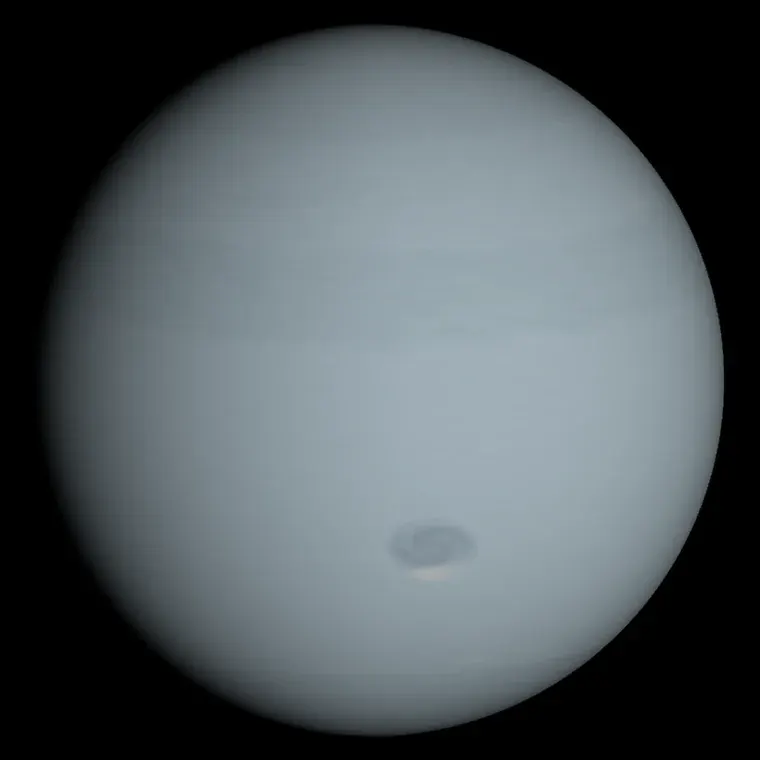
Then we held it to Sol. Run on Jupiter's, Saturn's, Uranus's and Neptune's own drivers, the science now draws each of them close to its observed weather block, written from the literature, each disc within about the smallest colour difference the eye can see. Uranus's bright north comes from methane depleted towards its summer pole, as the telescopes show.
 , open full size
 , open full size
In flight, every giant with a block is drawn from it, and a generated giant now leaves its placeholder in about twenty seconds, down from nearly two minutes: a 1,024 pixel preview map lands first and the full map fades in over it.
 , open full size
Rings come from the weather block too. Every ringed giant now wears a ring built in the game from its block, its kind, its gaps and its colour, and 1,152 giants that flew bare have rings for the first time. Saturn's rings keep their gaps, Encke and Keeler among them. A narrow dark ring shepherded by a moon can hold arcs, clumps that do not spread round the ring, like Fraternité and Egalité in Neptune's Adams ring, which Neptune now wears in the game. And a thin ring is now lit as single scattering says, the light crossing the layer on the way in as well as out, so Jupiter's faint ring shows from behind the planet.
 , open full size
 , open full size
 , open full size
The rarest weather is findable. The fast-travel menu carries twelve RARE WEATHER stops, one for each kind of find, each titled from the giant's own block. And the science hub reads the block whole: point it at Jupiter and VIS lists three great spots, while IR 5 µm finds eight cyclones round one at the north pole, as Juno found them, and nine hot spots at 7 degrees north. Point it at Saturn and it finds a six-sided polygon at 78 degrees north, the hexagon.
The science hub, one view and many sensors
The hub itself was rebuilt around how you use it. The left panel is now VIEW, one at a time, which paints the body in that light: visible, 5 µm infrared, methane, ultraviolet and the microwave radiometer, or for a star H-alpha, extreme ultraviolet and the magnetogram. Below it sit the INSTRUMENTS, spectrometer, magnetometer, gravity and X-ray, any number lit at once, each in its own card with its picture or readings. One SCAN latch runs them all together, each banking its result as it completes.
Mining, second and third waves
Press PING and a wave runs out from the ship through the field, grading every rock it passes, colour by family, with its return in credits per tonne for the head you have fitted. It names the best: at most six RICH and eighteen GOOD. About one whole monolith in 250 holds a CORE, a gold diamond on the ping, nine of them in a 20,000-rock dense cluster. A core rock will not yield to the beam alone: it stops at half the work, and the rest is charges. Seat them on the fissures, where a charge is up to two and a half times stronger, watch the gauge set PREDICTED against the clean band and SAFE against your ship, then hold DETONATE. A clean break gives the core to the largest piece. A shatter, or a break by charges with your ship inside the blast radius, costs hull.
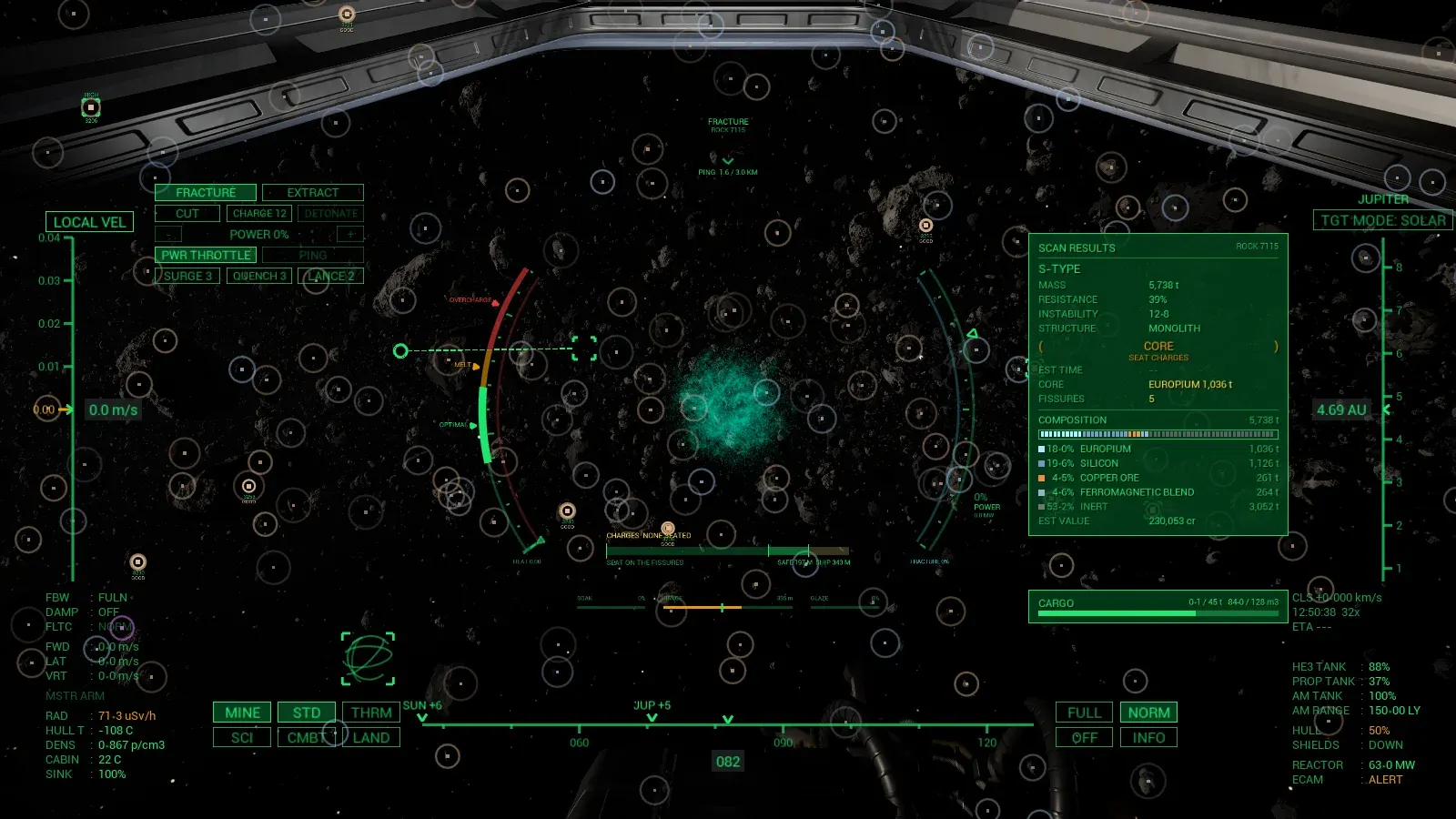 , open full size
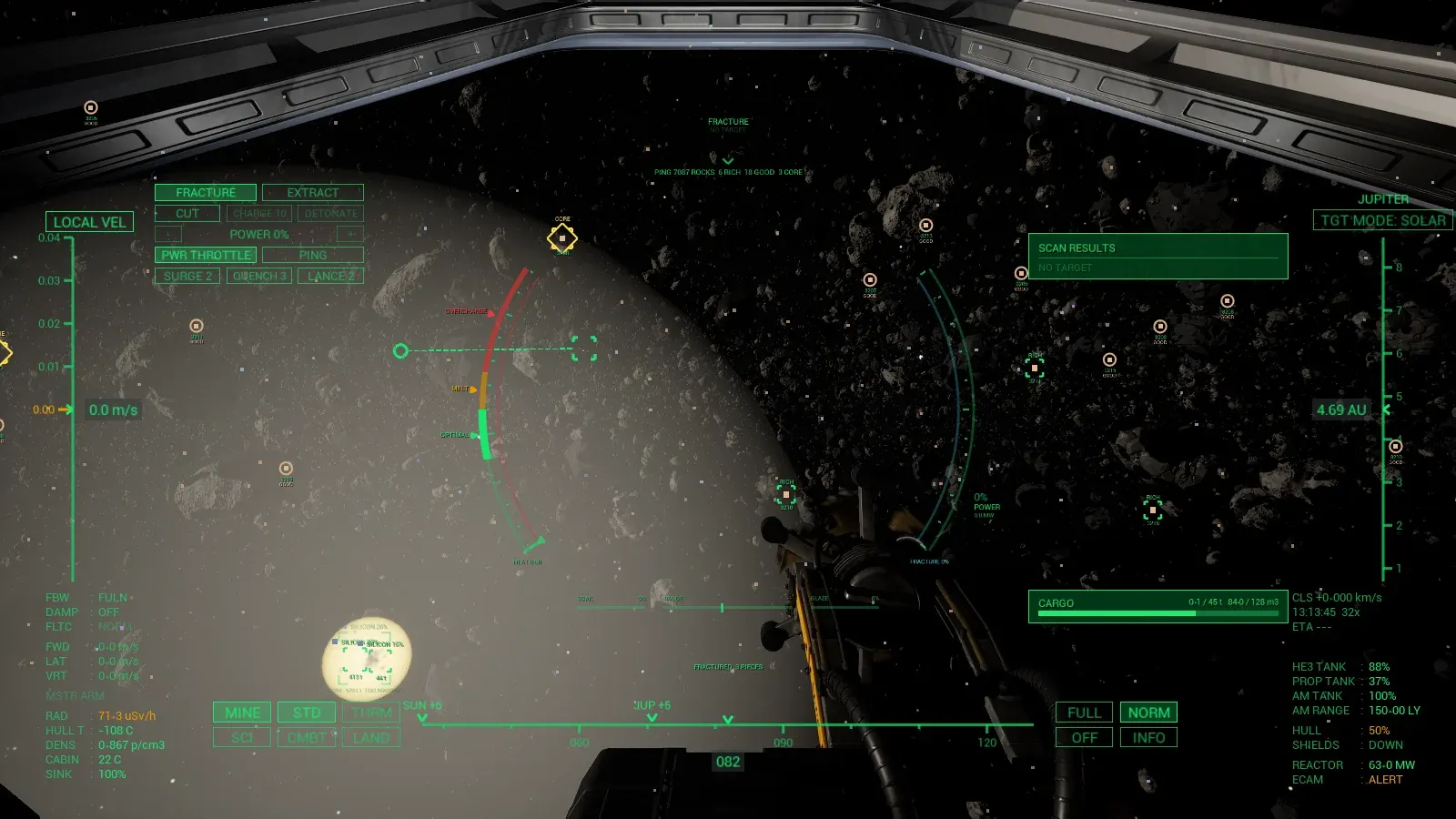 , open full size
The flow was cut to what a pilot needs. The cutter's panel moved off the glass into INFO's six-tab mining card: GUIDE, ROCK, CUTTER, HOLD, FIELDS with SET NAV, and TRAIN. MINING TRAINING teaches the basics and core rocks in 22 cards, each moved on by doing the thing it asks, each read aloud by Cassie, the first officer. SURGE, QUENCH and LANCE join the hub as active modules, charges restock at a station, and every dense field is now a nav target: the ship is caught at its edge like a station, and Sol's list grows from 10 rows to 17, MAIN BELT 4 and JUPITER L5 among them.
The cargo bay
Mined ore now goes somewhere. The processor bins drop whole units into the hold, so the ore can be sold, and the hold shows CARGO in tonnes and cubic metres. Press E at the hold's wall panel and the CARGO console opens on HOLD and MINING. The bay itself was built in Blender this week: six ore hoppers with sight glasses, the ore inside tinted by what it is; inclines and a transfer bridge; a refinery with a crusher, a furnace and a casting line; and an ingot crate that stacks what comes off the line. The refinery runs in world time, with its power, feed, stage and progress on the console.
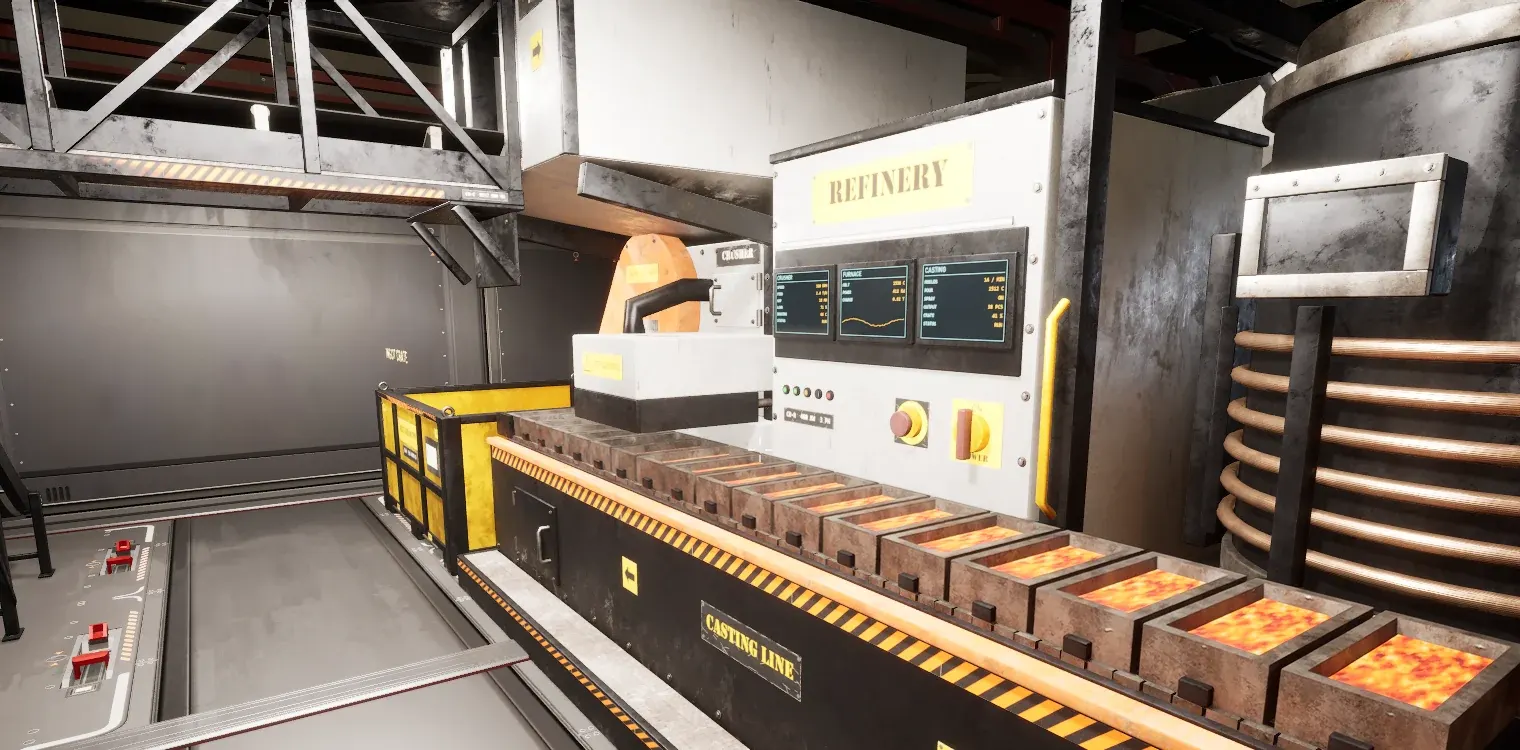 , open full size
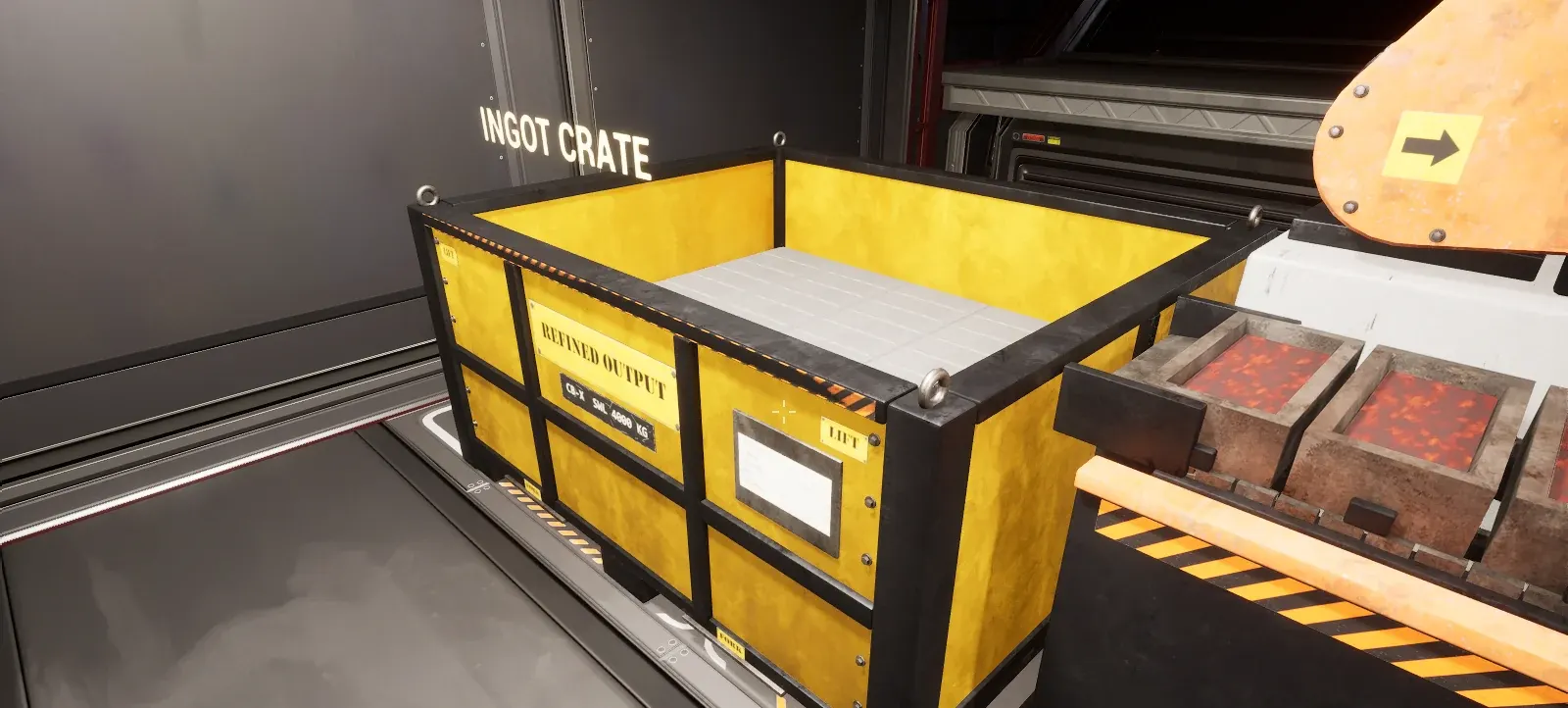 , open full size
Flying down
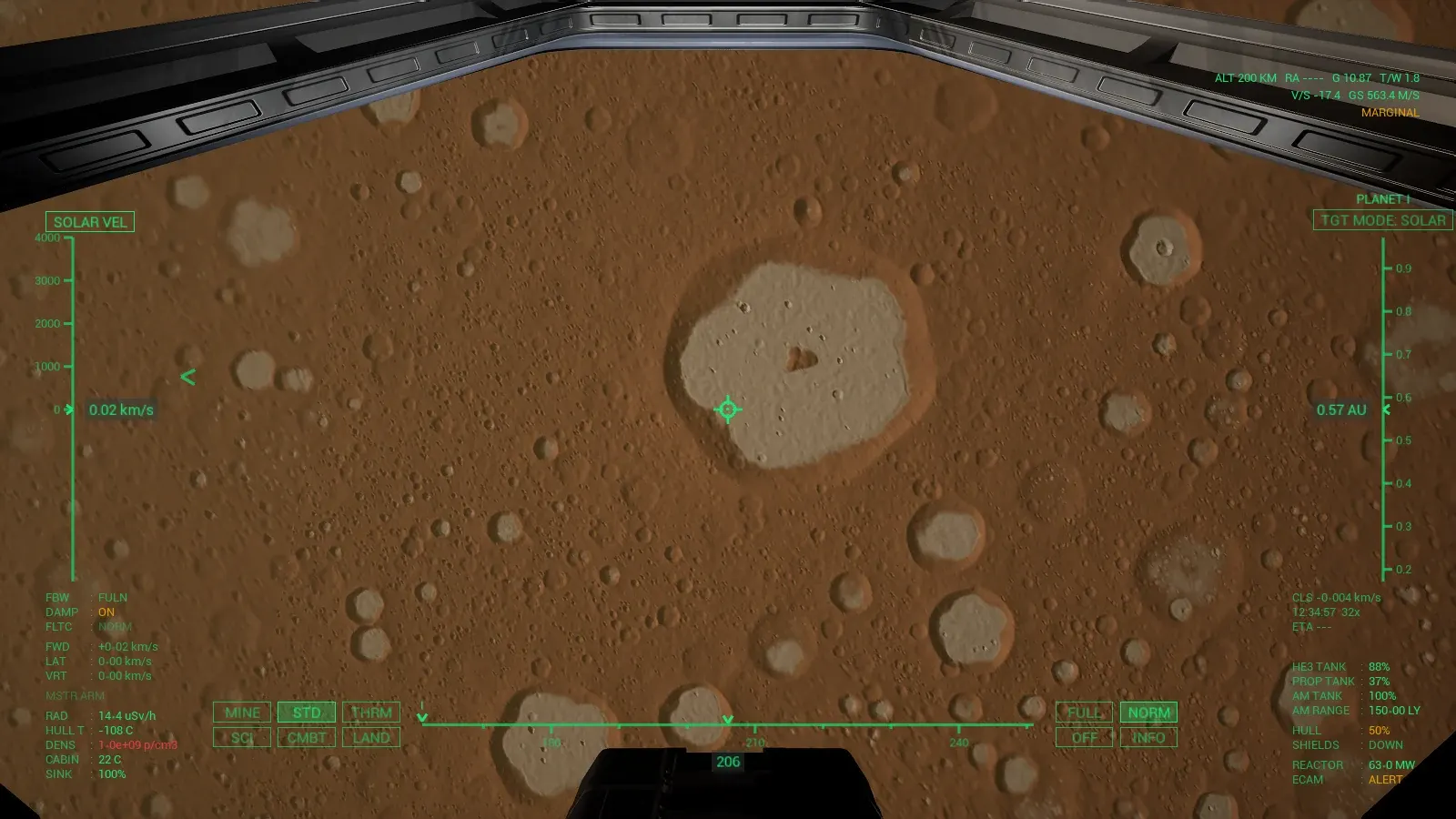
The planetary spin transition is in the game, proved in flight 16 checks out of 16. Cross 16 km on the way down and the ship's computer calls "Planetary spin transition altitude" with a tone, and the turning ground's speed, 630.7 m/s on our test world, is taken off her speed at the line, so every speed on the glass is now over the ground. Climb out and it is given back. On a world with air the air brings her into step by drag, against the column of that world's own atmosphere, and on the test world it took her ground speed from 617 to 484 m/s between 17 and 16 km. Touchdown graded FIRM at 4.4 m/s.
The approach lost its seams too. A fast-travel stop at a landable world holds the screen until the procedural planet has drawn its first frame, so you never see a placeholder; the world's air now stands over it from orbit; and the haze no longer leaves a clear patch beneath the ship on the way down.
 , open full size
Distant worlds changed as well. From about one pixel across, a landable world in view is now the live planet, not a stand-in picture; each costs about 0.05 ms of the graphics card's time and 65 MB of its memory, and four can be live at once. Far planets and moons are now drawn as stars of their own brightness, by the same code that draws the stars, so a planet fainter than the faintest star you can see is not drawn at all. And the lighting plan landed: interiors rise about a stop, sunlit ground on an airless world no longer blows out when the camera looks into shadow, and an airless night has starlight, a shadowless light from overhead at 0.004 lux.
The galaxy map and the menus
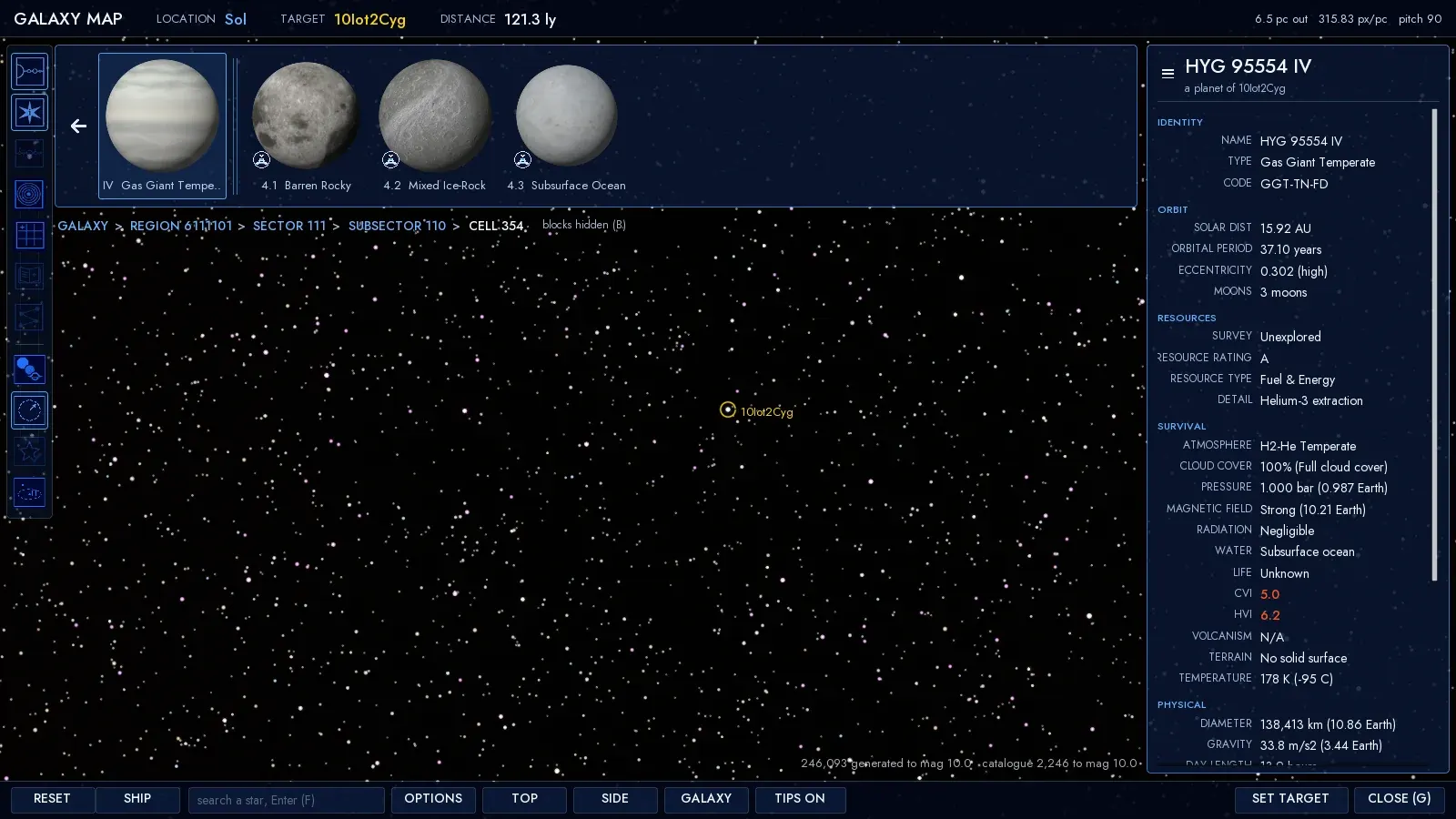
On the galaxy map a planet's card shows its moon count. Click it and a bar of the planet and its moons opens out from it, sized by the same five modes as the planets, with a back arrow home. The fast-travel menu's spaceflight list grew long enough to split into four pages: SPACEFLIGHT for ships, stations, belts, boarding and combat, then GAS GIANTS, TERRESTRIAL and RARITIES.
 , open full size
On paxabyssi.com
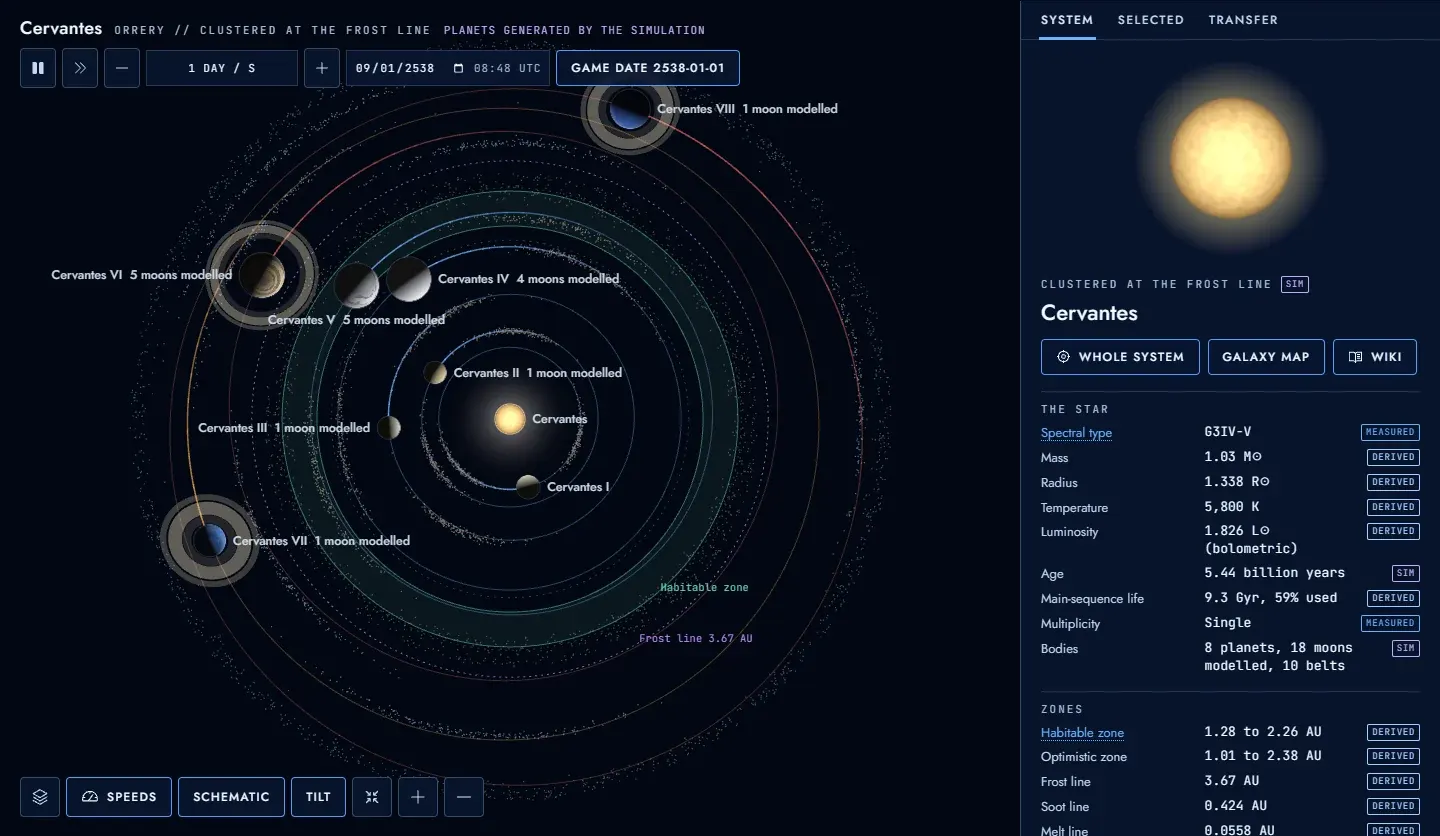
The web galaxy map now has a system for every star. We ran the game's own generator over the 113,061 map stars it builds on demand, beside the catalogue's sheets: 119,623 systems, 60,524 of them with planets. Hover or select a star and its panel says what the system holds, planets, moons, belts, habitable-zone worlds, rings and notable types, and every star offers the orrery, by button or the O key.
 , open full size
The orrery draws every world as a lit globe turning on its own pole, the star as a turning, limb-darkened photosphere, and a portrait of the selected world in the panel. Every gas and ice giant wears its own map, as the game draws it: the giant's seed picks a look of its type, the game's recipe is built for that seed in your browser, and the game's own giant shader bakes the map on your graphics card. A Speeds popup sets how fast the planets and moons turn. New science pages went up for solar system types and the orrery, barren and ice worlds, lava worlds and greenhouse worlds, each world page opening on large frames from the game with every type on its wall, and the wiki gained Atmospheric escape, Hot Neptune desert and Titan.
Also this week
- CALIBRATE. The THROTTLE, JOYSTICK and PEDALS pages each have a CALIBRATE sheet: every axis of the device, ON or OFF, CENTRED or LEVER, the raw value and what the ship will read, live. Move everything, CENTRE HERE, SAVE. It is kept per device, and a hat switch starts off on a device never calibrated.
- Film mode. Shift+C records a clip. Shift+Alt+C records in film mode, where the game steps a fixed time per frame and writes every frame, so the footage is smooth however hard the machine is working. Every clip ends in a box to name it, save it or throw it away.
- The start screen. An in-game picture under two dark bands, PAX ABYSSI across the top, a quote that turns every 12 seconds and a status box that says what is really loading. The 37 quotes, from Cicero and Pliny to Copernicus and Gagarin, were each checked against a named translation.
- The music player. A right-click menu, an UP NEXT queue, an OPTIONS page and a now-playing popup that you can turn off, time and move to any corner.
Next week
Giant weather gets a clock: storms born, drifting, merging and fading across the years. The lava worlds get their ground at walking distance, cracks and pools at the shore with molten rock underfoot, and their night-side glow seen from far off. The greenhouse worlds get the underside of their deck lit red by the glowing ground, a scientific look to set beside the painted one, and a descent you feel: the horizon bent upward by the thick air, and the heat and pressure on the hull. Mining gets its sound, and a rock you have mined stays mined. See you next week.
Related in the wiki
Credits
- The Pax Abyssi team
- Author
Spotted an error? Tell us in the forum thread or on the talk page of a related wiki article; corrections are noted at the top of the piece.