Science // Greenhouse worlds
Greenhouse worlds, from the cloud tops down
Rocky planets smothered by their own air, Venus's kind. They are the first procedural worlds in Pax Abyssi with a thick atmosphere, and each is built from its own science: a deck of cloud drawn from its winds and chemistry, tens of bar of air beneath it, and ground you can fly down to.
Greenhouse worlds as you see them from the seat
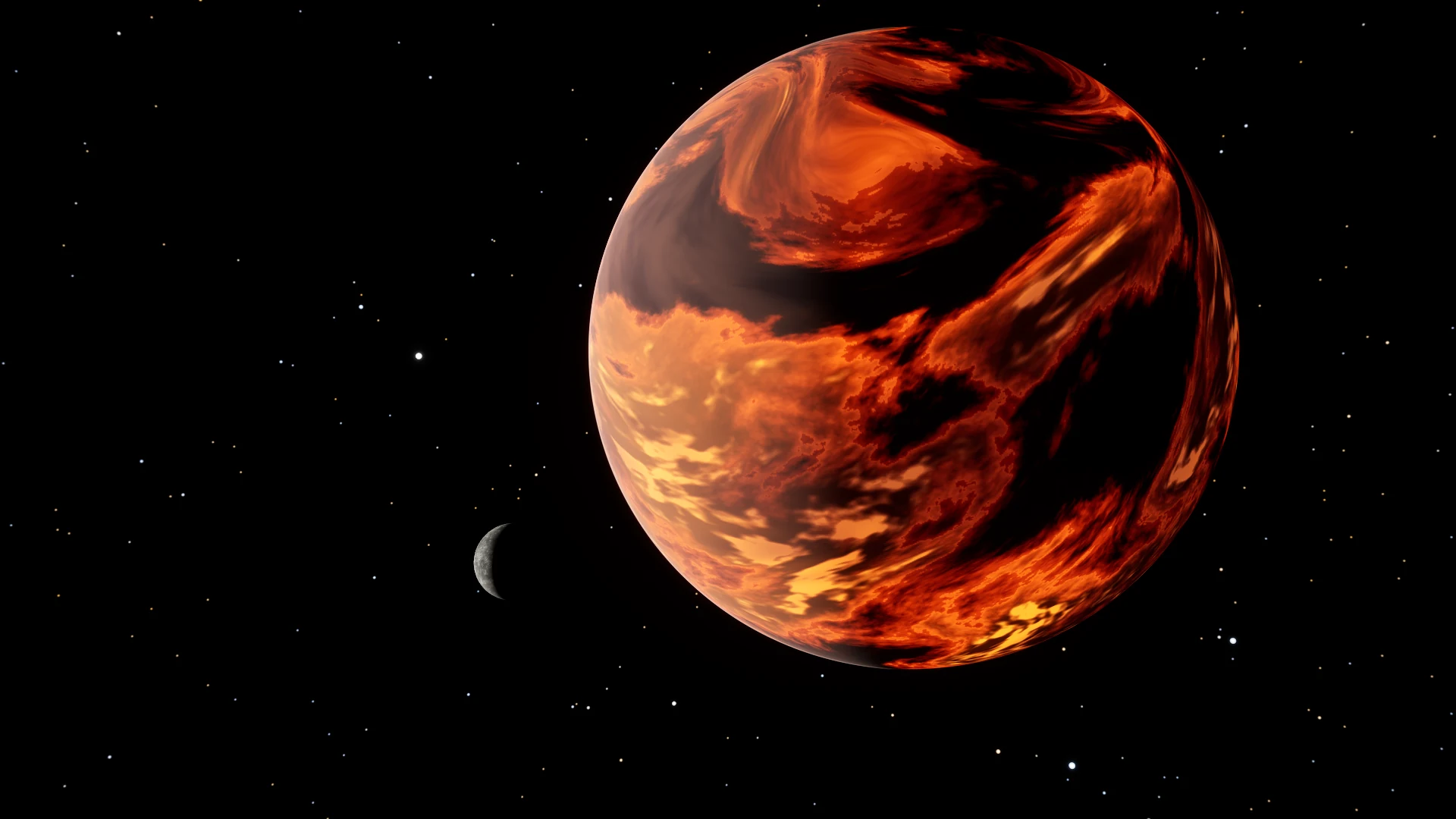
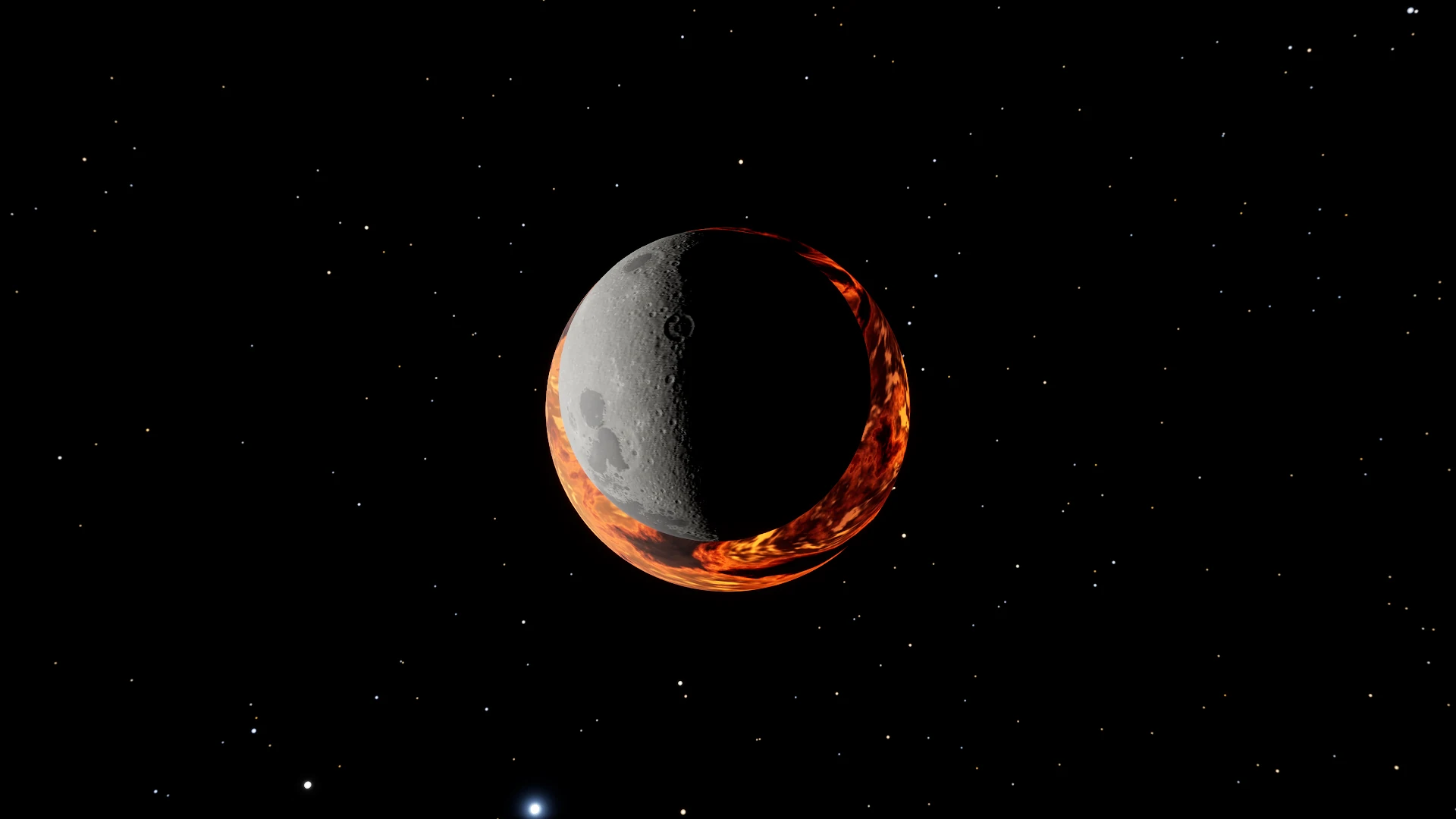
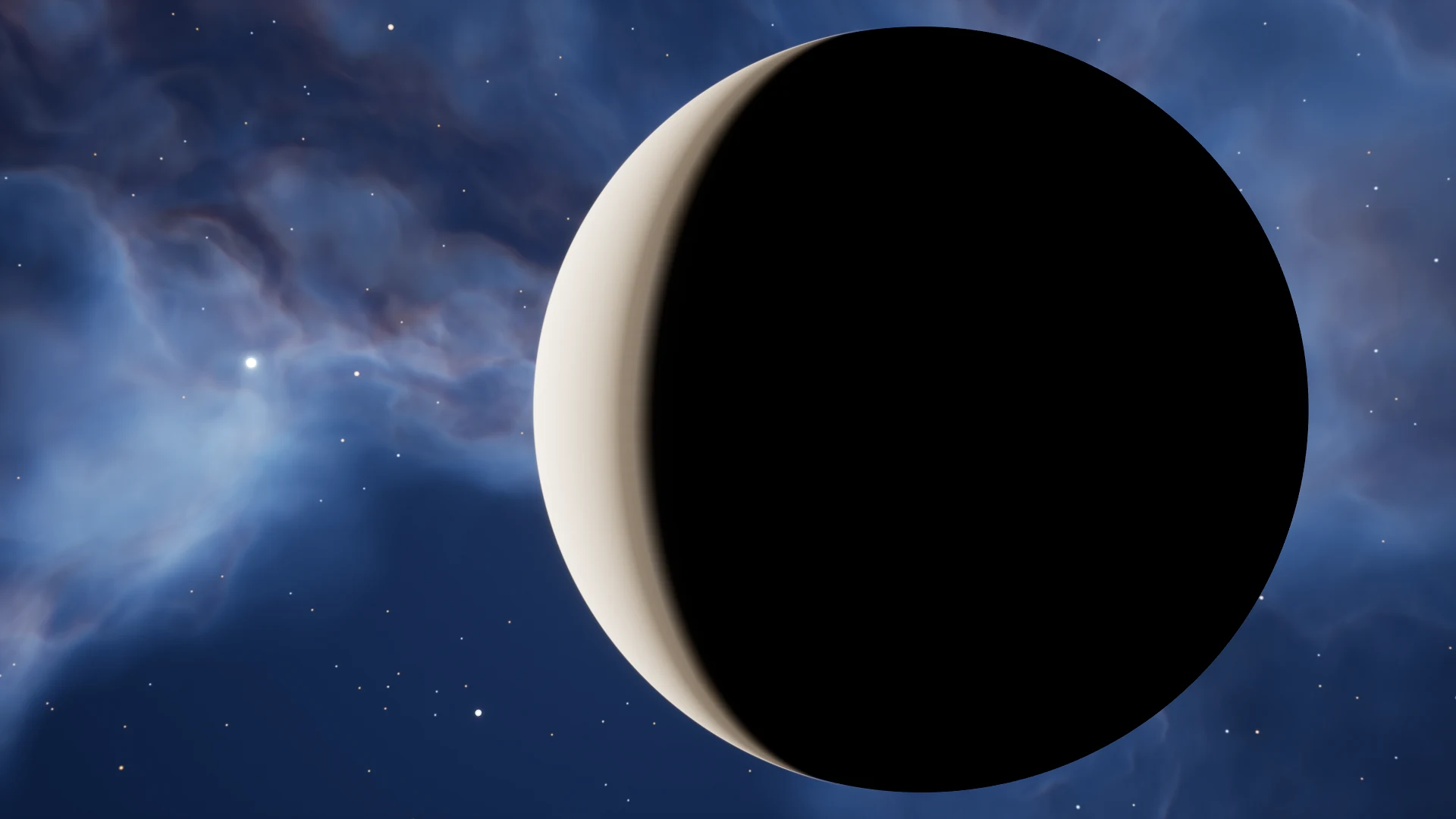
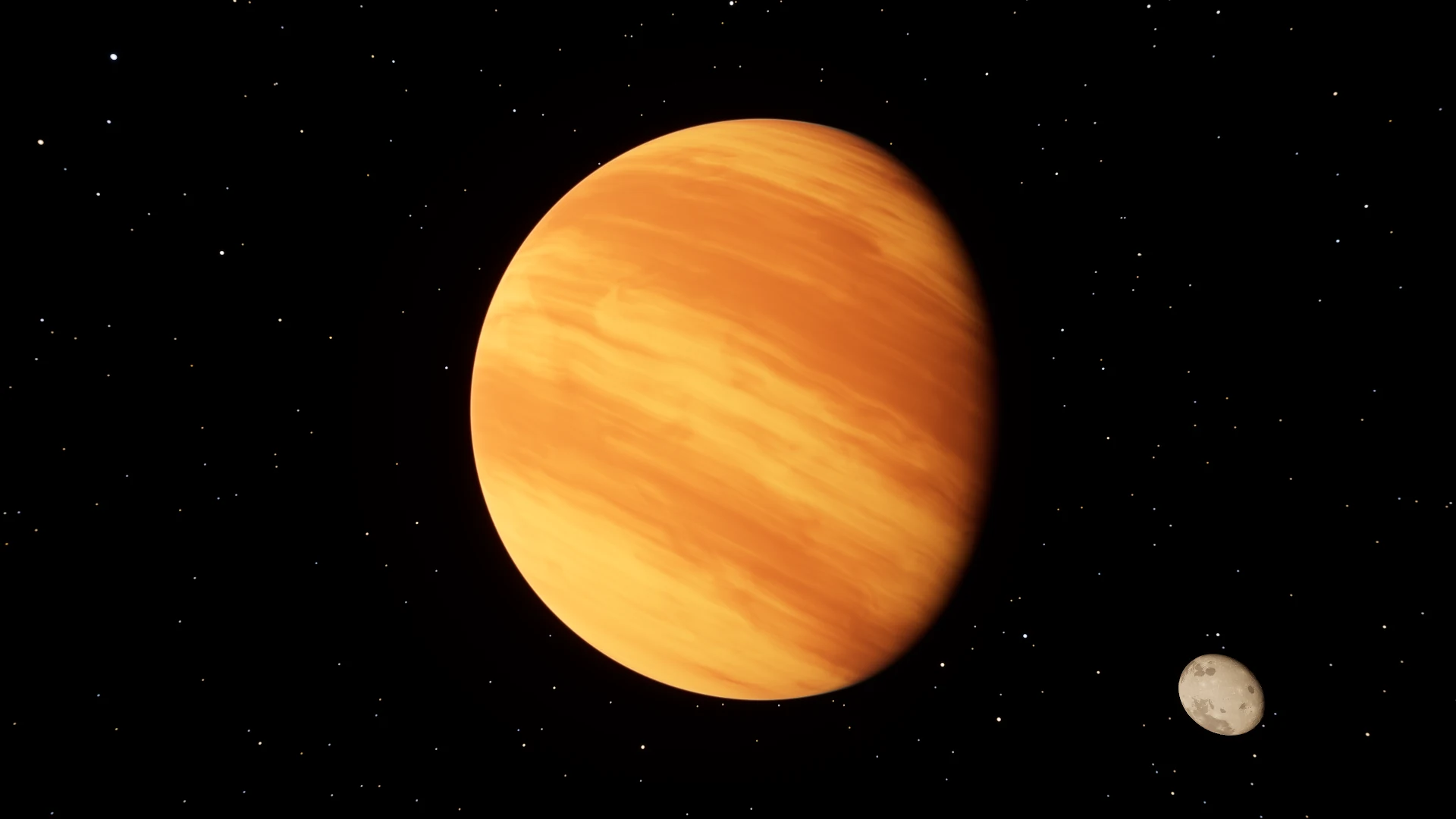
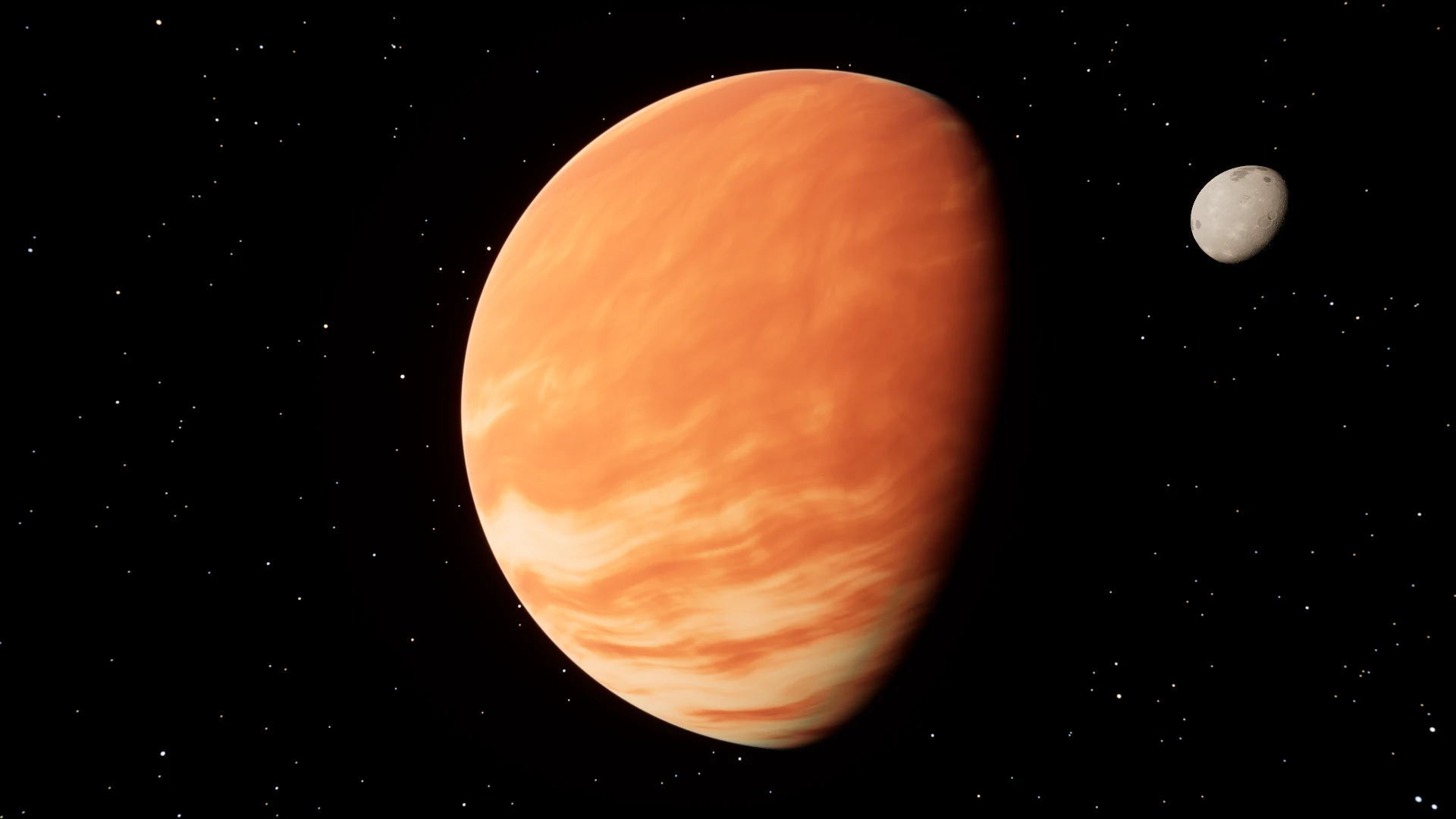
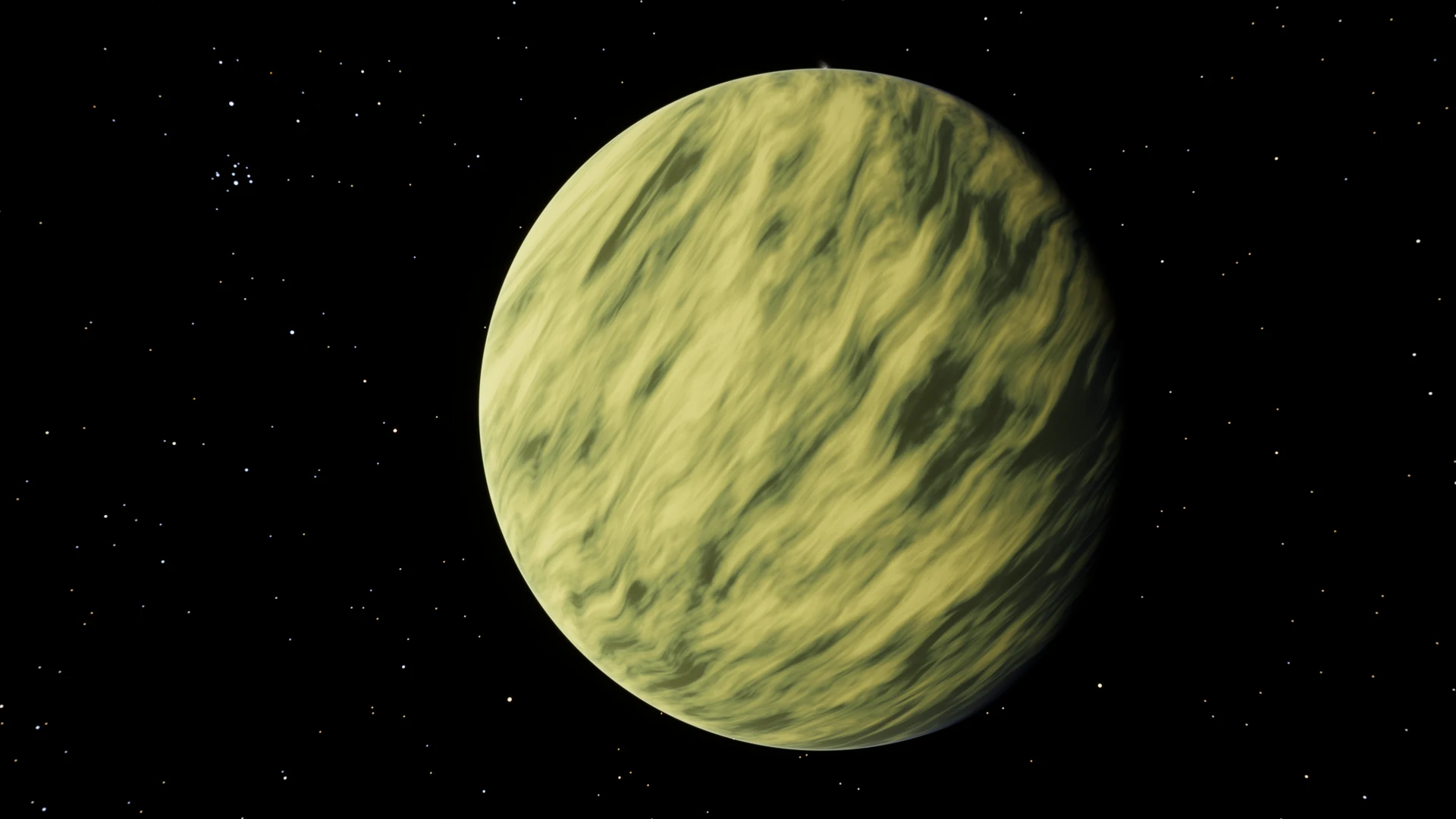
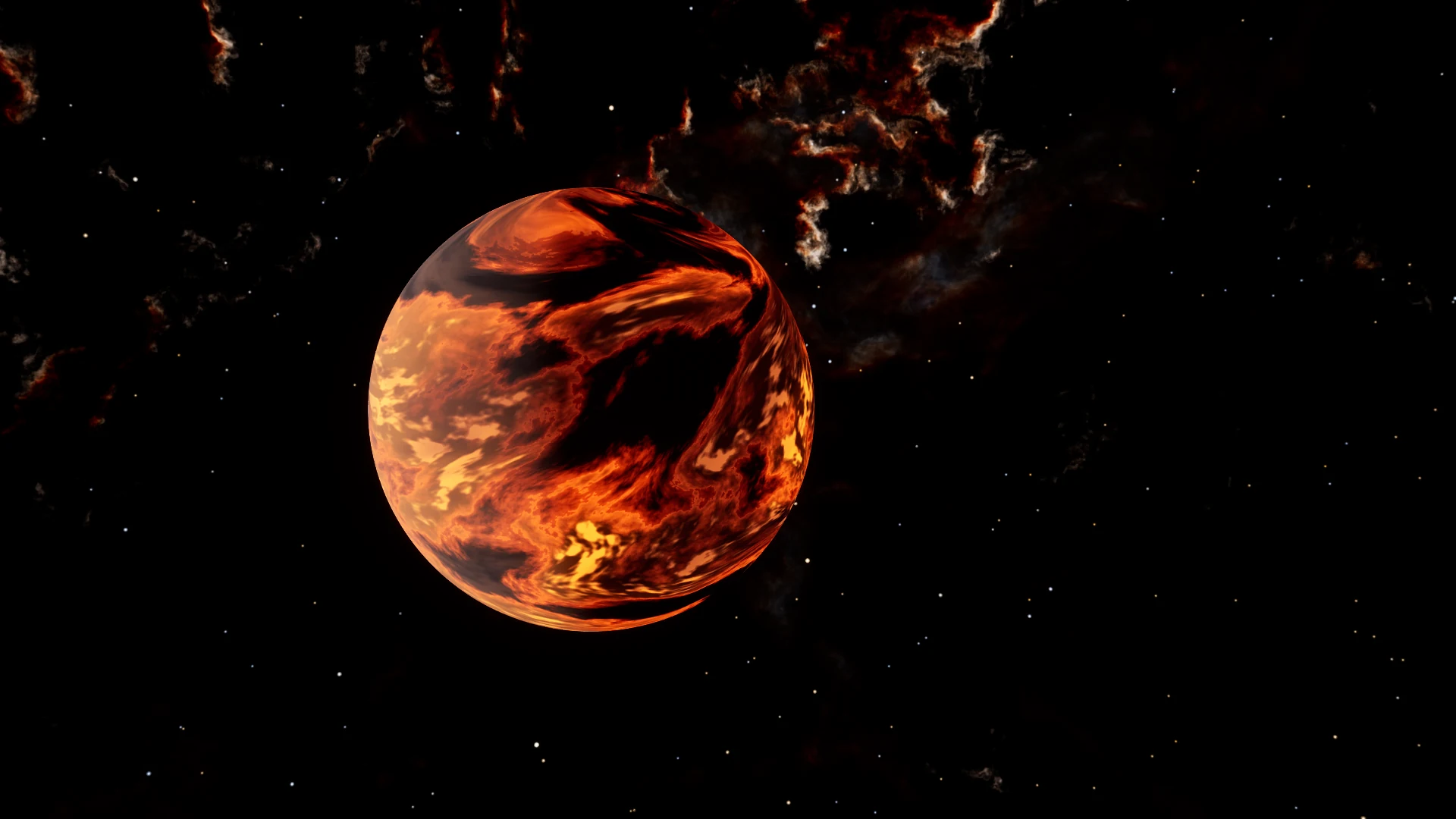
Frames from the game, the HUD off, each lit by its own star at its true colour. The decks turn: their winds carry the cloud round the planet far faster than the ground beneath it. Select a frame to see it full size.
A deck, an ocean of air, and the ground
A thick atmosphere cannot be painted onto a sphere. Each greenhouse world is built in three layers, each from the planet's own science, and the descent passes through all of them.
The deck
30 to 85 km up
The face you meet from orbit: a layer of cloud whose pattern is the wind's and whose colour is the chemistry's. Water cloud is white, sulfuric acid cream to salmon, sulfur gold to olive. It breaks where the planet's own cloud cover falls short, and on the hottest worlds its gaps glow.
The air
16 to 250 bar
Carbon dioxide between the deck and the ground, so deep that the blue is scattered away above you. What reaches the ground is a dim orange light from the whole sky at once, a few per cent of the sunlight on the cloud tops.
The ground
300 to 1,400 K
A Venus surface: lava plains crossed by wrinkle ridges, broad low shields, pancake domes and few craters. On the thermal emission worlds the rock is hot enough to glow at its own temperature.
The deck follows the planet's science
Each look starts from our painted study of its type, and the colours are that painting's, measured, never picked. Then every planet moves the look by its own numbers. Where a planet sits within its type on surface heat, pressure, the wind at its cloud tops, sulfur dioxide and spin decides its dials: a fast wind draws long streaks and chevrons, a slow turner opens wide gaps, more sulfur greys the smoke.
The cloud cover is the planet's own, so one water world is nearly whole and the next is broken half open. The deck stands where the planet's own temperature profile puts it, its base where sulfuric acid condenses and its top where the air cools to 250 K, and it turns at the speed of the wind at the cloud tops, as Venus's does every four days.
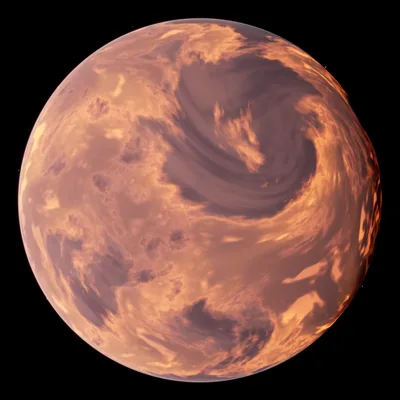
On a thermal emission world the light in the gaps is the ground's own heat, its colour moved along Planck's law from the type's typical heat, about 1,060 K, to the planet's own. A cooler world glows deep red, the hottest gold.
Below the deck the rock glows too, by the same law, at the true ratio to the daylight that reaches it. These worlds sit far closer to their stars than Venus does, so by day the glow matters on the hottest of them and outshines the daylight on a few; on the night side it is the only light, a dark red plain at the median heat. There are 458 greenhouse planets around the catalogue stars, in 404 systems, and you can land on every one.
8 types, 12 looks, sorted by what the cloud is made of
We sort greenhouse worlds by chemistry first, then by how much of the sky the deck covers. A type whose study we painted twice has two looks, and each planet wears the one painted for it.
In Pax Abyssi: every sphere is the game's own frame of a planet wearing that look, from its fast-travel stop 40 degrees from its star. Hover or focus a tile for its name.
- In the game
- In development
- Planned
Thermal emission worlds
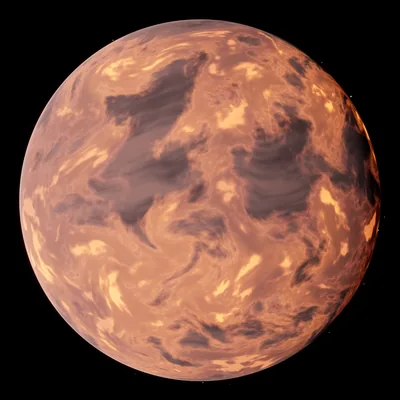
The hottest greenhouse worlds, their ground at 850 to 1,400 K under a median 57 bar of air: rock hot enough to glow, seen through the gaps in a deck of dark smoke. The commonest greenhouse world in the catalogue, 218 planets, and on the night side the glow is the only light.
 TGW-TE-GL-1
 TGW-TE-GL-2
Water cloud worlds
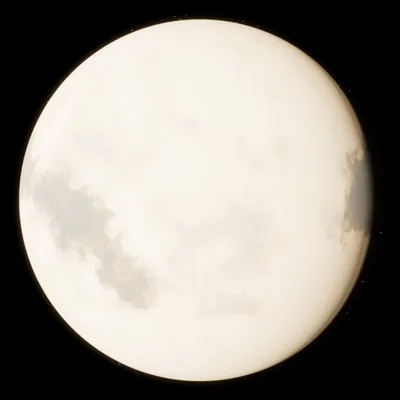
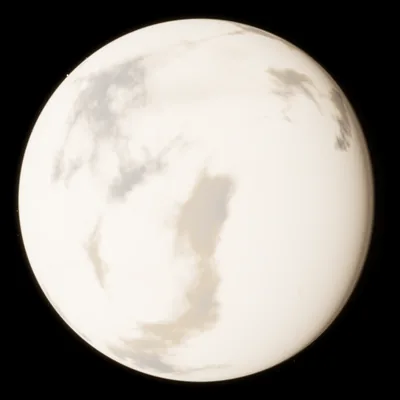
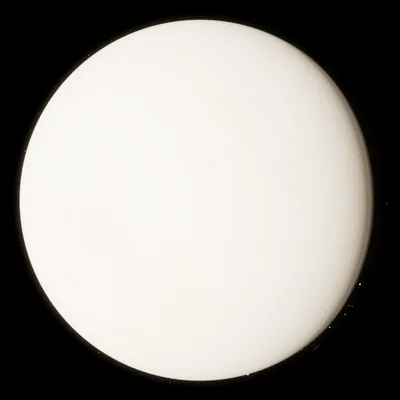
Where the air still holds more than 500 parts per million of water, the deck is water cloud: white billows broken over a slate-blue lower haze, or an unbroken pearl. They turn slowest of all, most of them once in about half a year.
 TGW-WP-WS-1
 TGW-WP-WS-2
 TGW-WF-OQ-1
Sulfuric acid worlds
Venus's own class: a deck of sulfuric acid droplets 40 to 70 km up, cream to salmon, its pattern drawn by winds that circle the planet far faster than the ground turns. Banded where the deck is thin enough for the wind to streak it, patchy where it breaks.
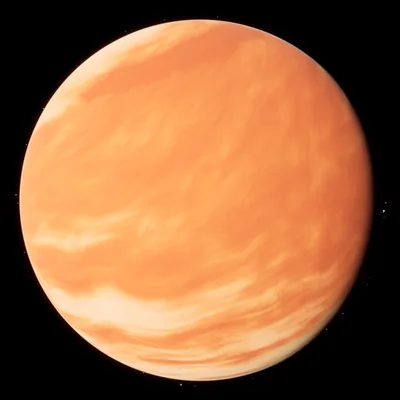 TGW-AF-TK-1
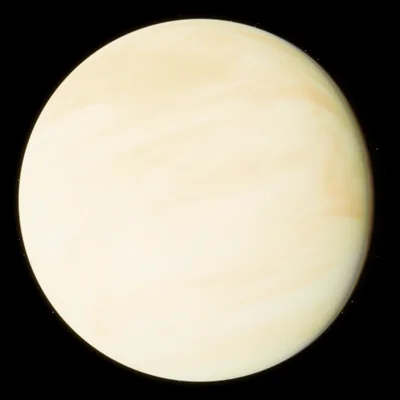 TGW-AF-TK-2
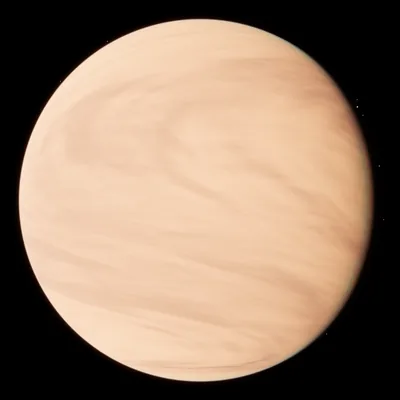 TGW-AF-BN-1
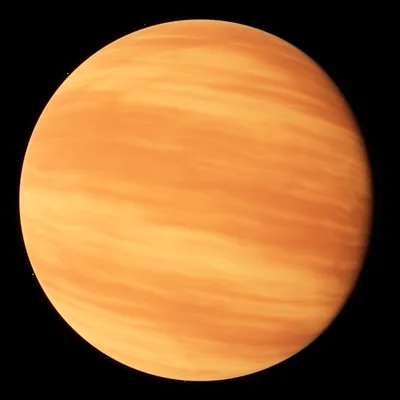 TGW-AF-BN-2
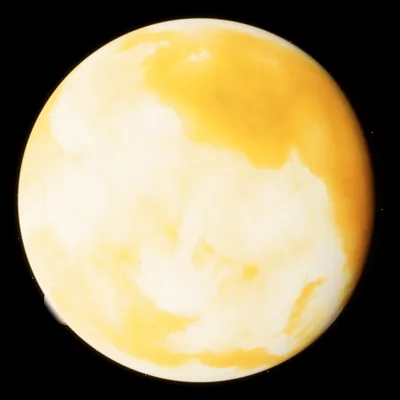 TGW-AP-PT-1
Sulfur worlds
With more than 300 parts per million of sulfur dioxide in the air, sulfur colours the deck: olive and yellow haze when it is whole, gold billows over a near-black haze when it breaks. The rarest greenhouse worlds in the catalogue.
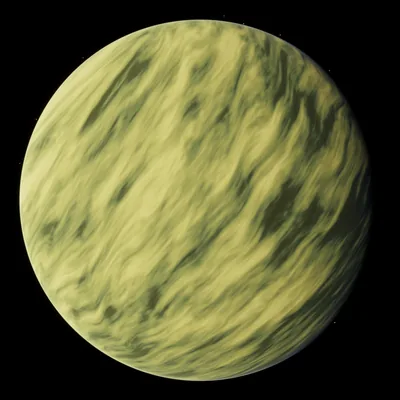 TGW-SF-YH-1
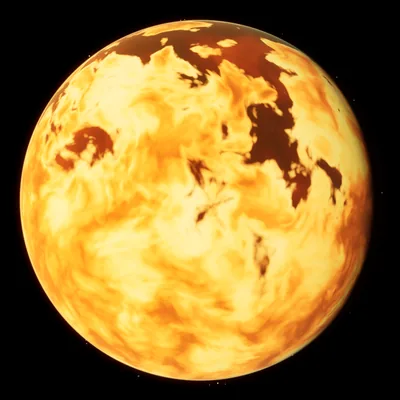 TGW-SP-BK-1
Rocky worlds hot enough for their rock to melt are lava worlds; airless and icy ones are on barren and ice worlds.
The rest of the science
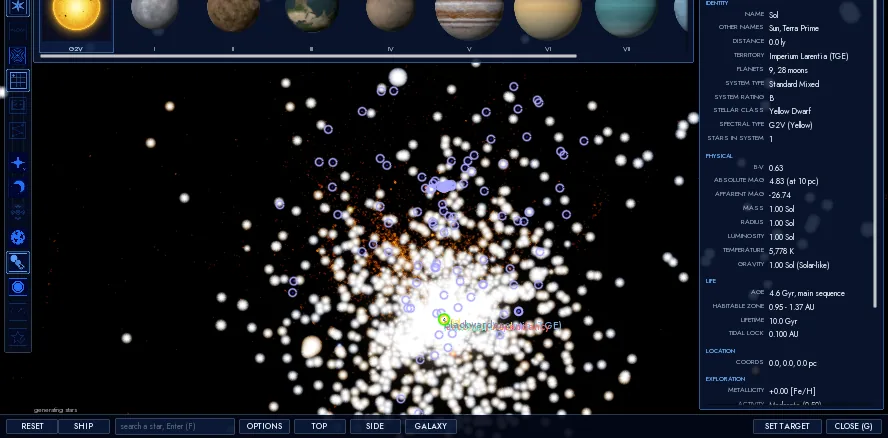 The galaxy111 billion stars, the measured ones where astronomers put themThe whole Milky Way at true scale: every catalogued star in its measured place, and the rest generated from a published model of our galaxy.
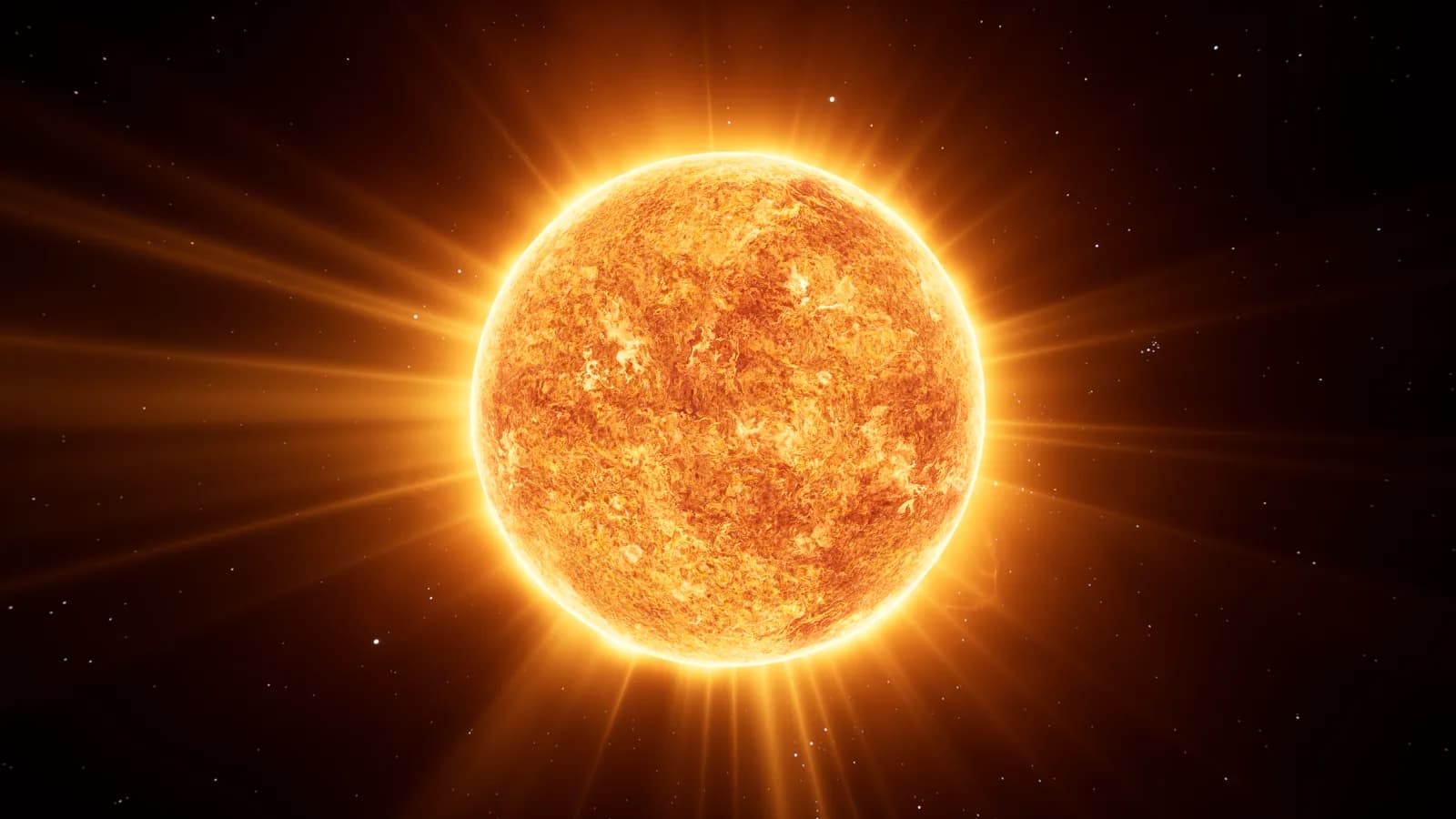 StarsA star is the colour of its temperaturePlanck's law through the human eye, so the Sun is white. Pick Scientific, Game or Vivid in the options.
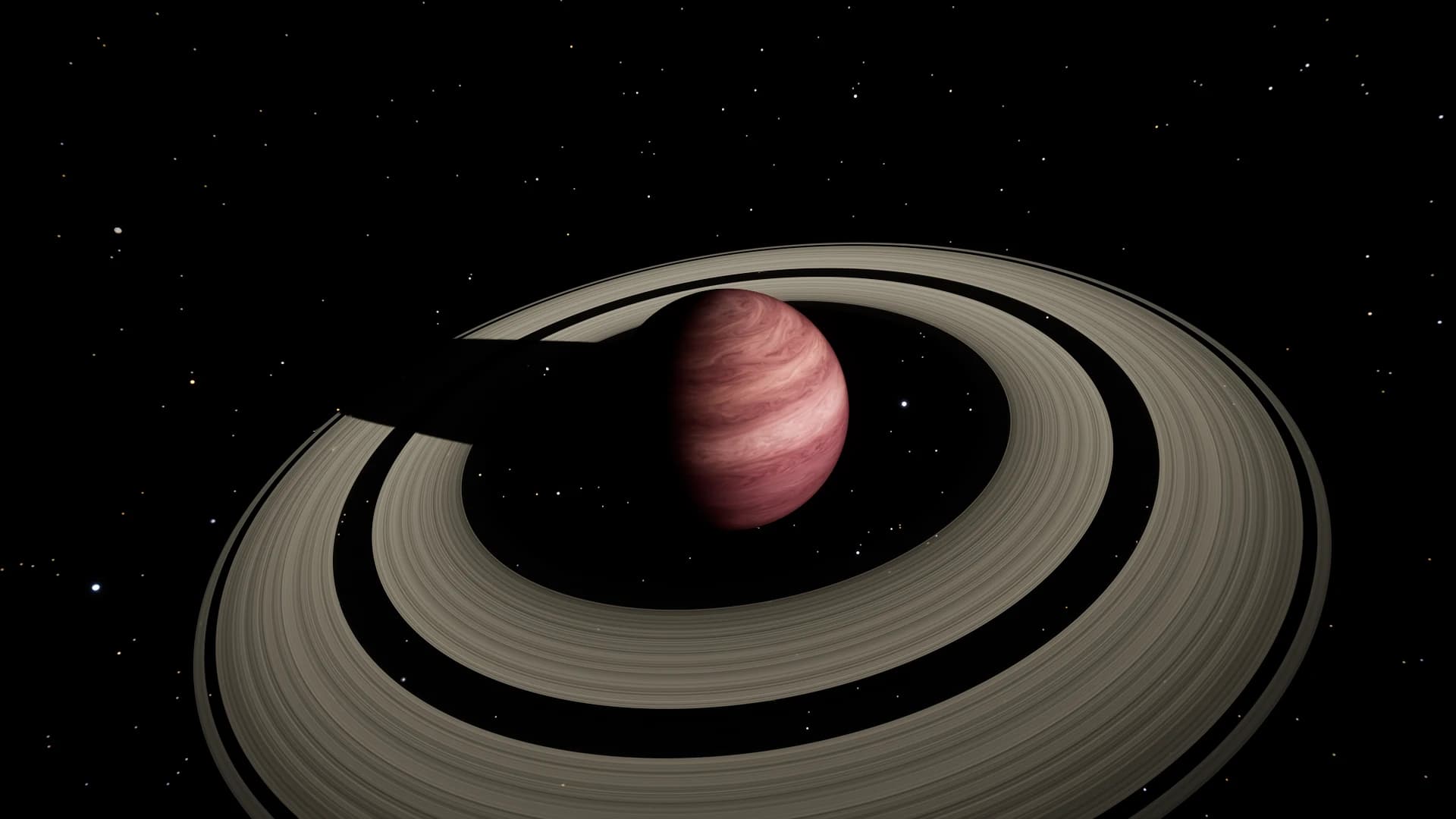 Gas giantsEvery kind of giant, drawn from its chemistry41 types across five families, each growing its own weather from a seed.
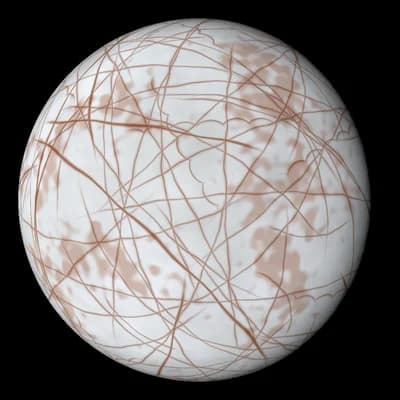 Barren and ice worldsEvery barren and icy world, grown from its typeAirless moons, iron worlds and ice super-Earths at their true radius, with the research behind each type and the numbers one planet is made of.
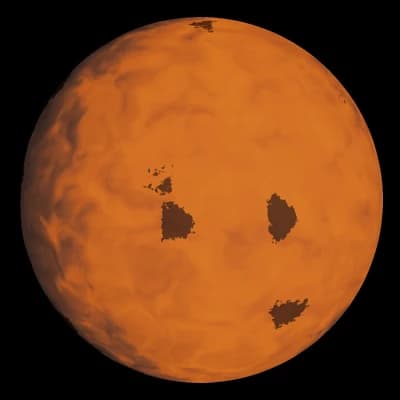 Lava worldsSeas of molten rock, each grown from its own heatEighteen types, from gold-white magma oceans to frozen plates, every planet's sea drawn from its heat, its crust and a seed of its own.
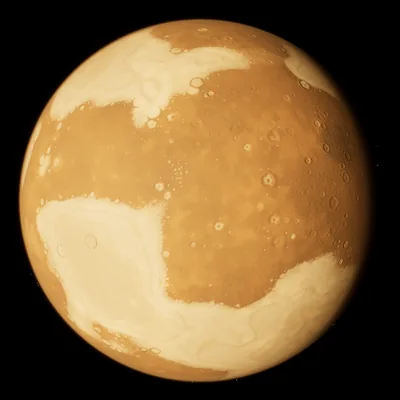 Arid worldsMars and its kind, from orbit to the dustRust plains, cratered highlands, basalt shields, evaporated oceans and clouded deserts, every planet's caps sized by its own temperature, and Mars from its own layout.
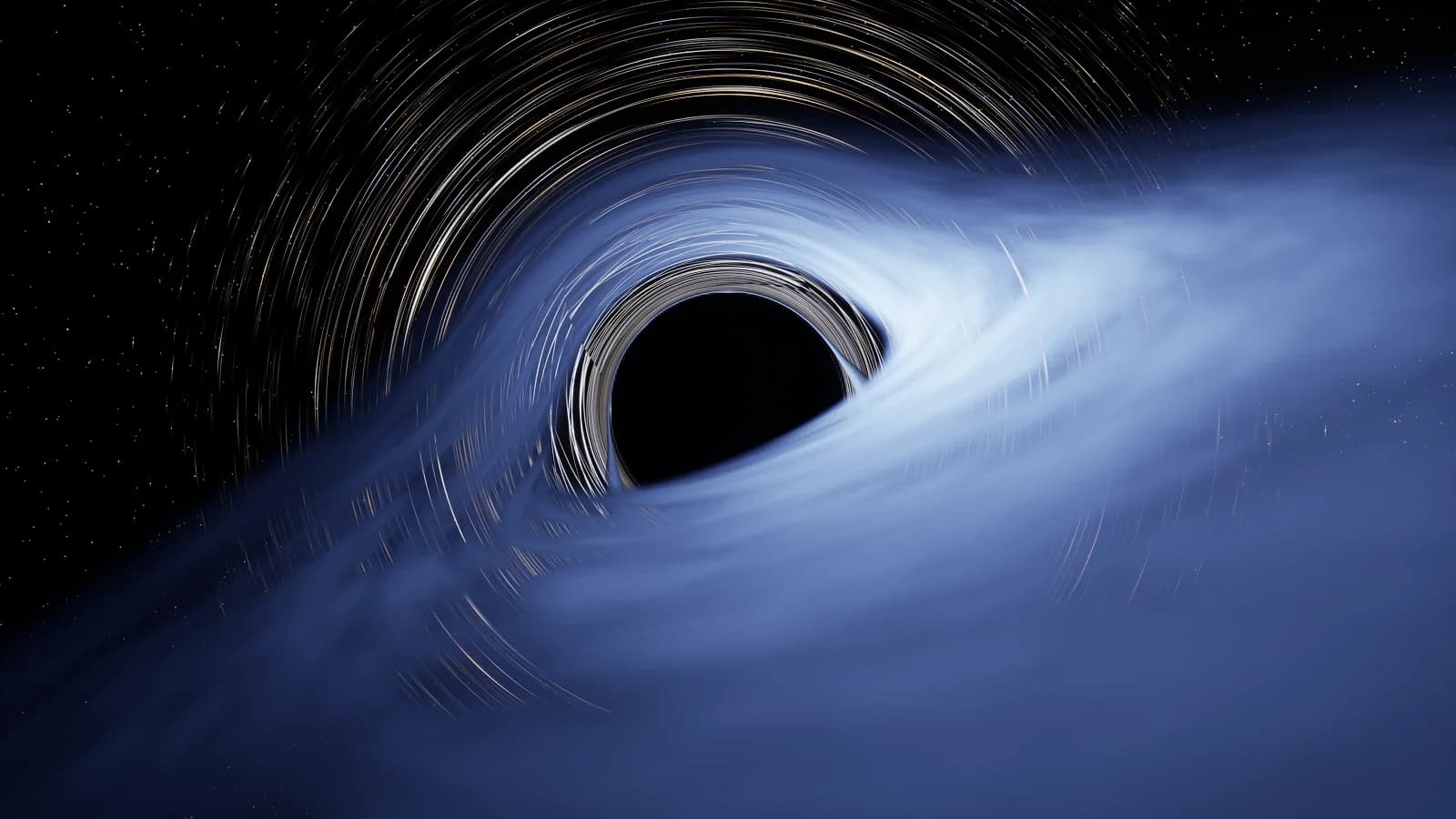 Black holesThe physics, and an artist's visionLight solved through general relativity at every pixel, over the real star field behind the hole.
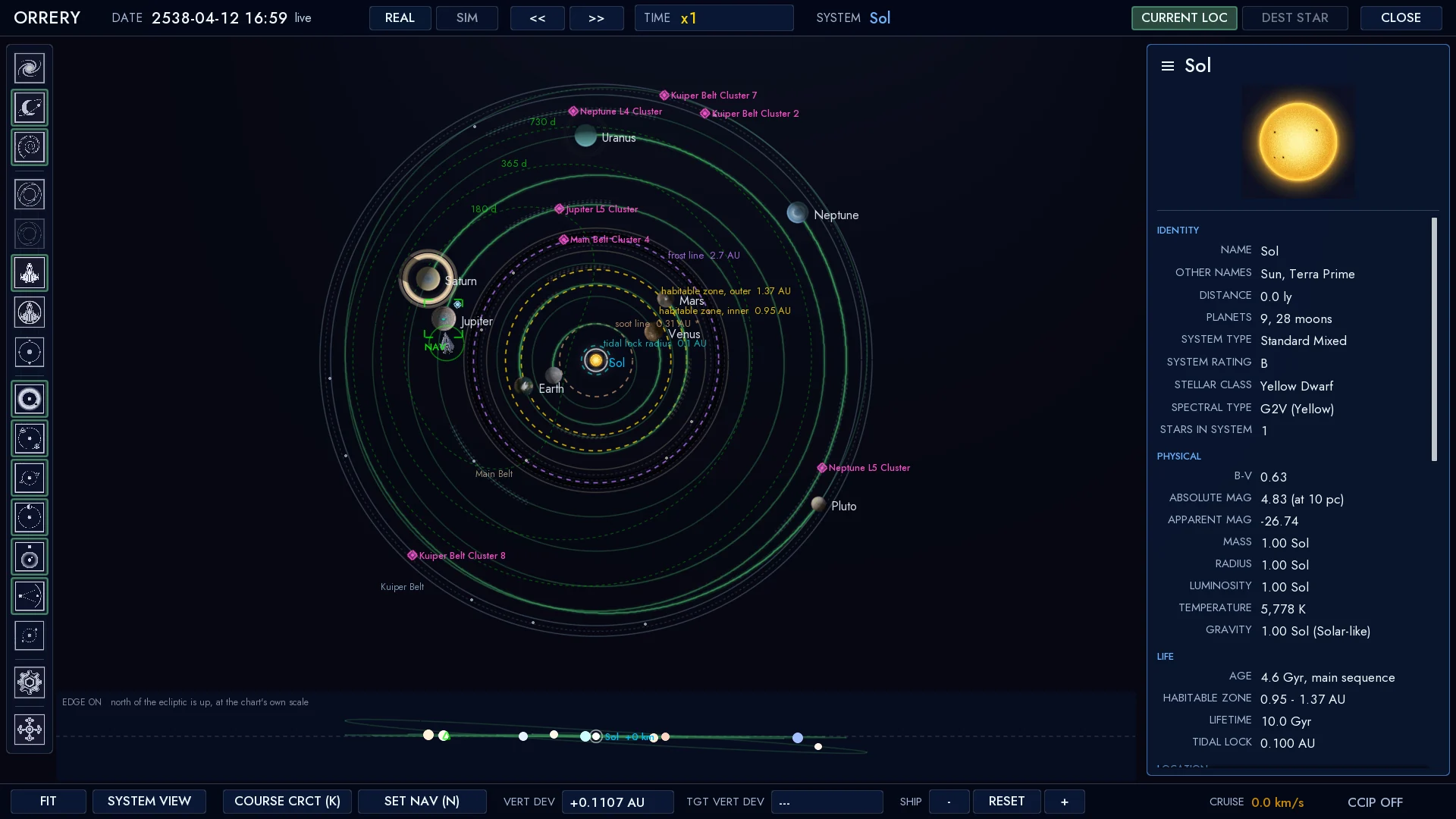 Solar systemsSolar system types and the orrery23 layouts taken from the exoplanet surveys, and an orrery that charts any system at any date.