Science // Gas giants
Gas and ice giants, drawn from their chemistry
Every giant in the game is procedural. Its type sets the chemistry, the chemistry sets the colours and the clouds, and a seed of its own grows the weather, so no two giants of a type are the same.
41 kinds of giant, sorted by what you see
We classify every giant by what a pilot sees: gas or ice giant first, then a family by temperature, then whatever colours or hides its cloud (trace chemistry, haze, dayside heat or the heat from inside), then its weather. Our own generator grows each planet's weather from that type and a seed of its own, so every giant is its own world. The wall below shows every type as the generator draws it.
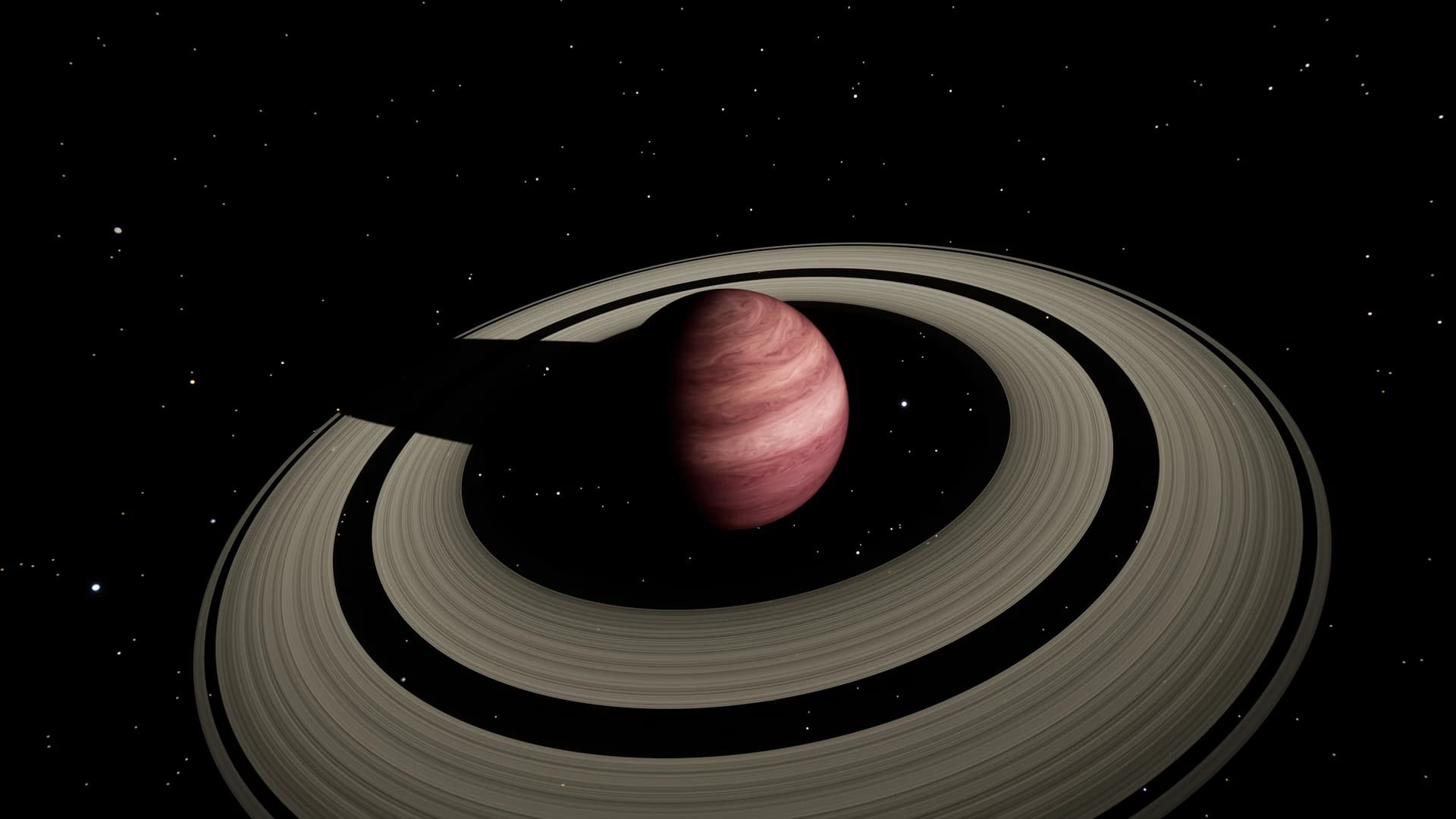
Each look is a row of data that cites its science: band count and colour, storms, haze and how the limb darkens. The generator reads the row and a seed of the planet's own, then stirs the cloud bands through a wind field built for that planet over forty steps: zonal jets after Ingersoll 2004, anticyclonic zones and cyclonic belts, vortex streets between the jets, Saturn's hexagon as a polar wave of order six and Juno's polar cyclones.
Ammonia ice sits at about 0.7 bar over ammonium hydrosulfide at about 2 bar; limb darkening follows Minnaert under a scattering haze, and the terminator fades the way it does in Cassini's frames. Hot giants lock one face to their star where Gladman 1996 says they must, and the hottest glow from their own heat. Fly down and the cloud tops resolve to 0.21 kilometres a texel on a Jupiter.
The best-known older scheme, Sudarsky's five classes of 2000, sorts gas giants by temperature alone. Ours follows the same sequence of clouds and adds the questions that decide the look; The colours of the giants maps every one of our subtypes to its nearest Sudarsky class.
- Families
- 5
- cold, temperate, hot, and two of iceSim
- Types
- 41
- by colouring agent, then weatherSim
- Looks on the wall
- 61
- and a seed of its own for every planetSim
- Close in
- 0.21km
- a texel at the cloud topsSim
From painted maps to grown worlds
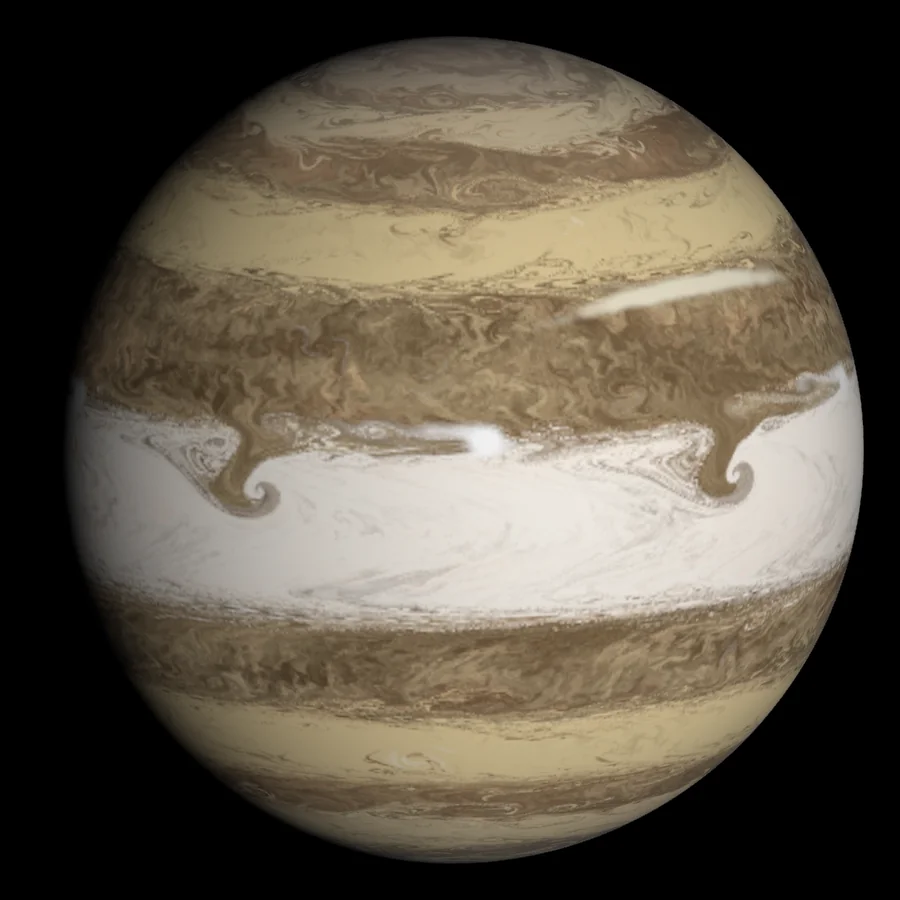
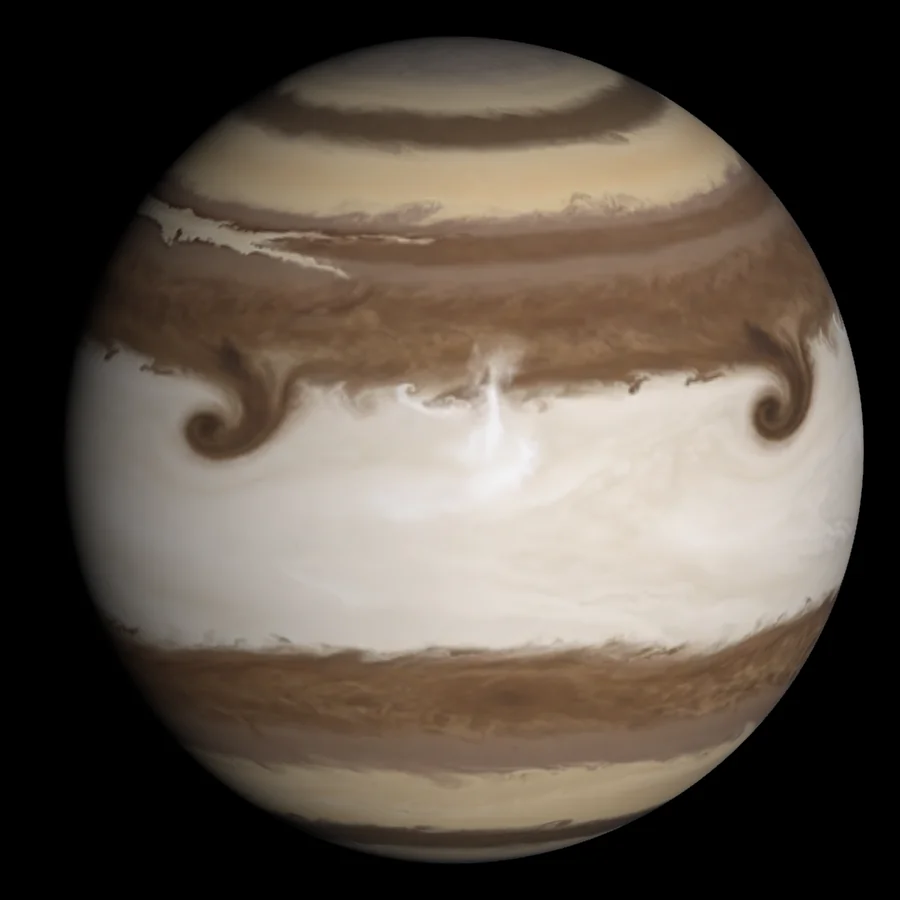
Our first simulator dressed each giant in a painted map, matched to our research on its type. The detail was beautiful, but a map always looks the same, and it softens and breaks down as you fly closer.
Procedural planets promise endless variety and usually deliver sameness. So we made the generator grow every feature the painted maps had: belts, festoons, hooked vortices, great spots, polar hexagons and haze, each matched to its painted original. Now every giant is its own world, and you can skim the cloud tops with the detail holding. On rocky worlds the same approach lets you fly from orbit to the ground in one unbroken descent, and walk the whole planet.
In Pax Abyssi: every sphere below is a render from the game's gas giant generator, lit from the same angle near full phase. Hover for a planet's name, and select it to turn it as a globe.
Cold gas giants
Ammonia ice clouds over a deck of ammonium hydrosulfide, coloured by traces of sulfur and phosphorus compounds: the Jupiter and Saturn family, sorted by which trace gas wins.
Temperate gas giants
Too warm for ammonia ice: water clouds take over, then clear skies, where Rayleigh scattering and methane absorption turn the whole planet blue.
Hot gas giants
Hot Jupiters: clouds of silicates and iron, sodium and potassium darkening the air, and the hottest faces glowing with their own heat. Most are locked with one face to their star.
Cold ice giants
Methane absorbs red light and leaves the blue and cyan. Internal heat splits them: active, Neptune-like worlds with fast jets and dark spots, and quiescent, Uranus-like worlds under thicker haze.
Hot ice giants
Neptune-mass worlds close to their stars, sorted by temperature: veiled in water cloud, then cloudless and blue, then stripped dark as the heat climbs.
The rest of the science
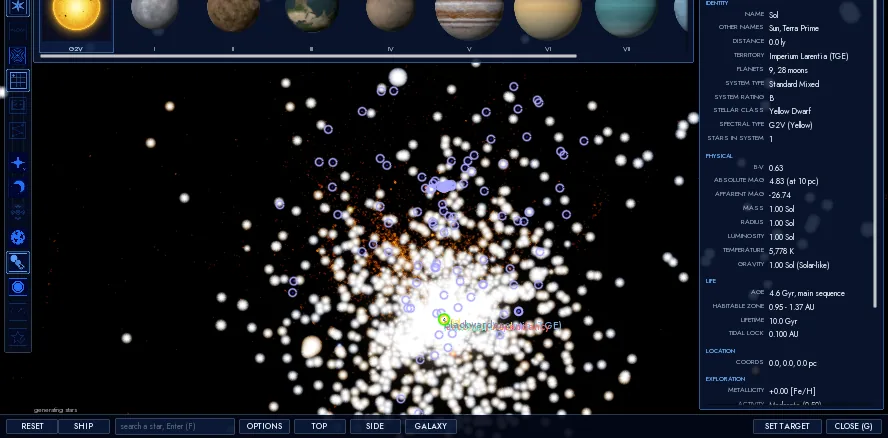 The galaxy111 billion stars, the measured ones where astronomers put themThe whole Milky Way at true scale: every catalogued star in its measured place, and the rest generated from a published model of our galaxy.
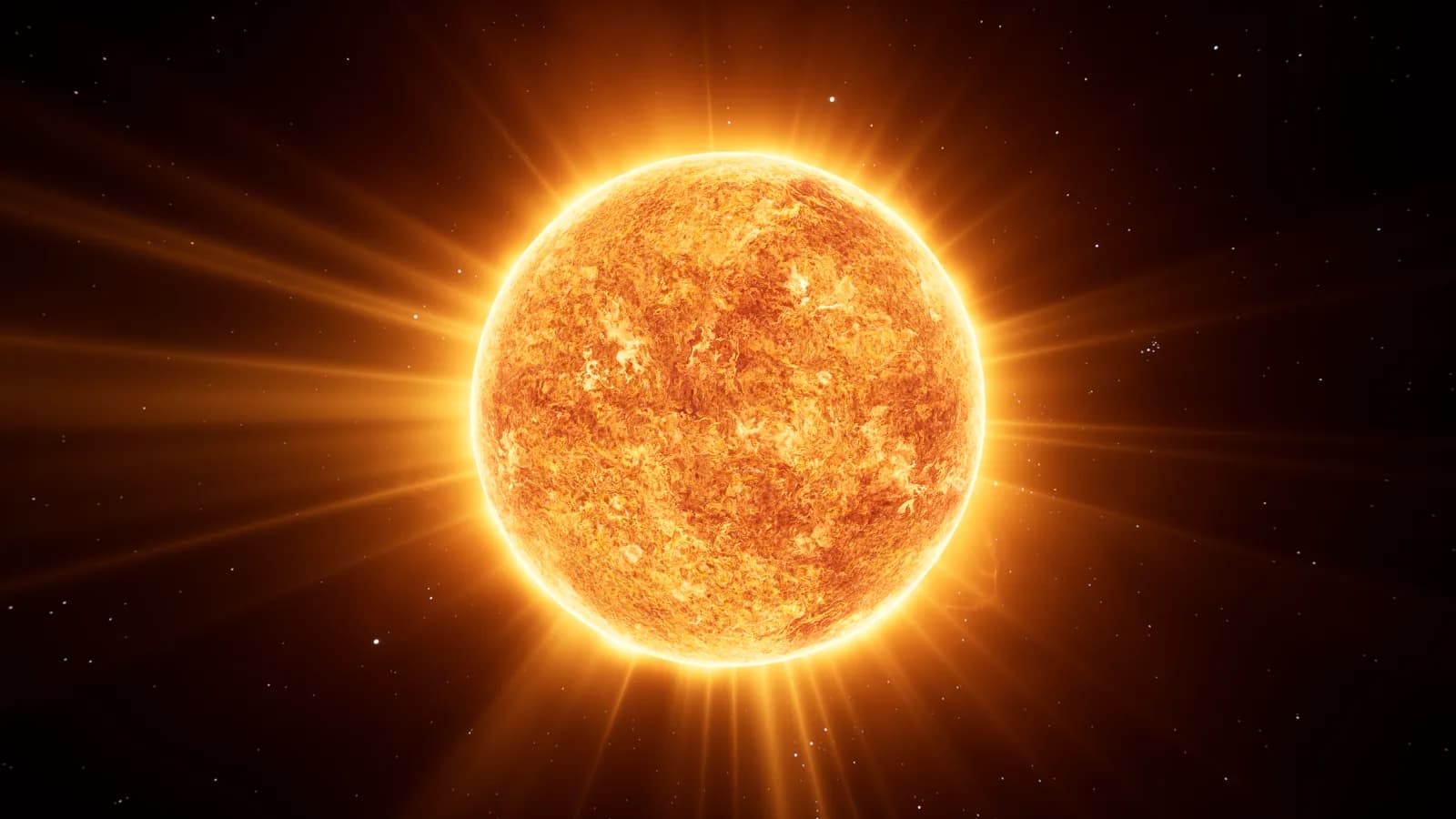 StarsA star is the colour of its temperaturePlanck's law through the human eye, so the Sun is white. Pick Scientific, Game or Vivid in the options.
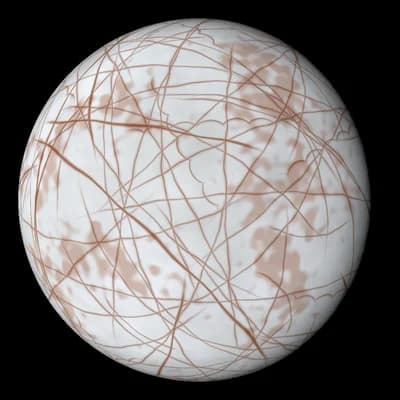 Barren and ice worldsEvery barren and icy world, grown from its typeAirless moons, iron worlds and ice super-Earths at their true radius, with the research behind each type and the numbers one planet is made of.
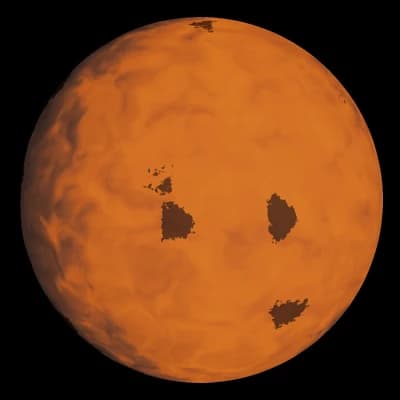 Lava worldsSeas of molten rock, each grown from its own heatEighteen types, from gold-white magma oceans to frozen plates, every planet's sea drawn from its heat, its crust and a seed of its own.
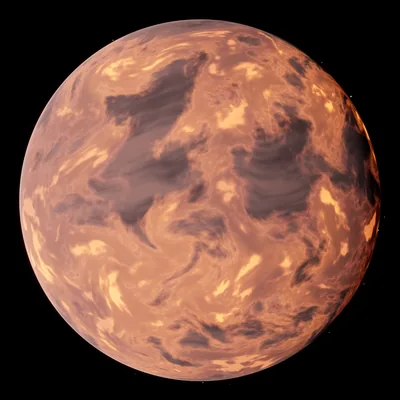 Greenhouse worldsVenus's kind, from the cloud tops downDecks of acid, water or sulfur cloud drawn from each planet's own winds, tens of bar of air beneath, and ground hot enough to glow.
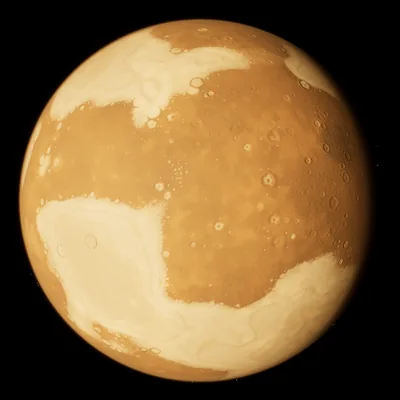 Arid worldsMars and its kind, from orbit to the dustRust plains, cratered highlands, basalt shields, evaporated oceans and clouded deserts, every planet's caps sized by its own temperature, and Mars from its own layout.
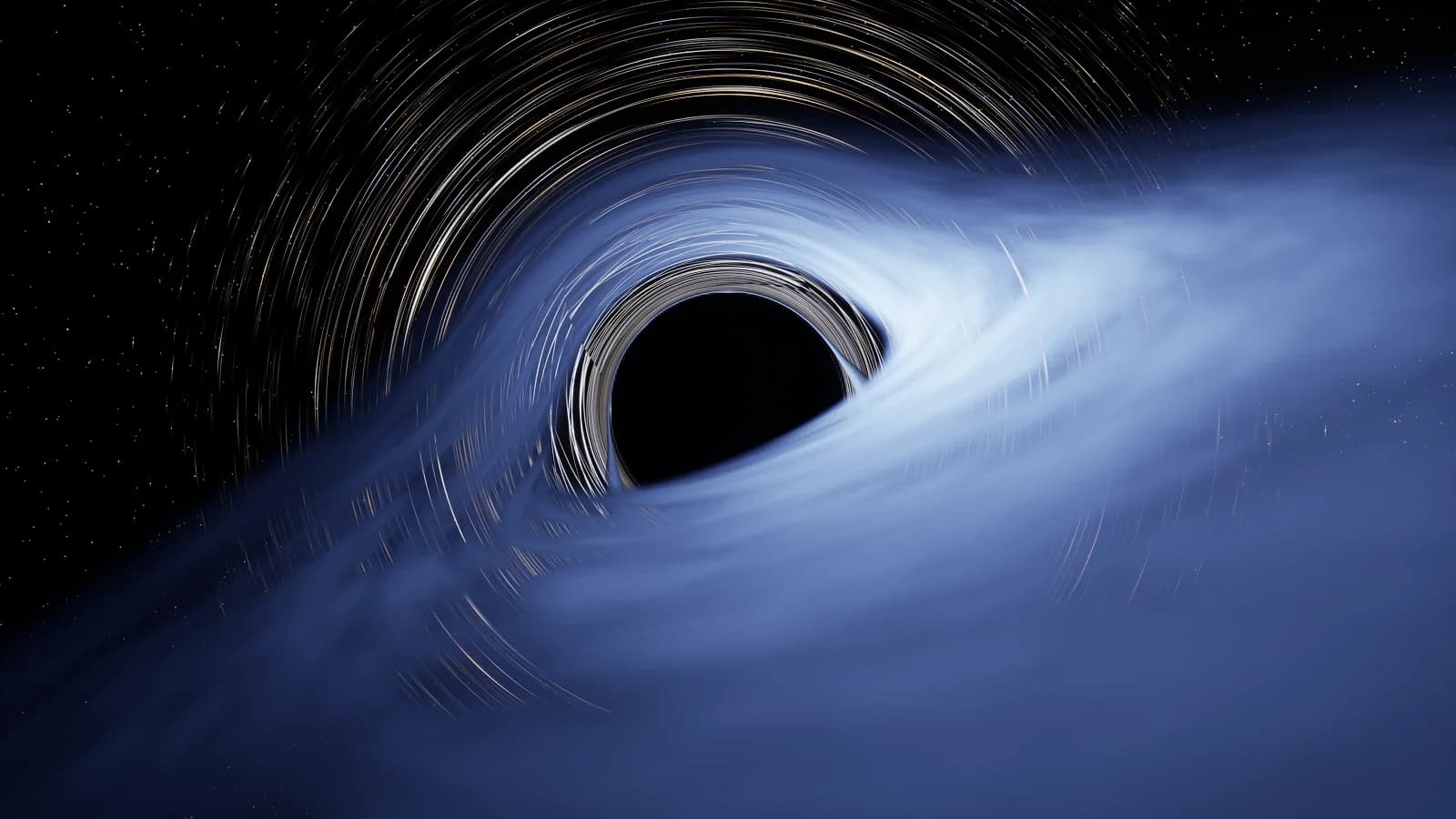 Black holesThe physics, and an artist's visionLight solved through general relativity at every pixel, over the real star field behind the hole.
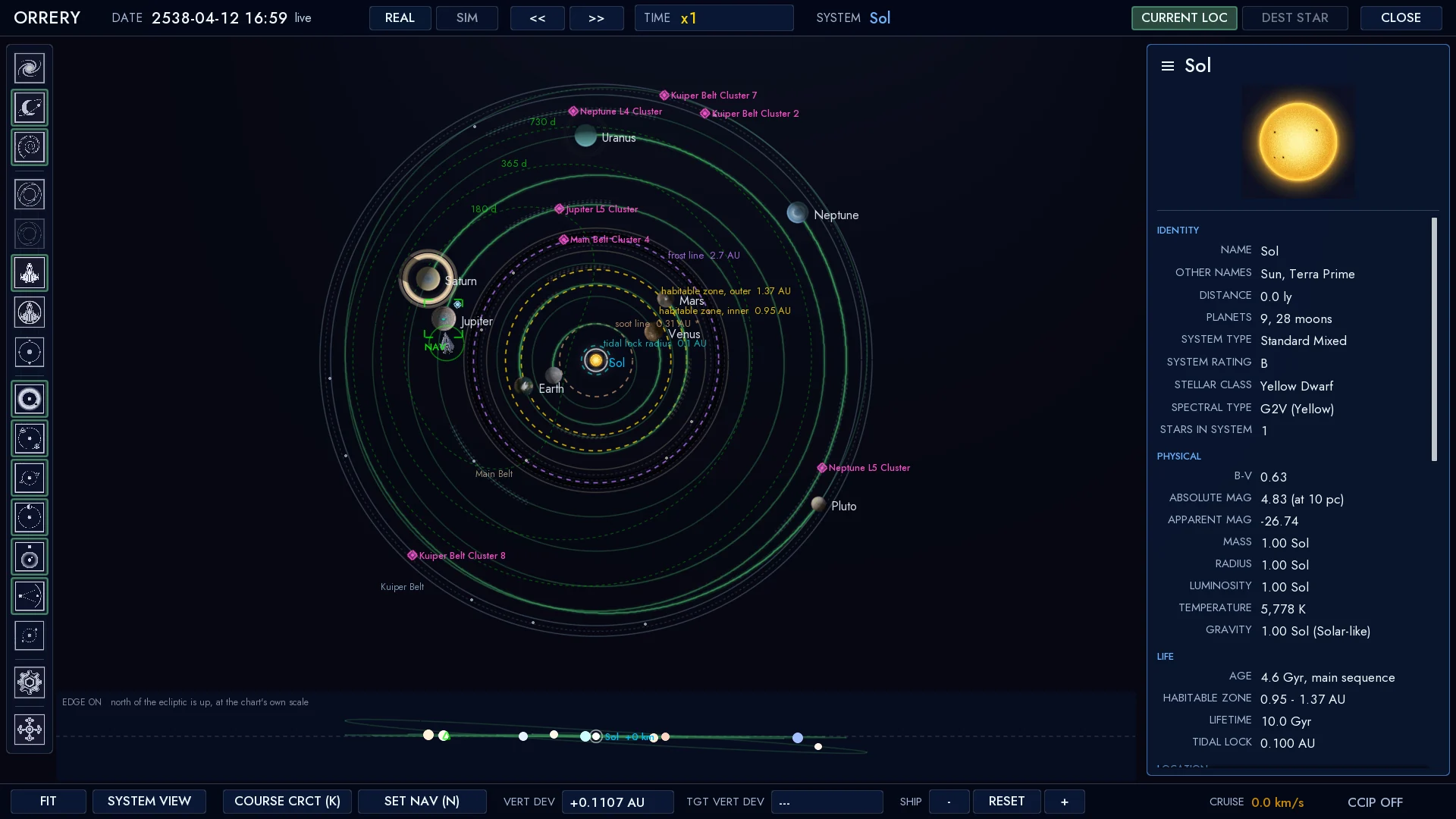 Solar systemsSolar system types and the orrery23 layouts taken from the exoplanet surveys, and an orrery that charts any system at any date.